Metroid Prime 4: Beyond review: A strong return with uneven new ideas
A richly atmospheric return to the Metroid Prime formula delivers memorable worlds and classic exploration—even if some design choices keep it from reaching the series’ highest heights.
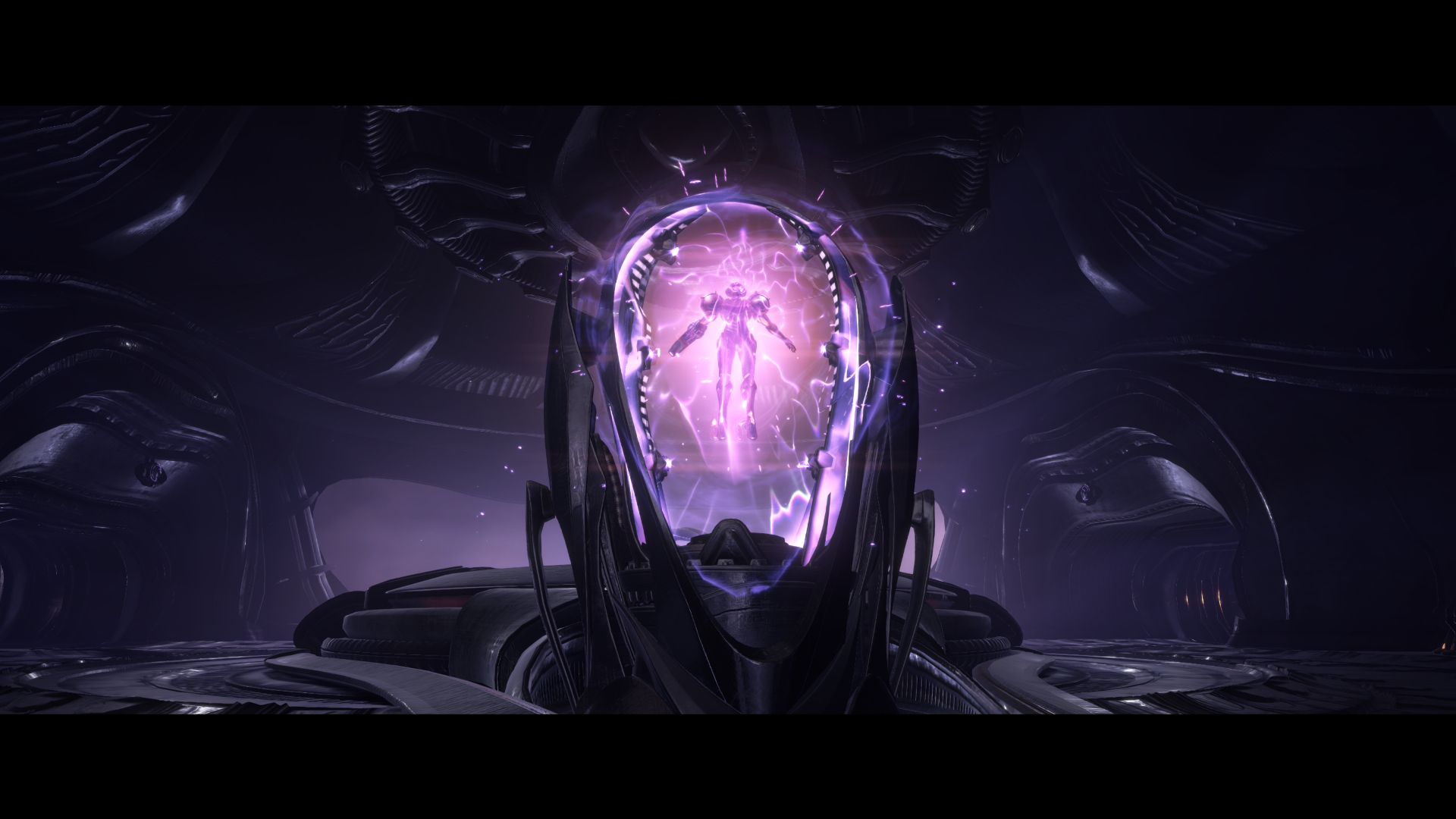
The review is based on the NS2 version. It's also relevant to Switch version(s).

I remember the first time I played Metroid Prime on the GameCube and how fun it felt to explore the world Retro Studios had built. Its unique environments were all cleverly interconnected, and the classic Metroidvania design—acquiring new gear, backtracking to previously inaccessible areas—translated beautifully into 3D. Later entries in the series kept that spirit alive, expanding the lore, deepening Samus Aran’s adventures, and giving us even more atmospheric worlds to uncover.
Fast forward 23 years, and the series finally gets its fourth mainline installment. With an entirely new world to explore, Metroid Prime 4: Beyond absolutely feels like the kind of Prime game fans have been waiting for—just not without some caveats. Changes in how its world is structured, a stronger lean toward linear progression, and a few experiments with the familiar formula make the game good, but not quite as great as it could have been.
Atmospheric Alien Areas
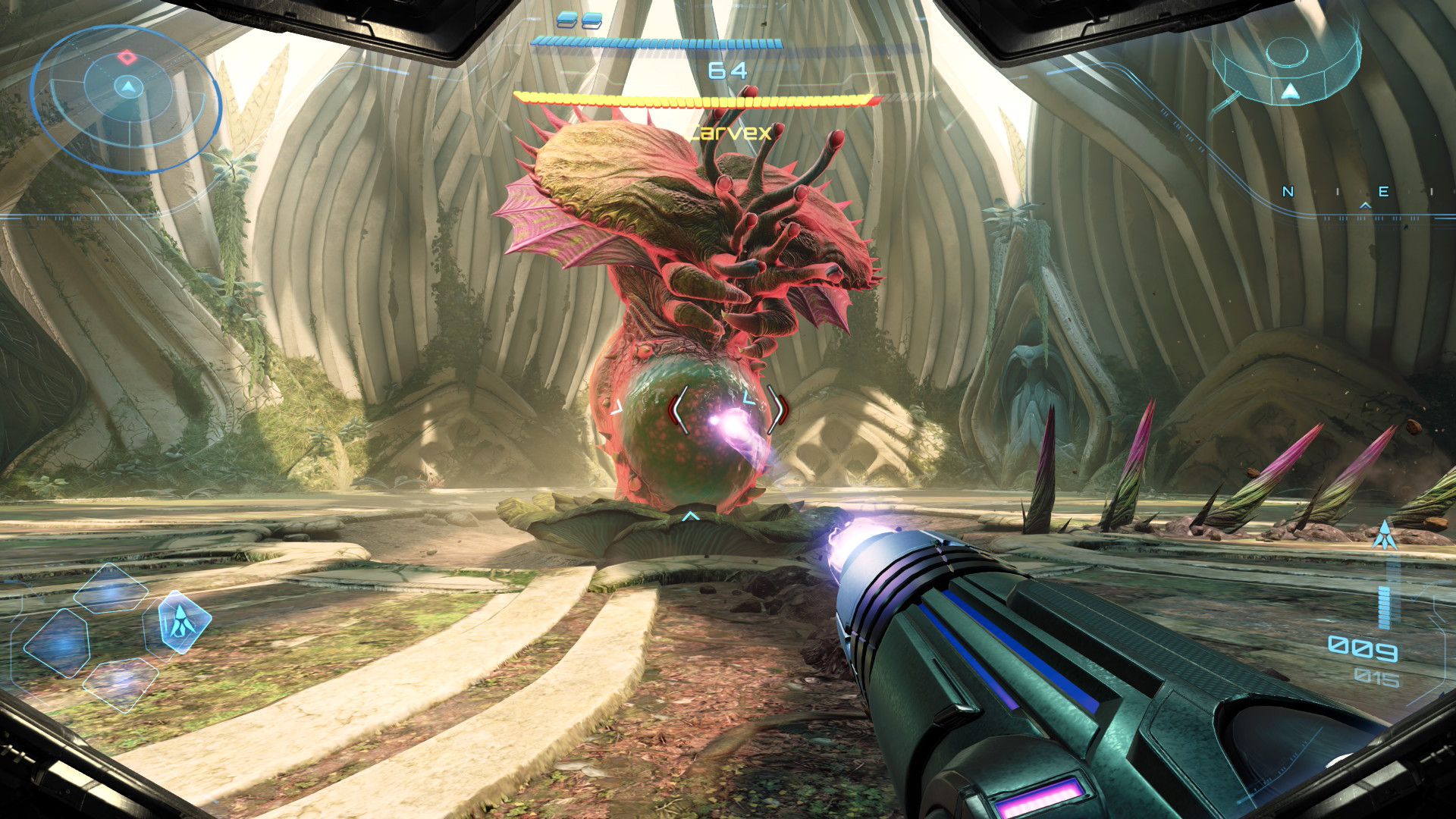
In true Metroid Prime fashion, Beyond begins with Samus and the Galactic Federation attempting to stop Space Pirates from stealing a newly discovered artifact. Sylux—Samus’s long-standing nemesis—intervenes, leading the artifact to teleport everyone to the mysterious planet Viewros. Here Samus uncovers the Chrono Tower, gains psychic abilities, and learns about the extinct Lamorn, a species that attempted to preserve itself by transferring their civilization to a new world through five Master Teleporter Keys.
Metroid Prime 4: Beyond, Nintendo, 2025
Samus’s mission across Viewros to retrieve these keys gradually reveals the Lamorn’s tragic history. Their story feels reminiscent of other fallen civilizations introduced in Metroid lore, but the way it’s delivered—through logs, holograms, and environmental storytelling—gives it emotional weight and a sense of purpose as you explore.
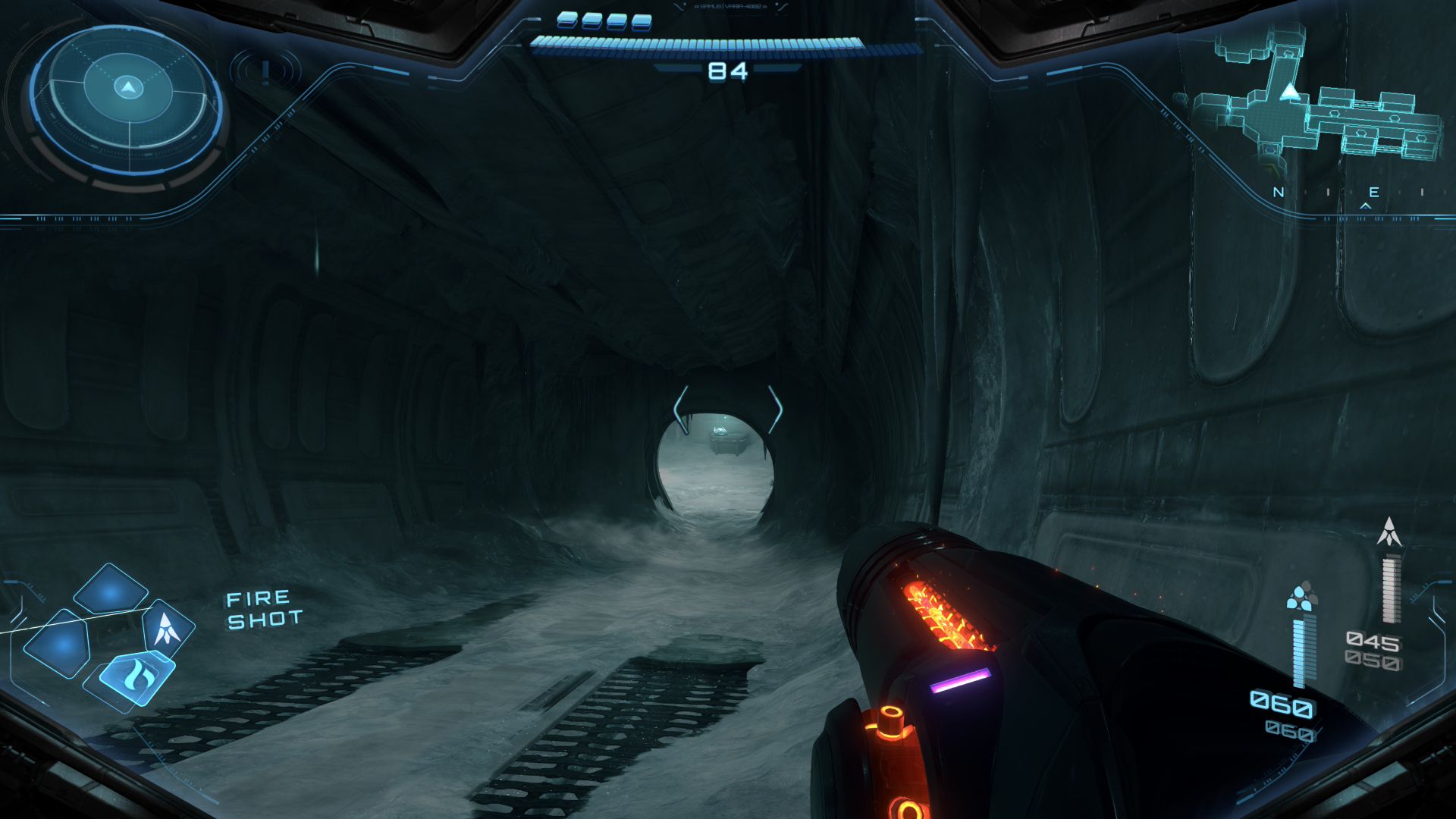
And explore you will. The regions of Viewros differ drastically from one another, each offering distinct challenges, ambience, and enemies. The first major area is a lush jungle full of ruins hiding upgrades and weapons, but also ancient texts that provide philosophical insight into the Lamorn worldview. Meanwhile, the Ice Belt features a cryogenics lab that slowly thaws as you restore power, revealing both the fate of the Lamorn and some unpleasantly awakened threats.
Metroid Prime 4: Beyond, Nintendo, 2025
This blend of lore and environmental discovery is central to Metroid Prime’s atmospheric pull—and Beyond absolutely nails it. As usual, new areas initially feel quiet and deceptively harmless. But the moment you grab a key item or reach a critical room, everything shifts. AI drones spring to life, mutated creatures called Grievers break free from cryo-chambers, and even the environment itself becomes hostile after you activate certain machinery.
Lost in the Desert
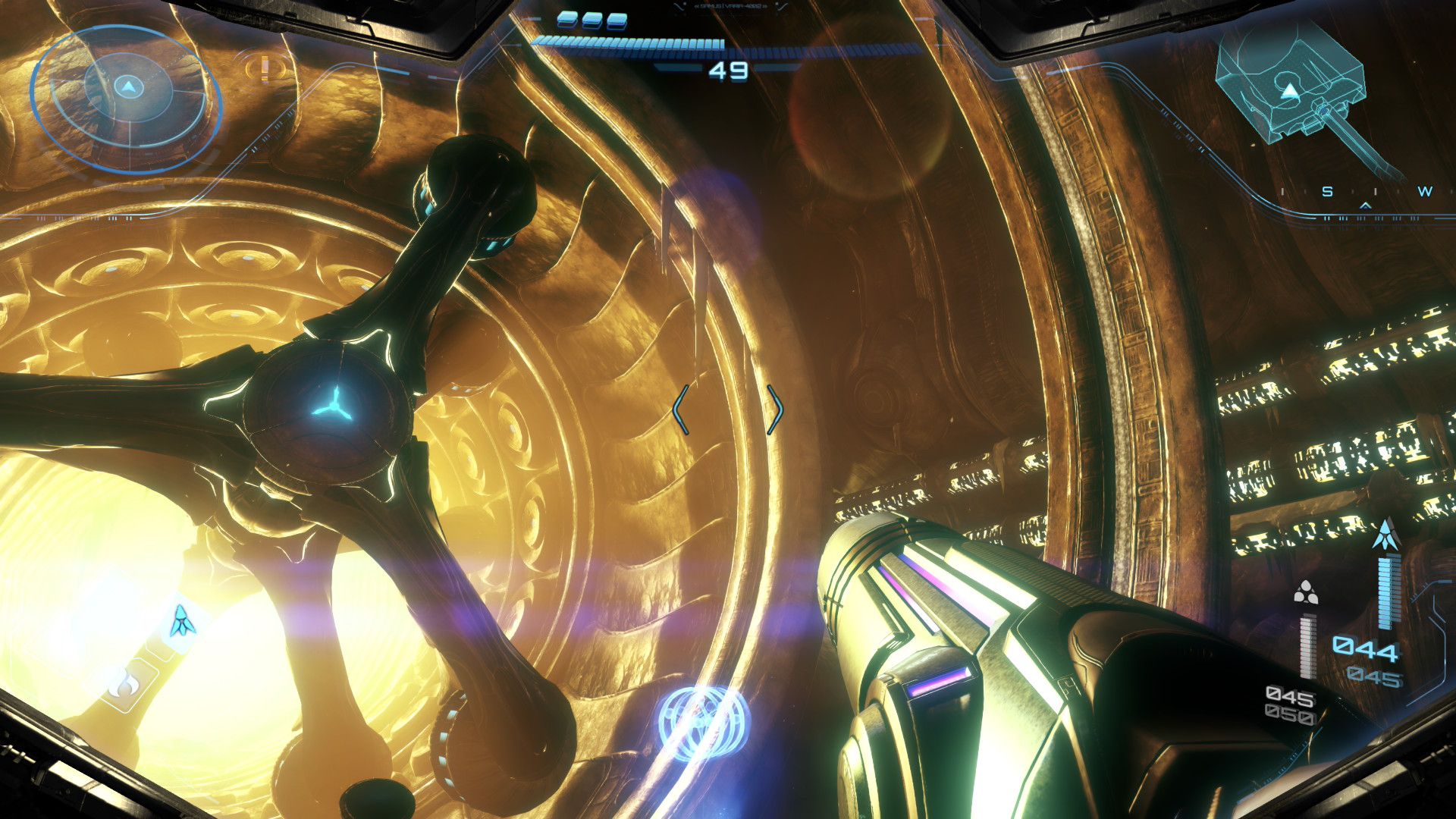
Atmosphere is Beyond’s greatest strength, but it’s not without some eyebrow-raising choices. For instance, an early area called Volt Forge—three towers built for the purpose of manufacturing motorcycles—feels strangely out of place. It’s a fun area with a great rock theme and a creatively designed bike for Samus (the Vi-O-La), but the lore implication that this psychic, scholarly species also enjoyed cruising around on motorcycles borders on comical.
Metroid Prime 4: Beyond, Nintendo, 2025
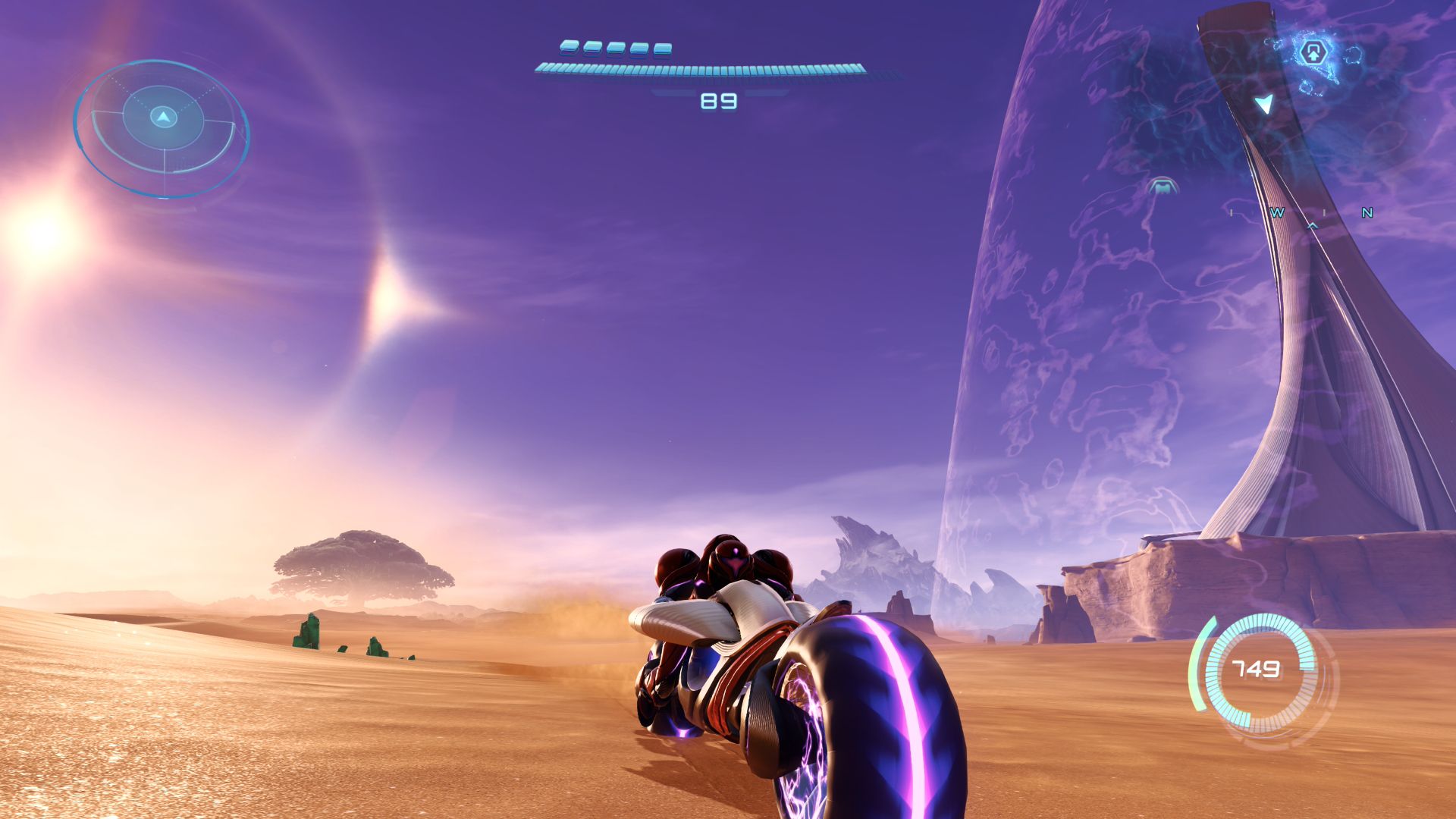
The more glaring addition, though, is the enormous desert separating each of the game’s worlds. The bike is clearly meant to make traversal smoother, but the issue is that there just isn’t much to see. A handful of shrines scatter the landscape and offer upgrades to your missiles or ammo, yet they feel like band-aids trying to justify the desert’s existence rather than meaningful additions.
Where past games connected areas through intricate tunnels or elevators, Beyond places each world at a separate corner of the map with a massive, visually and thematically disconnected desert between them. And with no fast travel, you’ll be riding across endless sand whenever you return to an area with new abilities or realize you missed something. It quickly begins to feel like padding rather than purposeful design.
Metroid Prime 4: Beyond, Nintendo, 2025
Because of this separation, Beyond often feels like you’re tackling discrete dungeons, each culminating in a teleporter key—very reminiscent of a Legend of Zelda structure. Borrowing from Zelda isn’t inherently bad, but the execution falters because the connective tissue—the desert—lacks character and charm. Add to that the more linear progression, and exploration rarely captures the “lost in an alien world” feeling that earlier Prime titles excelled at. You’ll backtrack occasionally, but once you finish an area, you usually return only to clean up collectibles.
- Amazing atmosphere and world design that gives us that classic Metroid Prime feel;
- strong classic gameplay loop with some notable additions that keep the game from feeling stale;
- one of the stronger narratives in a Metroid Prime game thanks to lore, atmosphere, and some companion interactions.
- The desert hub feels empty and disconnected;
- increased linearity makes the game feel smaller and more constricted;
- constant guidance gets annoying.
Masterful Metroid Moments
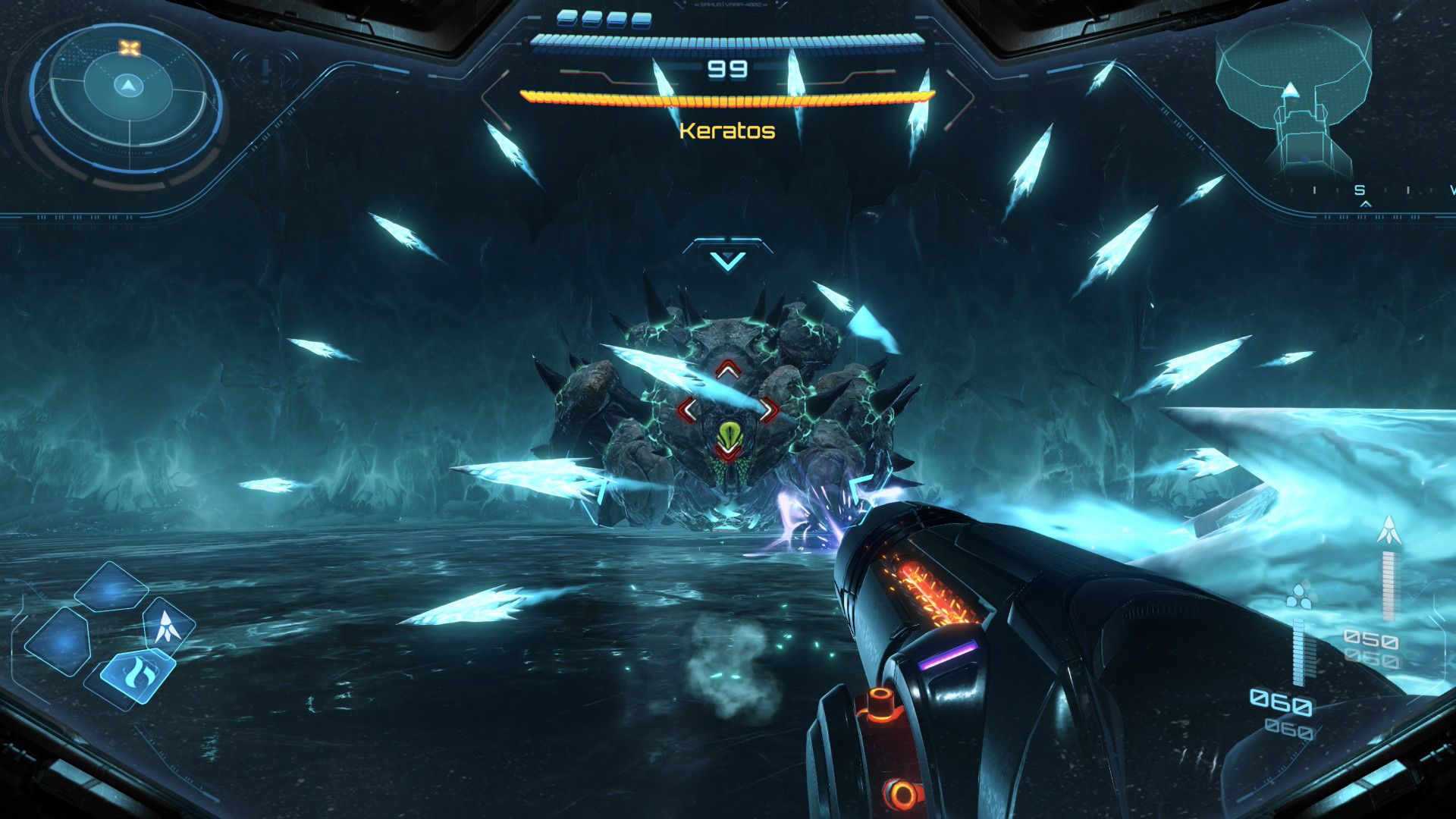
That said, the classic Prime loop—exploration punctuated by tense, action-heavy encounters—remains satisfying. Every world requires a mix of discovery, puzzle-solving, and boss battles, most of which reward you with new powers or upgrades. The game nails moments of suspense, too. You might enter a massive dark chamber expecting a fight, only to find nothing—until later, when flipping a switch or rerouting power triggers the ambush you thought was coming the first time. These sequences are enhanced by cutscenes, holographic interactions, and even conversations with new companions Samus meets along the way.
Metroid Prime 4: Beyond, Nintendo, 2025
The Galactic Federation crew isn’t bad, but they do break the trademark isolation of the series. Samus doesn’t need guidance, yet Beyond includes engineer Myles Mackenzie chiming in over the radio to remind you to clear out each area before moving on. You can’t disable his notifications, making them repetitive and reinforcing the game’s linearity even when you’re just trying to wander off the critical path.
Other companions mostly serve to contextualize the shared sense of being stranded on Viewros. Samus remains a silent protagonist, but her nods are powerful as she still forms connections—a wounded sniper who rescues her, a soldier who turns out to be her biggest fan, and others who add small but welcome layers of emotional depth. These interactions are brief enough to avoid feeling overdone, and the final moments of the story put these relationships into perspective—even if Mackenzie remains irritating.
Metroid Prime 4: Beyond, Nintendo, 2025
Boss fights are another strong point, ranging from towering beasts that push you to master newly acquired powers to close-quarters battles that test your movement and timing. Many of Samus’s psychic abilities are essentially reimagined versions of familiar Prime tools like the grapple or spider ball, but the controllable psychic beam stands out. It’s especially fun during puzzle-like boss mechanics and feels great whether you play with mouse controls or the Pro Controller.
VERDICT:
Metroid Prime 4: Beyond took years to arrive, and what we get is a game that remembers the series’ strengths while trying to push into new territory. It may not be the series’ best, but it’s a worthy return—and a promising glimpse of where Metroid Prime can go next.
Find all our reviews on Metacritic, Opencritic, and CriticDB.
Final Thoughts
Metroid Prime 4: Beyond took years to arrive, and what we get is a game that remembers the series’ strengths while trying to push into new territory. Not all of those experiments land—the open desert in particular feels empty and unnecessary—but the ones that work genuinely enhance the experience, such as the narrative weight added by the companions.
Thankfully, the game never loses sight of its identity. The worlds are stunning to explore, the soundtrack is another standout, and the combat evolves meaningfully as you collect more abilities throughout its 13-hour campaign. It may not be the series’ best, but it’s a worthy return—and a promising glimpse of where Metroid Prime can go next.


Metroid Prime 4: Beyond
Metroid Prime 4: Beyond review: A strong return with uneven new ideas
Metroid Prime 4: Beyond took years to arrive, and what we get is a game that remembers the series’ strengths while trying to push into new territory. It may not be the series’ best, but it’s a worthy return—and a promising glimpse of where Metroid Prime can go next.