Vampire: The Masquerade - Bloodlines 2 review: Not a worthy successor, yet still intriguing
Years of waiting, high hopes, a great predecessor, and a fantastic setting – did it all come together to create a good game?
The review is based on the PC version. It's also relevant to PS4, XONE, PS5, XSX version(s).

The first announcement of Vampire: The Masquerade - Bloodlines 2 caused quite a stir. After many years, we were supposed to get a sequel to one of the most intriguing and atmospheric games ever made. Many gamers are familiar with Vampire: The Masquerade - Bloodlines, and many also consider it the most acclaimed production based on the World of Darkness role-playing system. The emotions it evoked, the immersive atmosphere, theories, mods, and player support over the years... It was all a piece of history that had a chance to repeat itself.
Unfortunately, the development of VTM:B2 kept encountering problems. Changes in studios, stories, or layoffs – all of this cooled players' hopes for something great. However, The Chinese Room finally brought the production to a successful conclusion, delivering a new title set in the World of Darkness. Is it good? Not really. The game suffers from many issues, but that doesn't mean it isn't fun or doesn't offer a truly interesting story.
Two voices in the head are better than one
The game begins with us getting to know our character, or rather two characters: the elder vampire Nomad (called Phyre) and their companion-in-mind, Detective Fabien. Phyre is a character who begins the story with an already established reputation. They are a vampire known to everyone, with books written about them, and many would gladly sit with them to hear stories from hundreds of centuries ago... Or they would want to get rid of the vampire due to their power. The game starts with our awakening, as we learn who our character really is and why they found themselves in Seattle.
The identity of our character, although partially predetermined, can be modified to some extent – we can choose the gender, Clan, appearance, and aspects of the past during conversations with various characters. Some of these choices are more cosmetic, while others have impact on the mechanics, but they allow for a certain degree of control over character creation.
Vampire: The Masquerade – Bloodlines 2, The Chinese Room, 2025
The choice of playing as an elder vampire initially surprised me – after sessions of Vampire and VTM:B, I was used to playing as inexperienced newcomers who are just taking their first steps, and we get to know the world alongside them. Here, the situation was reversed, and we were given a truly powerful and experienced character. I must admit that despite my initial concerns, I enjoyed playing as the Nomad. They are an interesting and multi-layered character, and their reactions correspond to the position and nature of an "old" vampire. It is also up to us whether we engage in clever psychological manipulations or use our status to put other, weaker vampires in their place. I admit that despite the pre-defined character and the fact that I didn't create mine from scratch, these small things made me feel that the Nomad was "my" character.
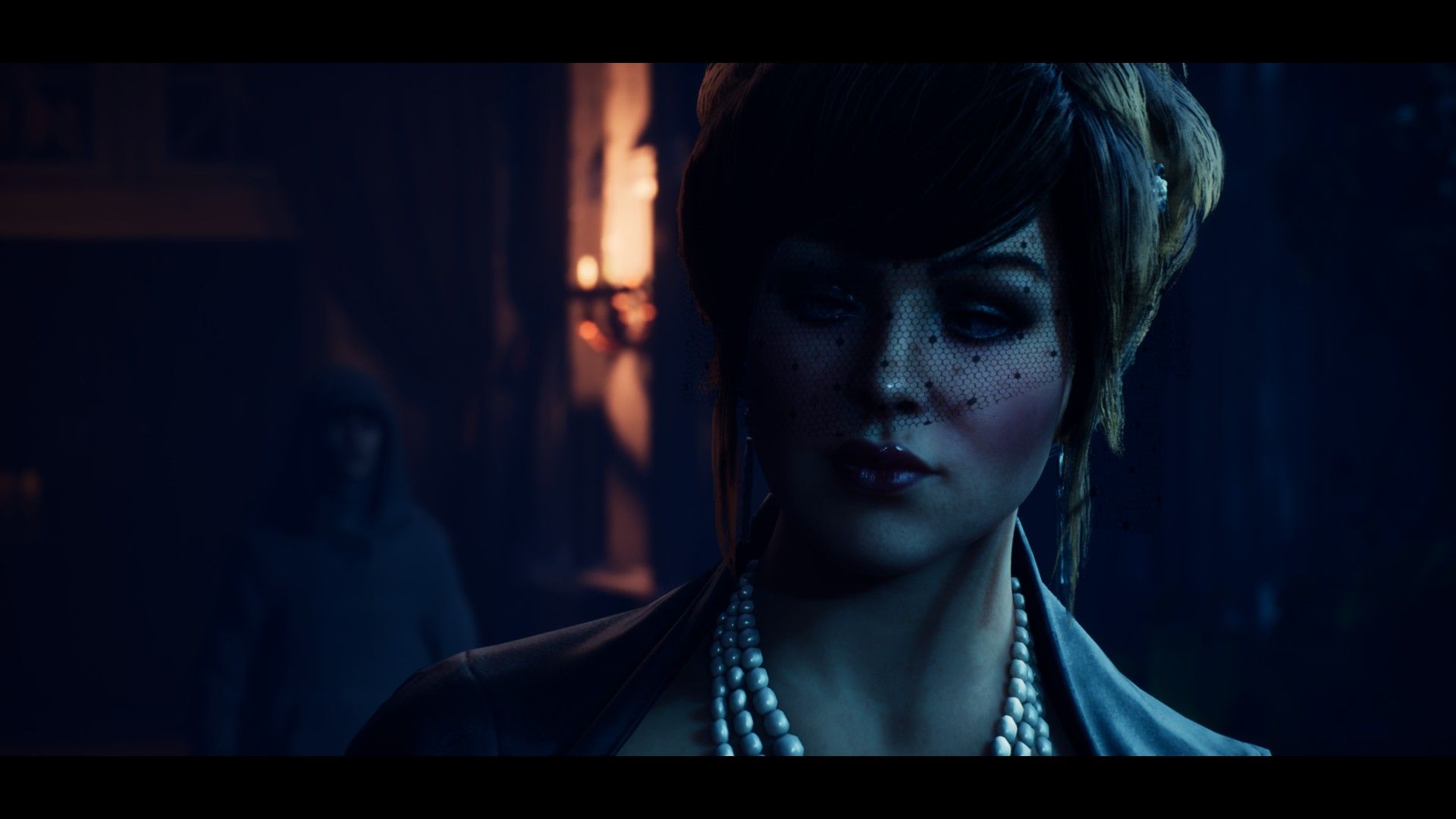
In the adventures, Nomad is accompanied by the colorful detective Fabien. A vampire from the Malkavian clan (inheriting a curse that affects their mind), who has somehow found himself in Phyre's mind, and together they try to unravel the mystery of their shared amnesia. Fabien, who roamed the world while Nomad was in a deep slumber, is the perfect guide to the nuances of the modern world and the politics of Seattle. Additionally, he is an intriguing character, crafted by the creators as a typical noir-style detective, and his touch of madness adds an appropriately elegant, and sometimes comedic, flair. He hints, comments, and makes mental notes for us, asking at the end of the day what we think about certain situations.
Vampire: The Masquerade – Bloodlines 2, The Chinese Room, 2025
Fabien's story doesn't end in Nomad's mind – we have the opportunity to play as the detective himself in two different time periods, at the beginning of his vampire journey and many years later, before he merged with Phyre. We accompany Fabien and use his unique powers during an investigation into a case that has been mysteriously terrorizing Seattle for quite some time.
What are you doing in Seattle, Phyre?
As I mentioned, the story begins quite abruptly. We don't know why we woke up, how we ended up in Seattle, or why our body is covered with strange markings. Additionally, it quickly becomes apparent that Nomad is not alone, as they are accompanied by the reliable and charming detective Fabien. After a quick suggestion and escape from the basement where we woke up, we step out onto the snowy streets of the Emerald City, searching for answers to the questions that haunt us.
I won't reveal too much of the plot because discovering it is one of the game's advantages, and I must admit that the developers have put a lot of effort into it. The story is truly intriguing and kept me captivated, offering us a sea of theories about what is really going on (especially if you're accustomed to the complexities of the World of Darkness). An interesting technique is that the story unfolds in two or even three tracks across different time periods, allowing us to gather evidence and connect it. Many elements we notice in the contemporary world may have had their beginnings many years ago. The plot flows at a good pace for most of the game, occasionally offering us plot twists and turning the story upside down. It's fascinating to discover, and I admit it kept me engaged through long, late-night hours of playing the game.
Vampire: The Masquerade – Bloodlines 2, The Chinese Room, 2025
What about the characters? They are very-well played! Although, similar to VTM:B, there aren't many of them, each one is perfectly suited to the lore and atmosphere. They are memorable, intriguing, and make you want to get to know them better. It's a pity that some of them get too little screen time, but the game allows the Nomad to inquire about their past or transformations.
How is the world in VTM:B2? And the graphics?
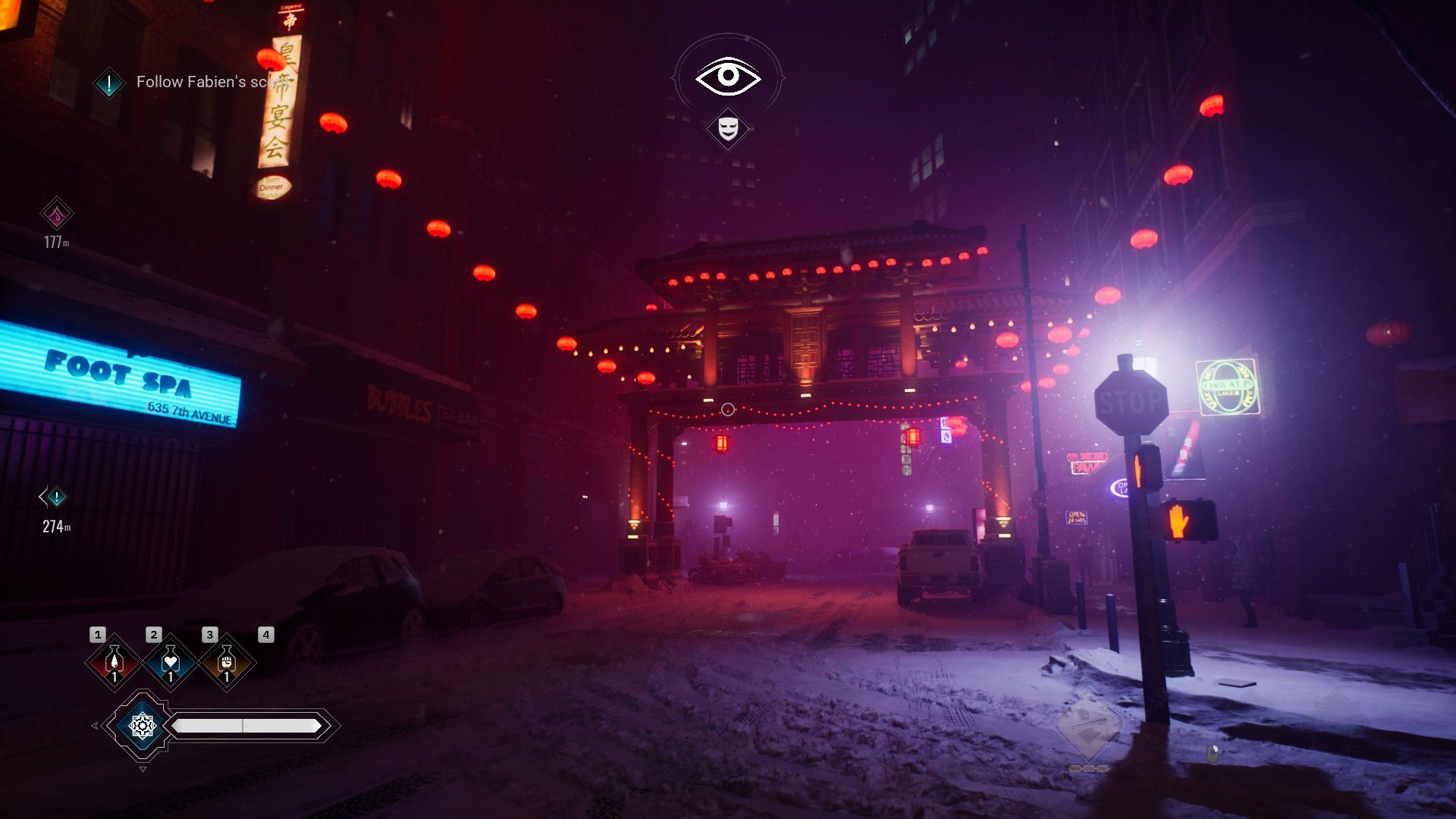
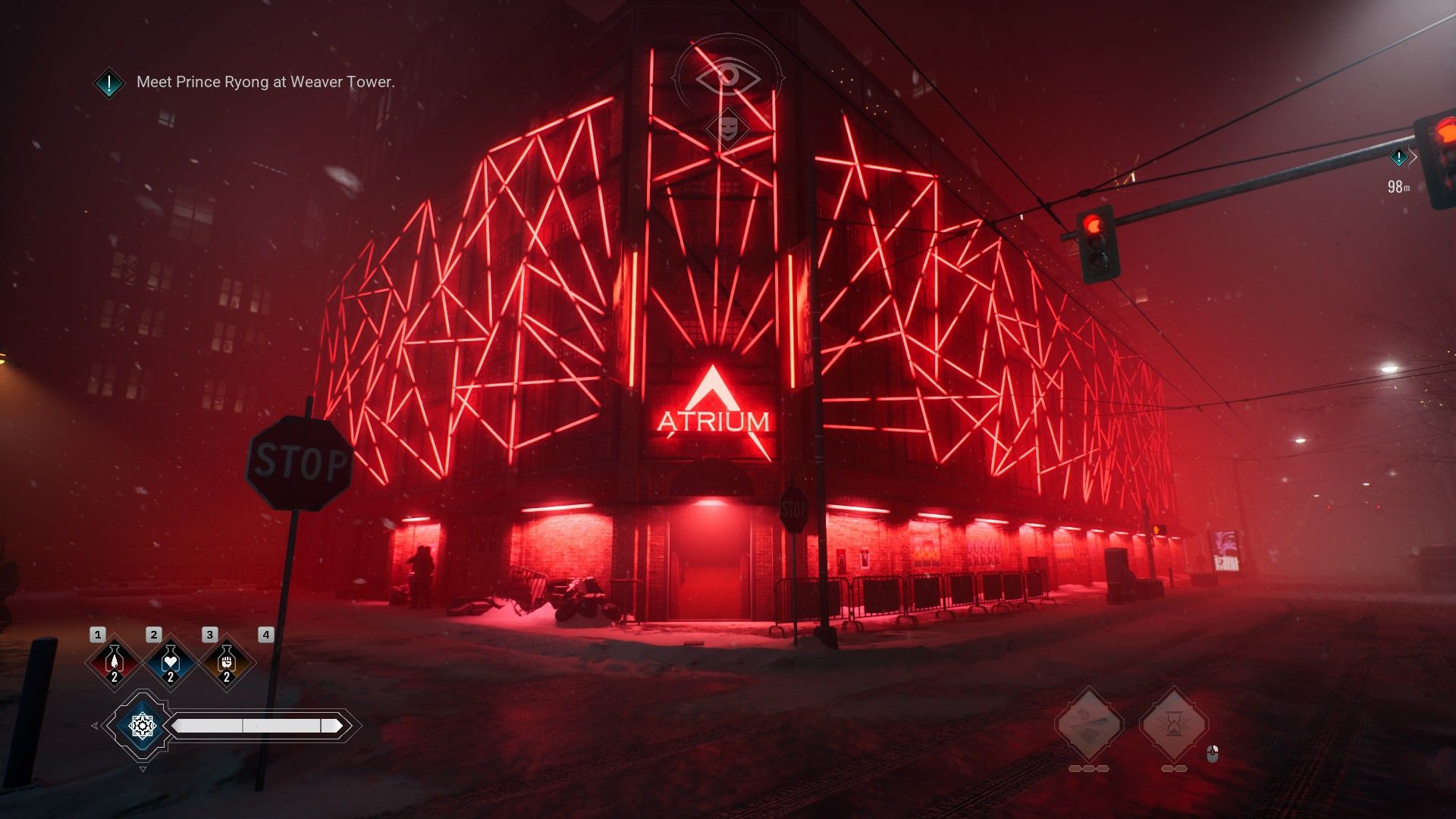
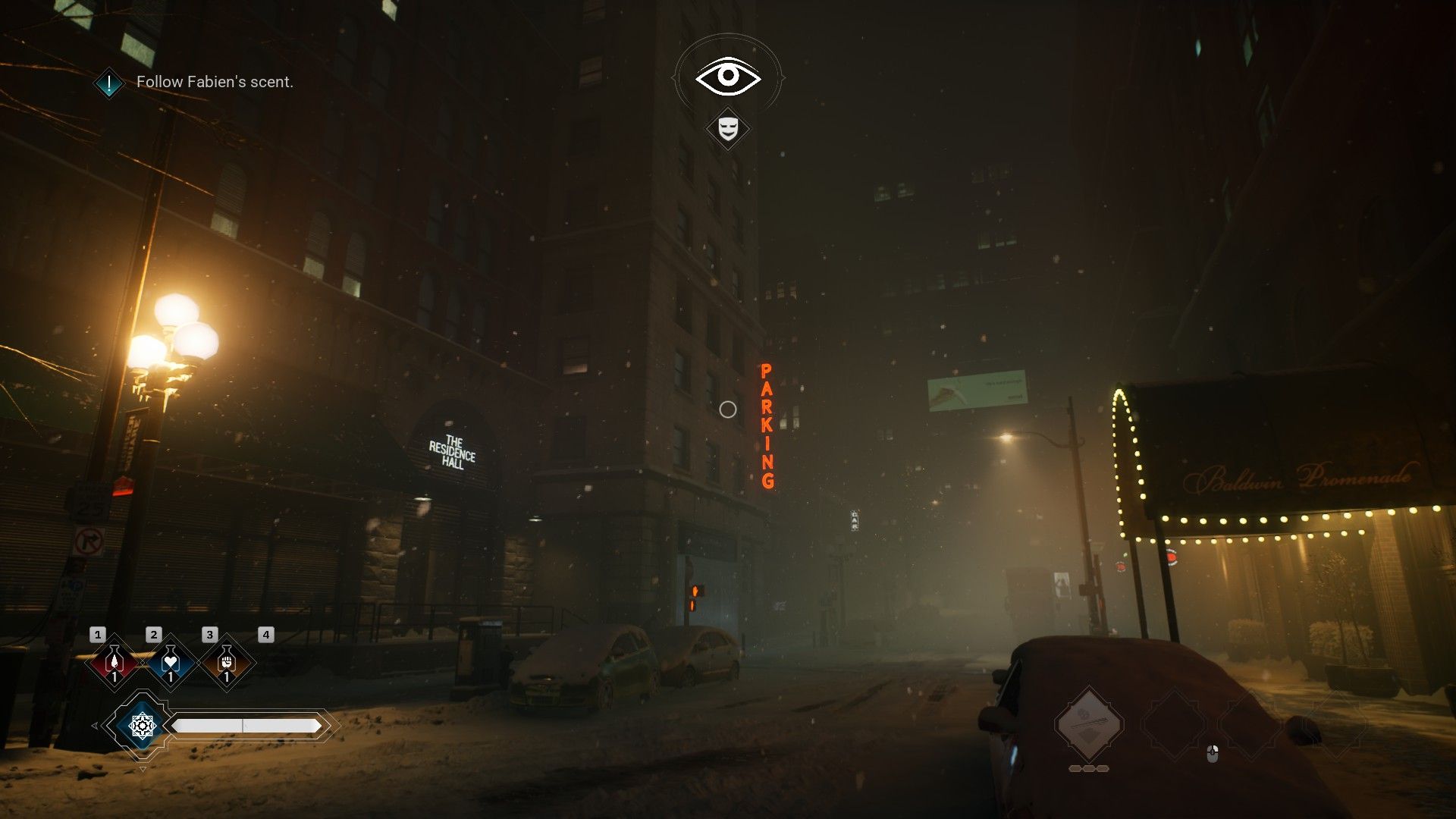
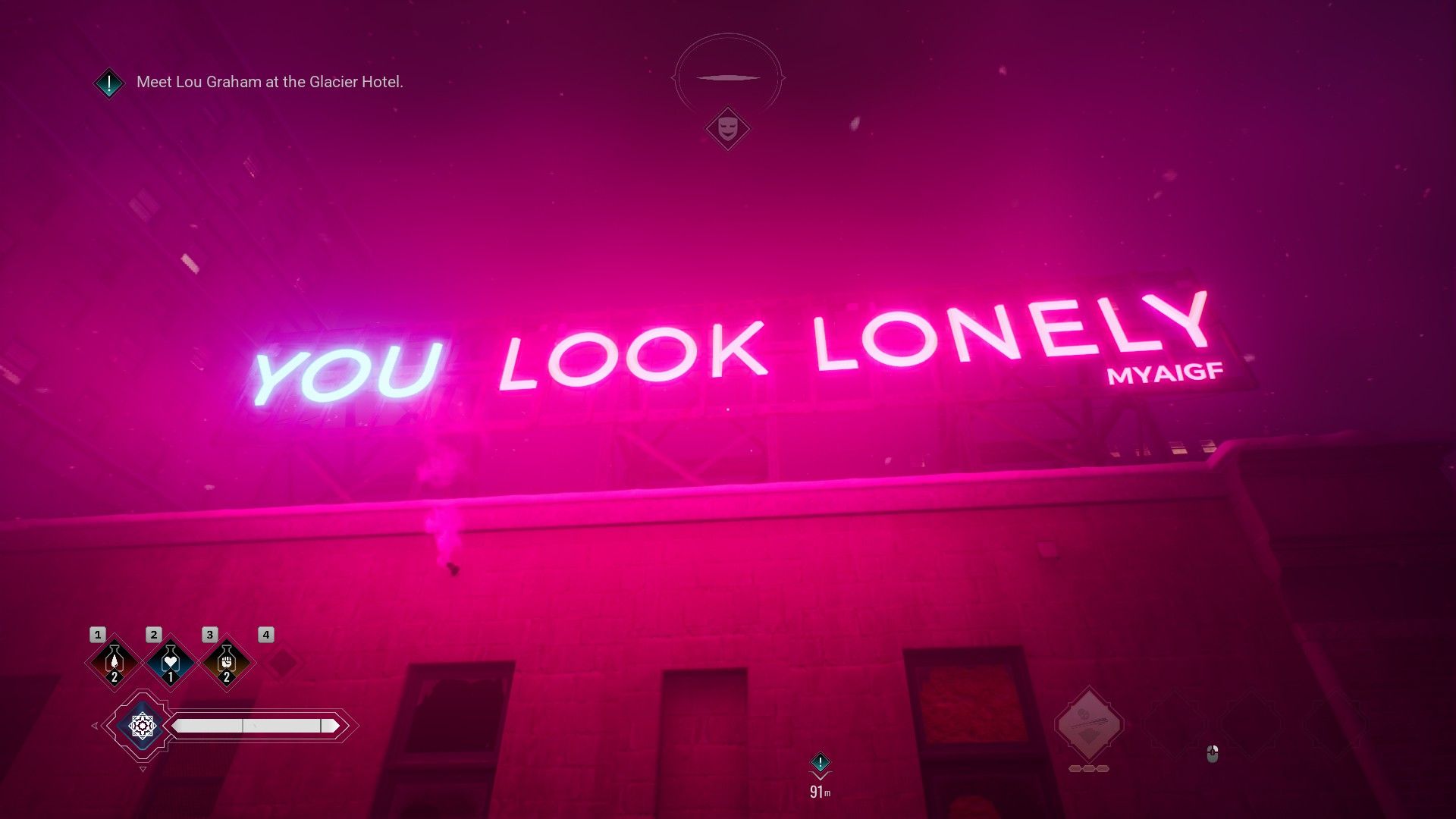
I have mixed feelings when it comes to Seattle, the main setting of the game. It's a city that can impress with its appearance, and I appreciate that it's appropriately self-contained (a bit like Kamurocho in the Yakuza series). This allows you to fully focus on a few locations and really remember them. Seattle is snowy and depressing, yet filled with the colors of neon lights and advertisements from nearby shops - a fascinating contrast that enhances the vampire atmosphere (especially when soaring over the city's rooftops). Everything is well contrasted: shadows are deeper, alleys more dangerous, fog thicker, and the night darker. The buildings that interest us stand out from the surroundings, and you can see that the action takes place in them.
At the same time, while walking around the city, I constantly had the impression that it is sometimes empty, and after a while, we just move indifferently between a few buildings, not even paying attention to the passersby who keep repeating the same lines. Of course, the locations in VTM:B were not overwhelming either, but I feel that the developers could have done more to enhance the impression of a "living city," especially with today's technologies and capabilities. Yes, the city reacts slightly to how the atmosphere changes, but at the same time, I feel like the game just adds additional enemies here and there.
Vampire: The Masquerade – Bloodlines 2, The Chinese Room, 2025
The graphics are also an element that doesn't always work. For instance, the UI is too simple, and it's the first thing we see when we start the game.
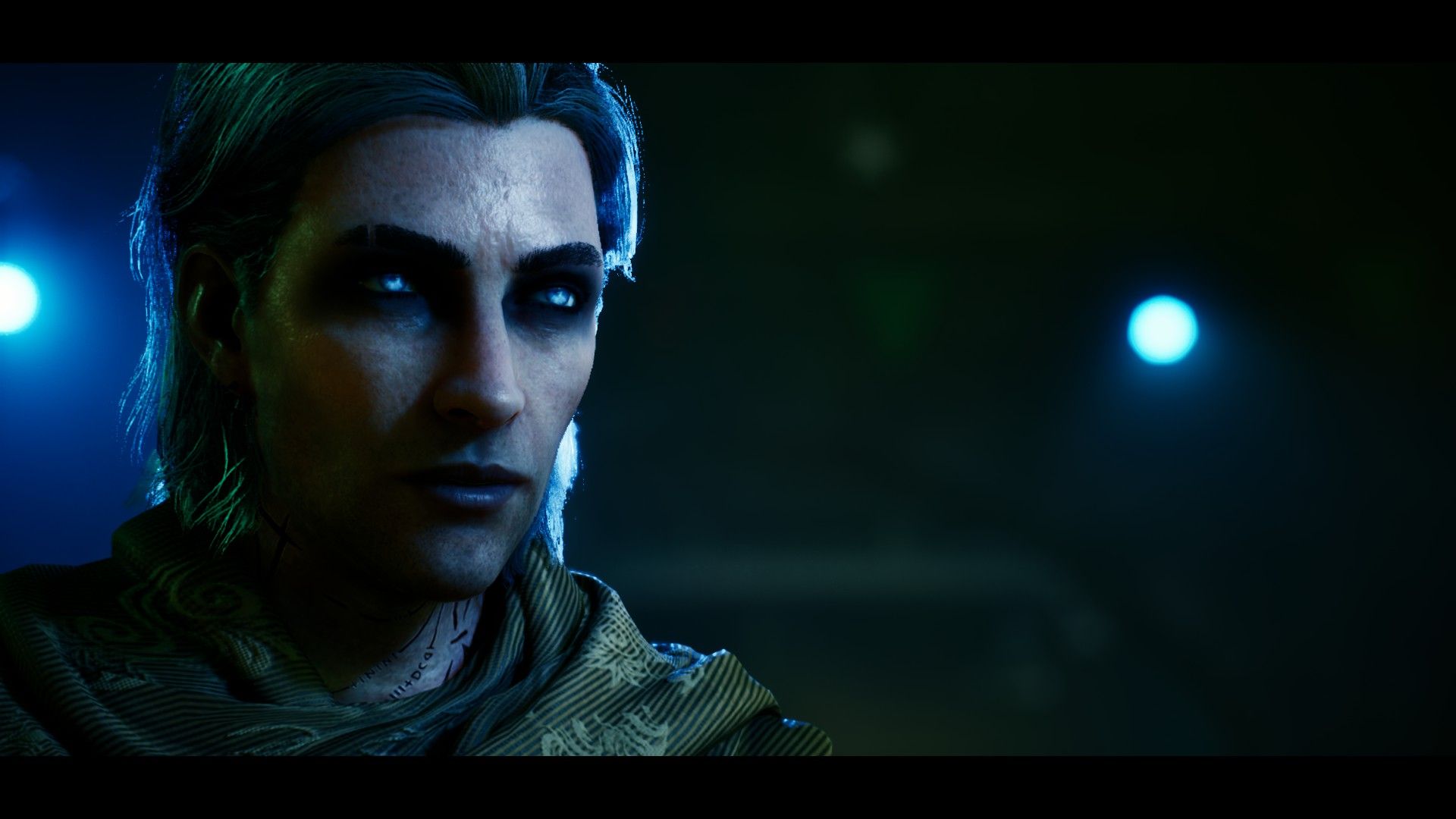
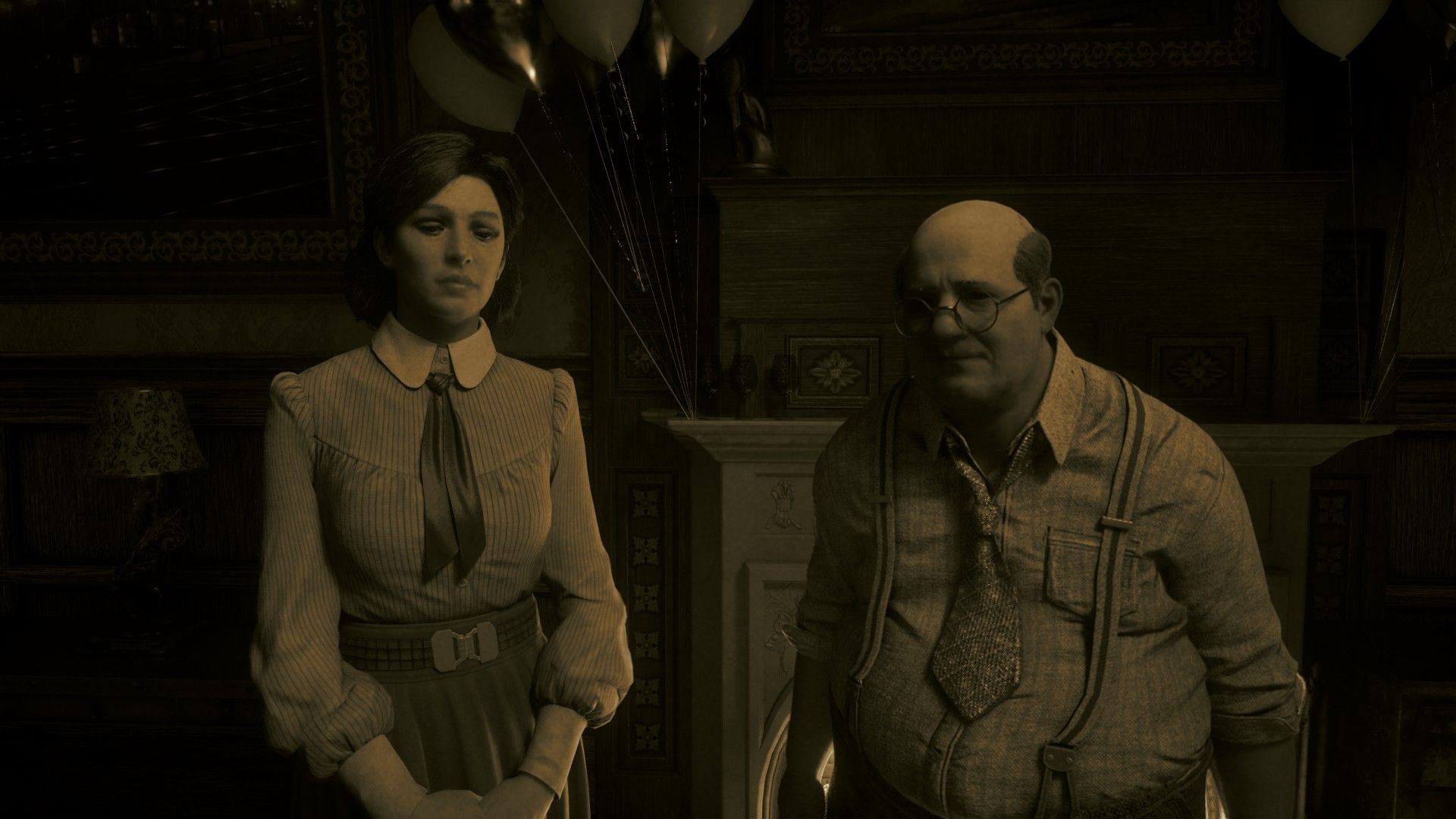
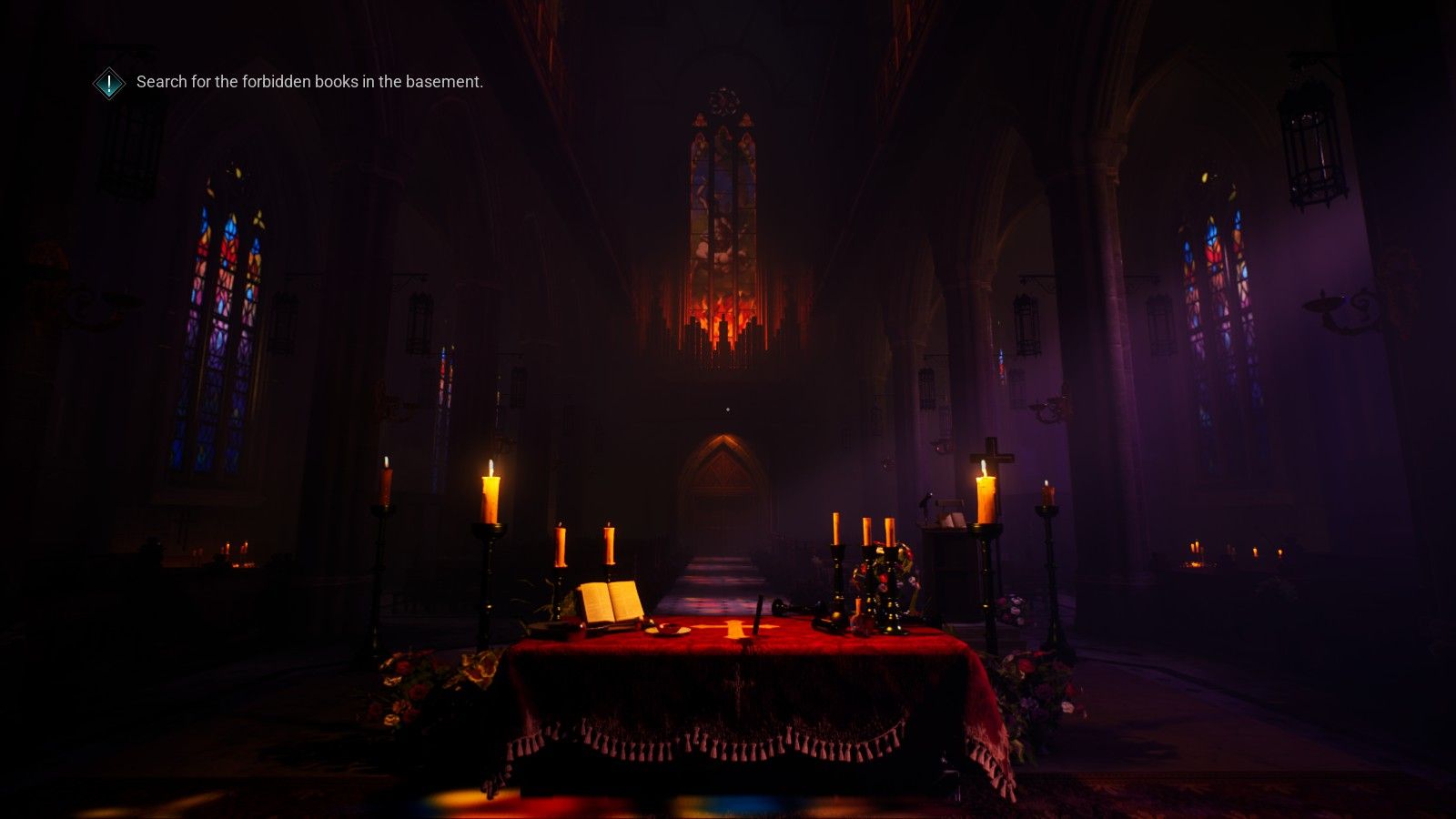
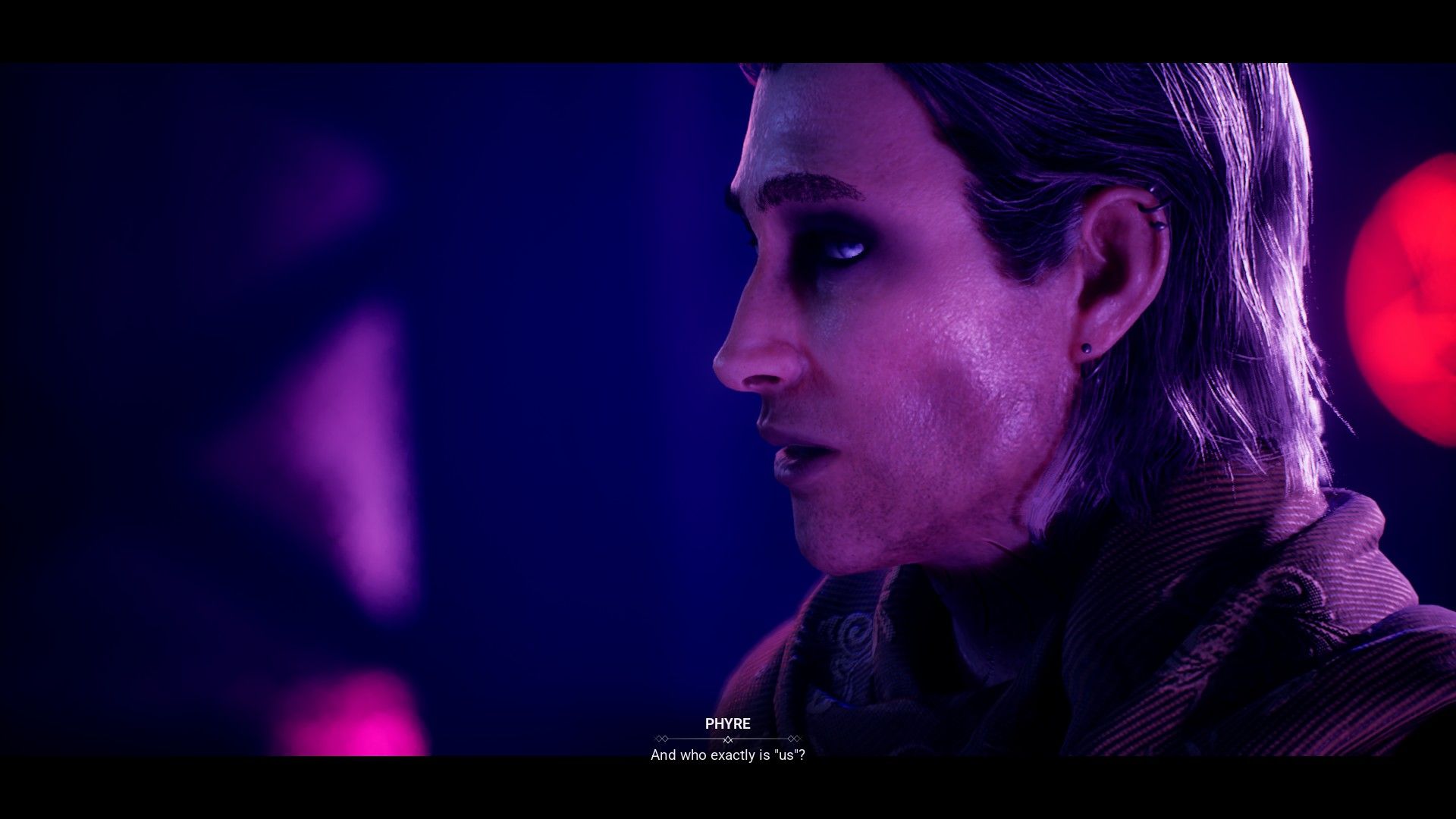
However, as I mentioned, the city has moments when it looks phenomenal, especially bathed in neon lights or when we are near important buildings. The cathedral impressed me the most, where colorful light from stained glass stood out in the darkness, or the beautifully decorated and lit altar. The characters look great in cut-scenes - the sharp, atmospheric lighting builds the mood, and I admit that I often found myself taking screenshots of a given scene. Close-ups of characters during these moments also turned out well.
However, once you step out into the city and take a closer look at random passersby or examine character models outside of cut-scenes, they don't look as good. The faces are a bit janky and plastic, sometimes textures overlap or some elements aren't quite well executed. After some time playing, you start to recognize all the models, so enemies and passersby look the same, regardless of when you encounter them. The buildings also repeat the same few models, which is apparent after a while, especially if you're moving across rooftops. The graphics overall are serviceable, but I constantly had the feeling that something is missing and it could be done "better."
Vampire: The Masquerade – Bloodlines 2, The Chinese Room, 2025
As for the music, it's quite good: ambient sounds accompany us during our journey in the open world, and in some locations and places, we have full tracks. It's worth mentioning that some of them were composed by none other than Rik Schaffer, the creator of the soundtrack for VTM:B. It's good, but again – it could be better, especially compared to the timeless soundtrack of the first game. I miss tracks from various bands or greater diversity in locations, as well as that "grittiness" associated with Vampire. It might also be a matter of the different eras in which both games were created and how the nature of composing music has changed, but the tracks in the new vampire game are definitely "softer," and not always as dark as they could be.
- Interesting story and plot, as well as well-made characters (designs, voice acting);
- dark atmosphere and mood pouring out of the screen;
- the Nomad/Fabien duo is really great;
- good-looking cut-scenes.
- Chaotic combat as the main solution to conflicts, lack of ability to solve tasks in your own way;
- mediocre side quests, and in fact, a lack of "classic" side quests;
- the city feels empty, with cardboard passersby;
- dull UI design;
- simple leveling system;
- lack of soft skills;
- no fast travel and classic save system.
So, what's it like to be an elder vampire?
Now we come to the core of the review, which is the gameplay, one of the most controversial aspects of the entire VTM:B2, because it really varies here.
At the beginning of the game, we choose one of the available Clans, which partially influences our gameplay - mainly the Disciplines we receive at the very start. We can choose a more brutal or more manipulative path. However, if it turns out that not every skill suits us, it's not a problem because we have the opportunity to learn other Disciplines from teachers. Unlike the tabletop RPG, the specific variants of Disciplines are predetermined, and apart from choosing between different Clans, we don't have much room for customization, so the skill tree is very simple by standard measures.
Disciplines require us to carefully manage blood points, which we gain after feeding or by drinking blood from bottles. Our blood pool is immediately distributed among the disciplines, so there is no option to freely choose them as was the case in VTM:B. We cannot use the same skill twice in a row without feeding again (even multiple times if we used a higher-level skill).
Vampire: The Masquerade – Bloodlines 2, The Chinese Room, 2025
Unfortunately, our Disciplines are focused mainly on combat and how we can defeat our opponents. We can manipulate the minds of our enemies to make them attack each other, hide in their shadows, or deliver quick strikes. All of this is related to how we can resolve conflicts in the game, and there is only one way – combat. The game does not give us the option to persuade someone to our point of view or to sneak in without alerting anyone. If there are enemies in a location, we must get rid of them using our strength or skills – this is really the only place where we get a small portion of stealth and alerting enemies, to carefully choose who to eliminate first. Even if we want to outsmart our opponents by using elements of the environment to lure them away from the area they are guarding, the game effectively stops us at a door with a lock we cannot open because "there are enemies nearby."
I admit that it was frustrating, especially since combat is not one of the most enjoyable elements of the game. Despite playing as a powerful vampire, it often happens that two or three guys can throw us off balance and simply kill us, staggering the character with each subsequent hit. Parrying, unfortunately, is not easy and often doesn't work, causing more harm than good. Although we have unlimited stamina for dodging, the lack of a lock-on means that we can often dodge in the wrong direction and simply fall off a roof. Only well-developed Disciplines slightly enhance the combat experience, but battles are not the game's strong suit. Especially when it throws wave after wave of enemies at you.
Vampire: The Masquerade – Bloodlines 2, The Chinese Room, 2025
Phyre also cannot wield any weapons, fighting exclusively with fists and their Disciplines. However, they can use telekinesis skills to pull enemies or their weapons towards the player and use them against the foes, which is often useful in critical situations.
I admit that what I miss most in the gameplay is the lack of "soft" and more social skills. We can't distinguish our vampire from ordinary thugs, who instead of defeating the opponent's guards may simply convince them to let us inside. I also miss skills known from VTM:B and the tabletop RPG, such as hacking, history knowledge, or leadership, which could further influence not only our conflicts but also how our Nomad is presented.
Leveling up in the game is straightforward – we earn experience points for completing quests, killing opponents, or successfully escaping from them. We can mainly use these points to learn new Disciplines, which we unlock by talking to teachers. However, learning is not free, as we need to use a certain number of blood points with choleric, sanguine, and melancholic resonance, which we obtain from appropriately manipulated mortals. We induce their emotional state with the right outfit, statement, or simply by chasing an already "emotional" opponent. This is an interesting solution because it allows us to guess a bit about what attire will affect a businessman and what will affect a gang member.
Vampire: The Masquerade – Bloodlines 2, The Chinese Room, 2025
We gain experience by completing both main and side quests. However, it's hard to even call them side quests. These tasks are more about finding opponents, collectibles, or delivering packages rather than completing an actual task with some narrative context. I must admit, I was quite disappointed here because the side quests in VTM:B were really interesting, and I still remember some of them fondly. Here, we just have repetitive activities.
Some solutions in terms of mechanics are also surprising – there's a lack of features like lock-on or fast travel. And although as Phyre we have the ability to run fast, double jump, or glide over the rooftops of Seattle, these are only small conveniences that make life slightly easier. As a vampire, we also have to maintain the Masquerade, which is an organized conspiracy to hide the existence of vampires from humanity. We cannot use our abilities or feed in front of people, as it would cause panic, ultimately leading to our death at the hands of the vampire enforcers. However, this is sometimes inconsistent, as I have fallen from a kilometer-high skyscraper without any reaction from mortals. Also, in the later stages of the game, breaking the Masquerade doesn't entirely depend on us, yet we still get affected by it.
Vampire: The Masquerade – Bloodlines 2, The Chinese Room, 2025
Additionally, there is a lack of a classic save system here. Saving is done automatically before quests, after dialogues, or sometimes after feeding. I often found myself wanting to check a different dialogue option and carelessly loaded the game, only to go back a significant portion of the game. Of course, this also affects when you want to finish the game to avoid losing valuable progress. As a gamer who likes to explore different character reactions (often not to choose the best one, but just for fun), this was a bit inconvenient for me.
As for technical issues, I encountered a few, but they were not game-breaking bugs. Once I fell out of the map, sometimes enemies got stuck in textures, or voices were swapped. These bugs occasionally broke the immersion, but they were not things that couldn't be fixed with a patch or two.
VERDICT:
Is Vampire: The Masquerade: Bloodlines 2 a worthy successor to the first game? Yes and no. It is an interesting game with many good features, but it is also riddled with problems and strange gameplay solutions.
Find all our reviews on Metacritic, Opencritic, and CriticDB.
Final thoughts
The game's strong point is its story and characters. It's clear that the developers want to engage us with the world and setting because the World of Darkness is truly intriguing. And they really had fun with it. They did a phenomenal job here, and if I were to rate the game solely on this basis, the score would be high.
Unfortunately, the problems that appeared at the start make it the fly in the ointment. I often pushed through the mechanics just to find out what awaited me at the end of the story, not because I was interested in just playing the game. However, I haven't lost hope, because VTM:B was also full of chaos and shortcomings before modders got their hands on it. I hope that VTM:B2 will have a similar outcome and after a few years of fan love, this game will also have the chance to achieve immortal status, because the foundations of the story are good. For now, VTM:B2 is an average game worth playing to get to know the story, but only when it becomes significantly cheaper.


Vampire: The Masquerade - Bloodlines 2
Vampire: The Masquerade - Bloodlines 2 review: Not a worthy successor, yet still intriguing
Is Vampire: The Masquerade: Bloodlines 2 a worthy successor to the first game? Yes and no. It is an interesting game with many good features, but it is also riddled with problems and strange gameplay solutions.
 Izabela Budzynska
 PC Windows