Donkey Kong Bananza review: Big, bold, and smashingly good
Nintendo’s brought Donkey Kong back to the spotlight in the best way possible—by staying true to what made the series great while boldly breaking new ground.
The review is based on the NS2 version.

Right from the jump, Donkey Kong Bananza eases you into its mechanics by dropping you into an underground area and pointing you toward a shiny banana just a few feet away. But instead of grabbing it, I spent a solid 30 minutes smashing everything in sight—floors, walls, ceilings—collecting all the gold that spilled out of every chunk of dirt and stone I broke apart. Thirty. Whole. Minutes.
That irresistible urge to dig, to see what’s behind every wall or hidden under every patch of soil, is exactly what makes Bananza so hard to put down. It taps into the same exploratory joy that made Super Mario 64 and Banjo-Kazooie iconic, but with just enough modern flair to feel new again. Donkey Kong Bananza doesn’t just tweak the formula—it reshapes it, literally, and the result is one of the freshest takes on the platforming genre in years.
Exploration through Destruction
A big part of why breaking everything around you feels so good is because it also feels so freeing. Older Donkey Kong games were tightly designed platformers with precision jumping and level-specific gimmicks. This one? It leans more into the spirit of Super Mario Odyssey, giving you more control over how and where you explore.
In fact, this same team has managed to craft a platformer that even goes beyond what Odyssey offered. You’re not just exploring—you’re shaping the world itself, and it’s all in your massive gorilla hands. Bananza mixes familiar DK names, characters, and elements with 3D Mario-style freedom, and then adds its own unique flavor that makes it shine as a full-fledged action-platformer in its own right.
Donkey Kong: Bananza, Nintendo, 2025
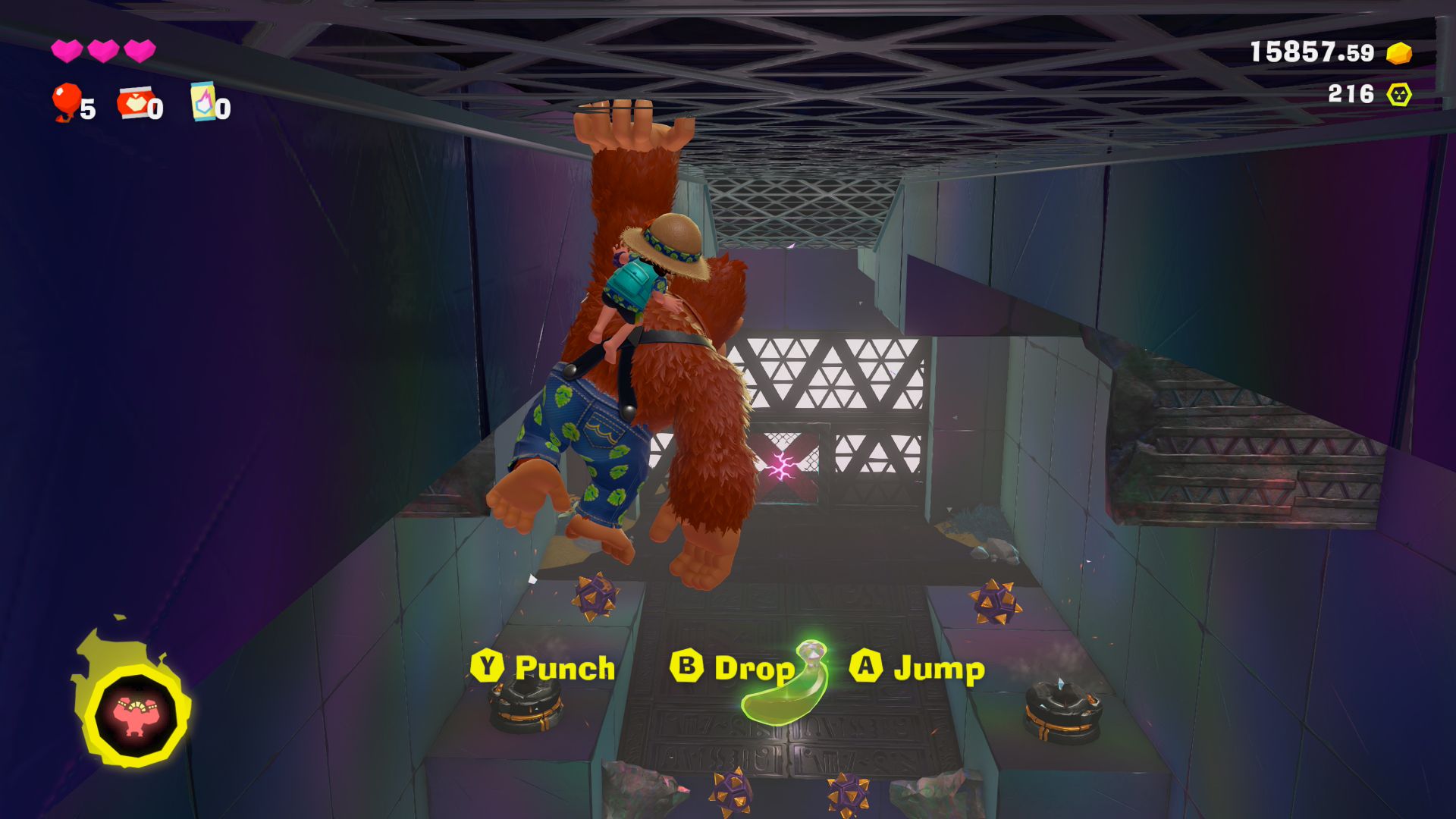
Just the ability to reshape the environment opens up so many possibilities. Instead of looking for a door or a key, you can just punch your own entrance through a wall. It’s a mechanic that ties directly into the game’s puzzle design—sometimes you’ll think you need a specific item to reach a banana, but really, all you need is creativity and a different approach.
The developers also probably expect you to try and “break” the game. They want you to experiment and push the mechanics to the limit. Each map includes a kind of unbreakable metal skeleton that keeps things grounded, letting you tear things apart without completely destroying the level’s structure. And if you get carried away, you can always reset the map to its original state with no problem.
Donkey Kong: Bananza, Nintendo, 2025
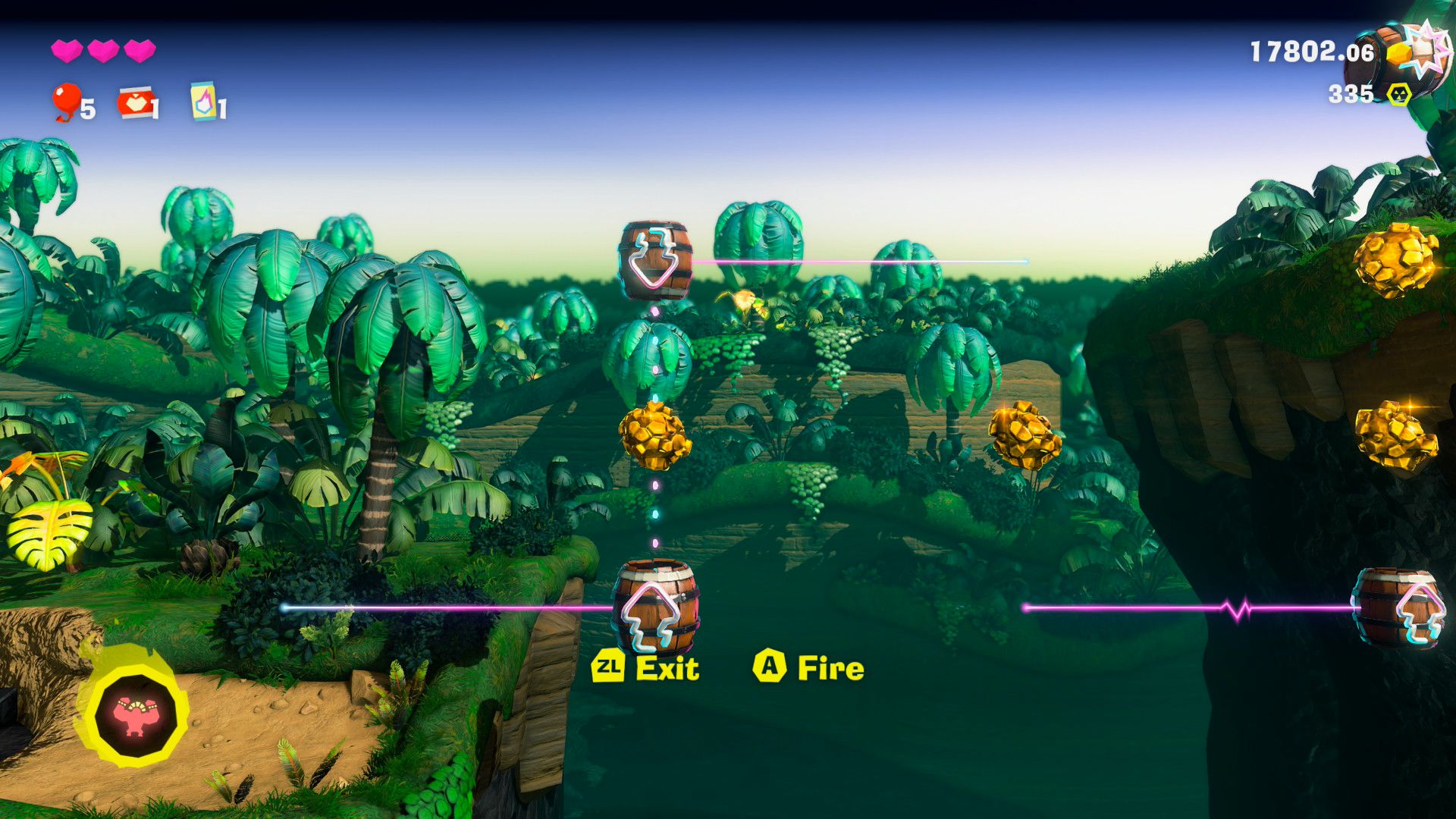
That said, where the game does show a few cracks is in the framerate. For the most part, Bananza looks and runs great, especially for a game with this much going on, but when you zoom out too far or trigger too much destruction during a boss fight or an explosion-heavy moment, the game can stutter. It’s a bit of a shame that one of the first Switch 2 titles is already pushing the hardware to its limit, but thankfully these moments are rare and don’t disrupt the flow too much.
Journey to the Center of the Earth
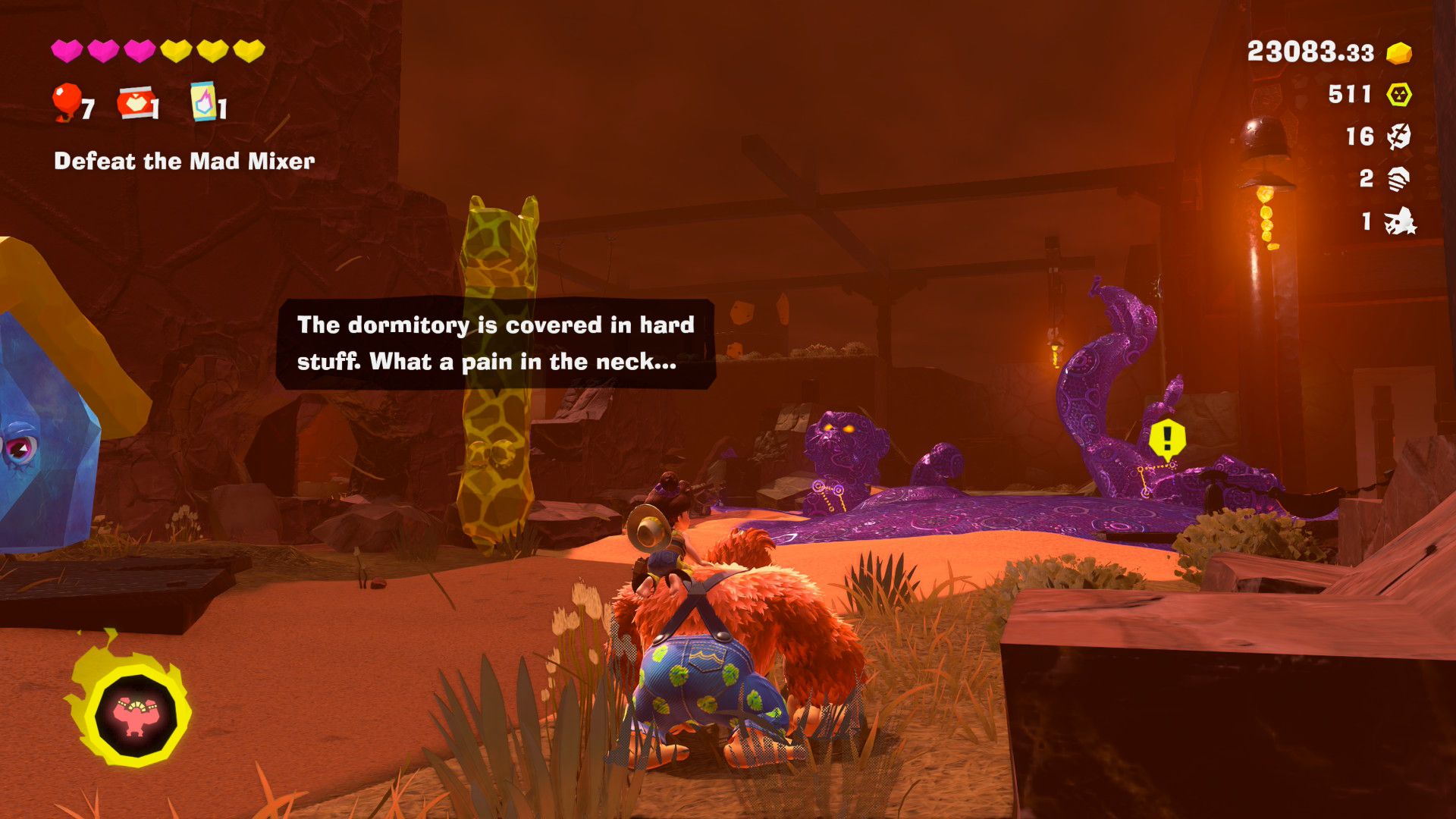
As DK and Pauline dive deeper underground in search of a way back home, you’ll find yourself pulled into a surprisingly engaging story that gives real structure to all the chaos and destruction. Each level takes place deeper below the surface, but every world acts as its own fully realized biome—complete with its own skies, oceans, terrain, and creatures to help or hinder you. The game never explains why there are meadows, stormy mountains, or oceans under the earth, but you’ll be too busy exploring to care.
The ultimate goal is to reach the Banandium Root at the center of the Earth, which can grant a wish to anyone who finds it. That objective keeps the story moving, but once you land in a world, chances are you’ll get happily sidetracked just seeing what it has to offer.
Donkey Kong: Bananza, Nintendo, 2025
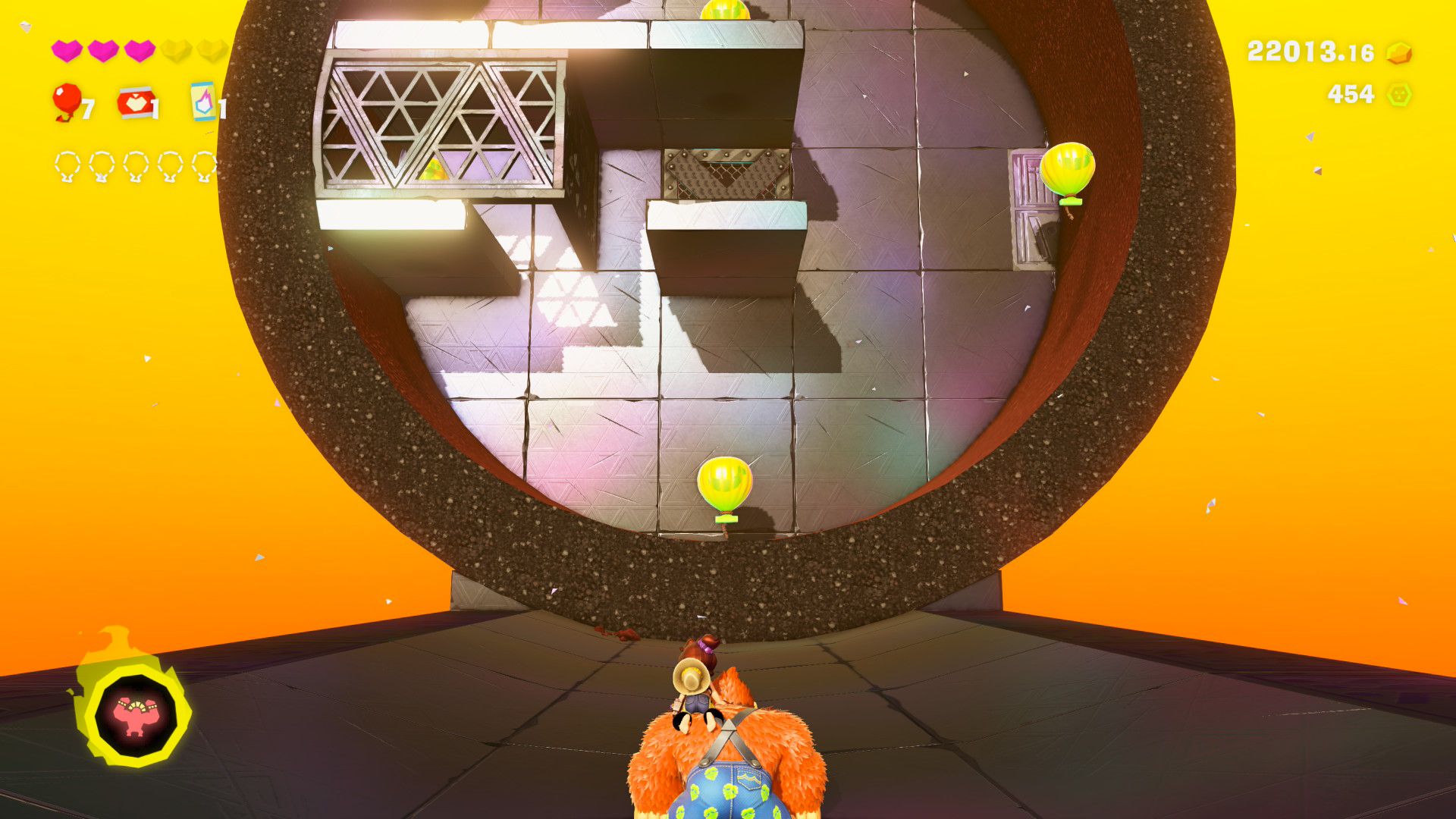
You’ll mainly be hunting down Banandium Gems—essentially, bananas—which function like Odyssey’s Moons. Some are cleverly hidden, others are tucked away in plain sight, and many of them can be discovered just by messing around and exploring. If you want to be a bit more efficient, DK’s ground slap works like a sonar ping that reveals bananas hidden nearby.
You’ll also find fossils scattered around, which act as a form of currency. You can trade these in for outfits for DK and Pauline, and each outfit can give you passive resistances or buffs depending on the world you’re in. It’s a fun extra layer that encourages you to explore each biome thoroughly, but it never gets in the way if you’re more focused on progressing.
Donkey Kong: Bananza, Nintendo, 2025
The best part is Bananza never forces you into a particular playstyle. Whether you want to fully explore each world or charge ahead to the next boss, it lets you set your own pace—and rewards you either way.
- Creative world-shaping mechanics make exploration feel fresh and empowering;
- a charming story and heartfelt character development elevate the adventure;
- massive, varied biomes are packed with secrets, collectibles, and surprises;
- nostalgic yet modern soundtrack complements every moment perfectly.
- Occasional framerate dips during large-scale destruction or boss fights;
- boss battles are mostly short and not particularly challenging in the beginning.
DK Powered Up
In addition to bananas being collectibles, they also serve as a way to upgrade DK himself. For every five you collect, you earn a skill point, which you can use to improve existing abilities or unlock entirely new ones. I focused first on punching strength to break through terrain faster, but you can easily tailor your skill path to suit your own playstyle.
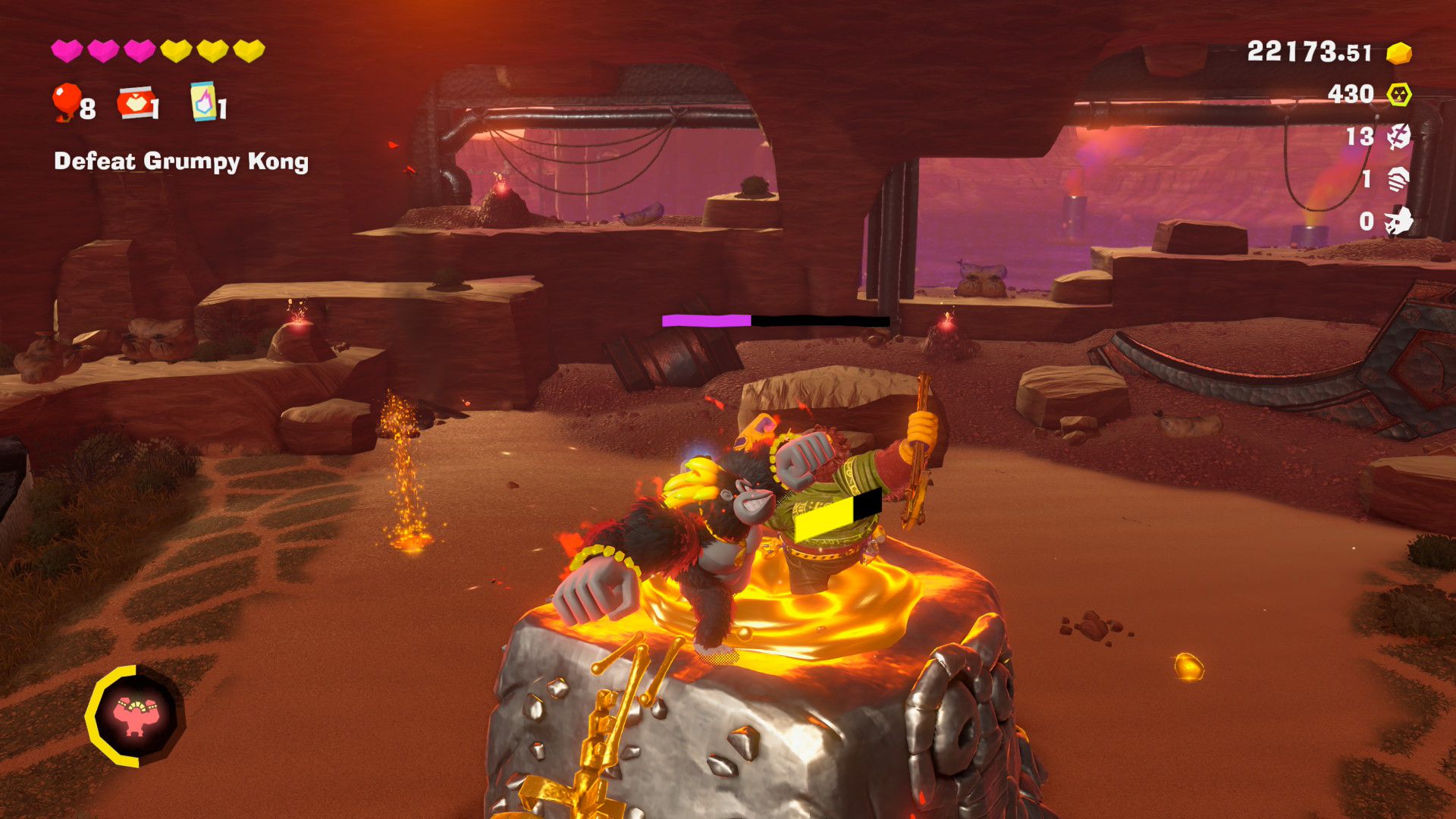
The game also isn’t especially difficult, and many of the bosses can be beaten fairly quickly, but there’s also an accessibility option available if you need some extra help or want a more relaxed experience. Bosses do get progressively trickier as you play and challenge you to use all your learned skills and resources to beat them, but the first few bosses you will face are a cake walk in comparison.
Donkey Kong: Bananza, Nintendo, 2025
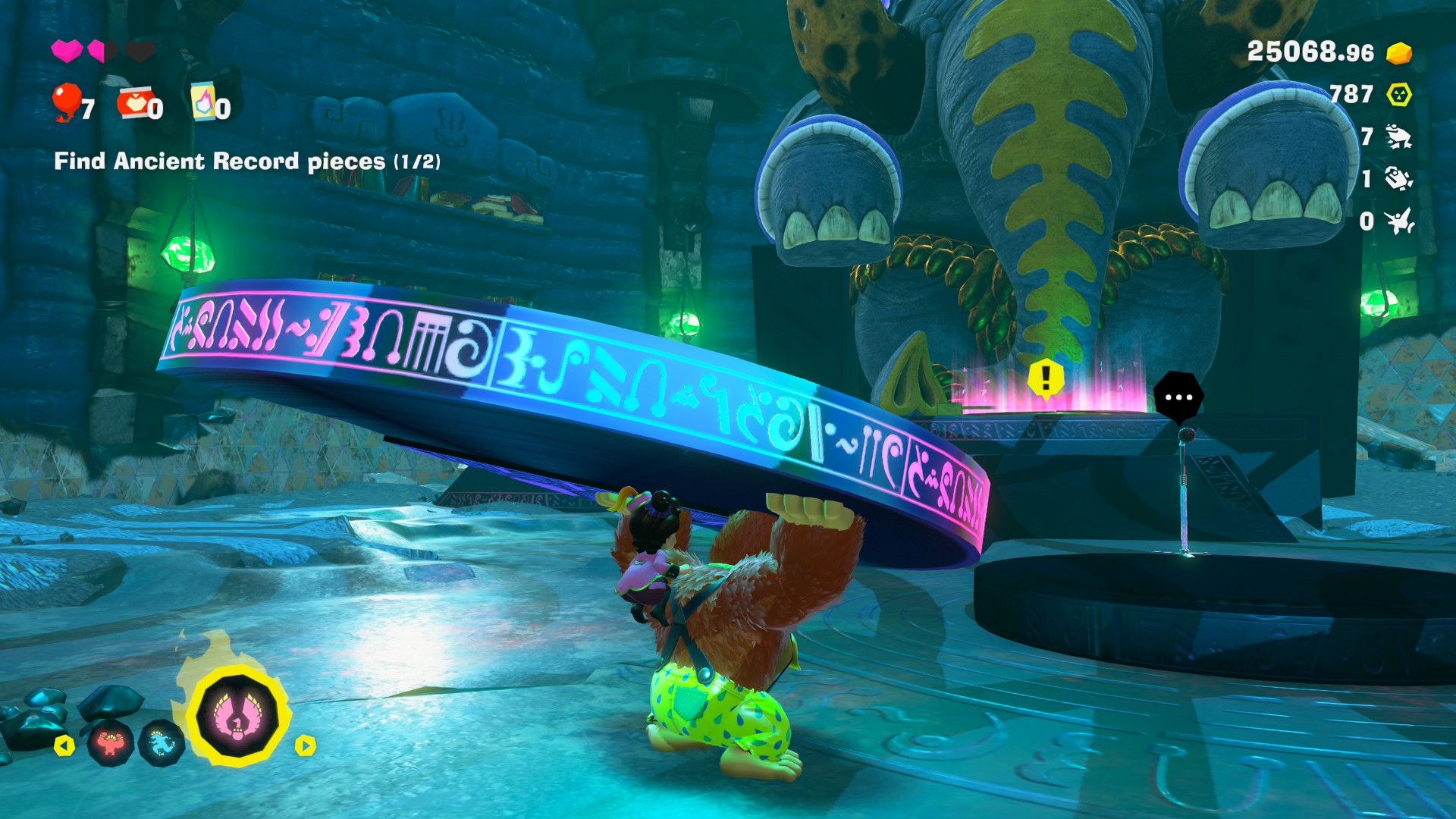
Throughout the story, DK also gains special Bananza Powers that let him transform into different animals, each with its own unique powers. These forms are essential for completing the story, but they also open up new ways to explore. Utilizing the Elephant Bananza to vacuum up your surroundings in a jiffy was a timesaver, and being able to flap your wings for a bit to reach new heights with the Ostrich Bananza made exploration even easier.
These transformations are more than just gimmicks—they’re tools that deepen the way you interact with the environment. And they’re fun. Really fun.
Friendship Through Hardship
What makes Bananza even more memorable is how it builds the relationship between DK and Pauline. They’re an unlikely pair at first, but their journey through the underground binds them together in ways that feel genuine and touching.
Everyone in the game is voiced, but while the underground denizens speak in charming gibberish, Pauline speaks actual dialogue in your system’s default language. That gives us direct insight into what she’s feeling—and also means we get to hear her sing. Her voice plays a key role in transforming DK into his Bananza forms and in unlocking certain obstacles.
Donkey Kong: Bananza, Nintendo, 2025
Pauline herself also grows throughout the game. What starts as a quiet, timid character slowly becomes a braver, more confident version of herself, especially as she confronts the greedy villains of VoidCo., who want to hoard all the gold for themselves. The game does a great job of showing her evolution through cutscenes and small in-game moments—like the conversations she has with DK at rest stops, just before they drift off to sleep. These quiet scenes add a depth and humanity you rarely see in Nintendo platformers, and by the time the story wraps up, the bond between DK and Pauline feels earned and emotional.
VERDICT:
Donkey Kong Bananza blends new ideas with the series’ core DNA to create something that's not only incredibly fun, but hard to put down. It’s not just a great Donkey Kong game—it’s a must-have title, and a reason all on its own to pick up a Switch 2.
Find all our reviews on Metacritic, Opencritic, and CriticDB.
Final Thoughts
Donkey Kong Bananza is an absolute joy from start to finish. Each world is overflowing with things to collect, break, or challenges to master, and even after the credits roll, there’s still plenty left to discover. While the game is primarily a single-player experience, a second player can jump in to control Pauline and provide support with vocal-based attacks.
The soundtrack deserves a shout too. It blends remixes of classic DK tunes with original compositions that fit each world perfectly. It’s nostalgic in all the right ways, but never leans too hard on the past.
All in all, Bananza is exactly what Donkey Kong needed—a bold, ambitious return that proves the series deserves to stand shoulder to shoulder with Nintendo’s biggest franchises. It combines freeform exploration with creative destruction and top-tier presentation, making full use of the Switch 2’s capabilities. Sure, the framerate stumbles here and there, but it never derails the experience.
More importantly, Donkey Kong Bananza blends new ideas with the series’ core DNA to create something that's not only incredibly fun, but hard to put down. It’s not just a great Donkey Kong game—it’s a must-have title, and a reason all on its own to pick up a Switch 2.


Donkey Kong: Bananza
Donkey Kong Bananza review: Big, bold, and smashingly good
Donkey Kong Bananza blends new ideas with the series’ core DNA to create something that's not only incredibly fun, but hard to put down. It’s not just a great Donkey Kong game—it’s a must-have title, and a reason all on its own to pick up a Switch 2.