"Balancing ambition with polish has been our greatest challenge." Interview with the Co-Founder and Project Director of Blind Descent
Recently, I had the opportunity to send some questions to Emrehan Şeyihoglu, the co-founder and project director at Pokuch, a studio working on an exciting new survival crafting game called Blind Descent.

Blind Descent is set in a strange underground alien world on the planet Mars and draws inspiration from classic novels by Jules Verne, such as Journey to the Center of the Earth. The environments are full of vibrant alien flora and fauna that behave in unexpected ways. But that’s not all, players will need to learn to adapt in unique ways to survive.
There’s still a lot to learn about Blind Descent, the game hasn’t announced an Early Access release date until sometime next year. But hopefully, some of these questions help paint a picture of what to expect. If you’re interested, you can request access to the playtest now on Steam for a chance to get an early look.
My conversation with Seyihoglu took place over email, but we still managed to cover a wide range of great topics, from why they’ve decided to launch in Early Access, what kinds of mechanics to expect, and how its four-player co-op will work. Here’s the interview:
Matt Buckley: If you don’t mind, could you introduce yourself to our audience? Who are you? What is your role on the team? How long have you been working with Owlcat, and how long have you been working on Blind Descent?
Emrehan Seyihoglu: I’m Emrehan Seyihoglu, Co-Founder and Project Director at Pokuch. I oversee everything from high-level vision and world-building to coordinating our art, design, and engineering teams. We partnered with Owlcat Games in early 2025, and I’ve been working closely with their publishing and marketing team ever since. Development on Blind Descent began in mid-2019, so I’ve been steering the project from its very inception: nearly three years of designing, prototyping, and polishing the experience you’ll see in Early Access next year.
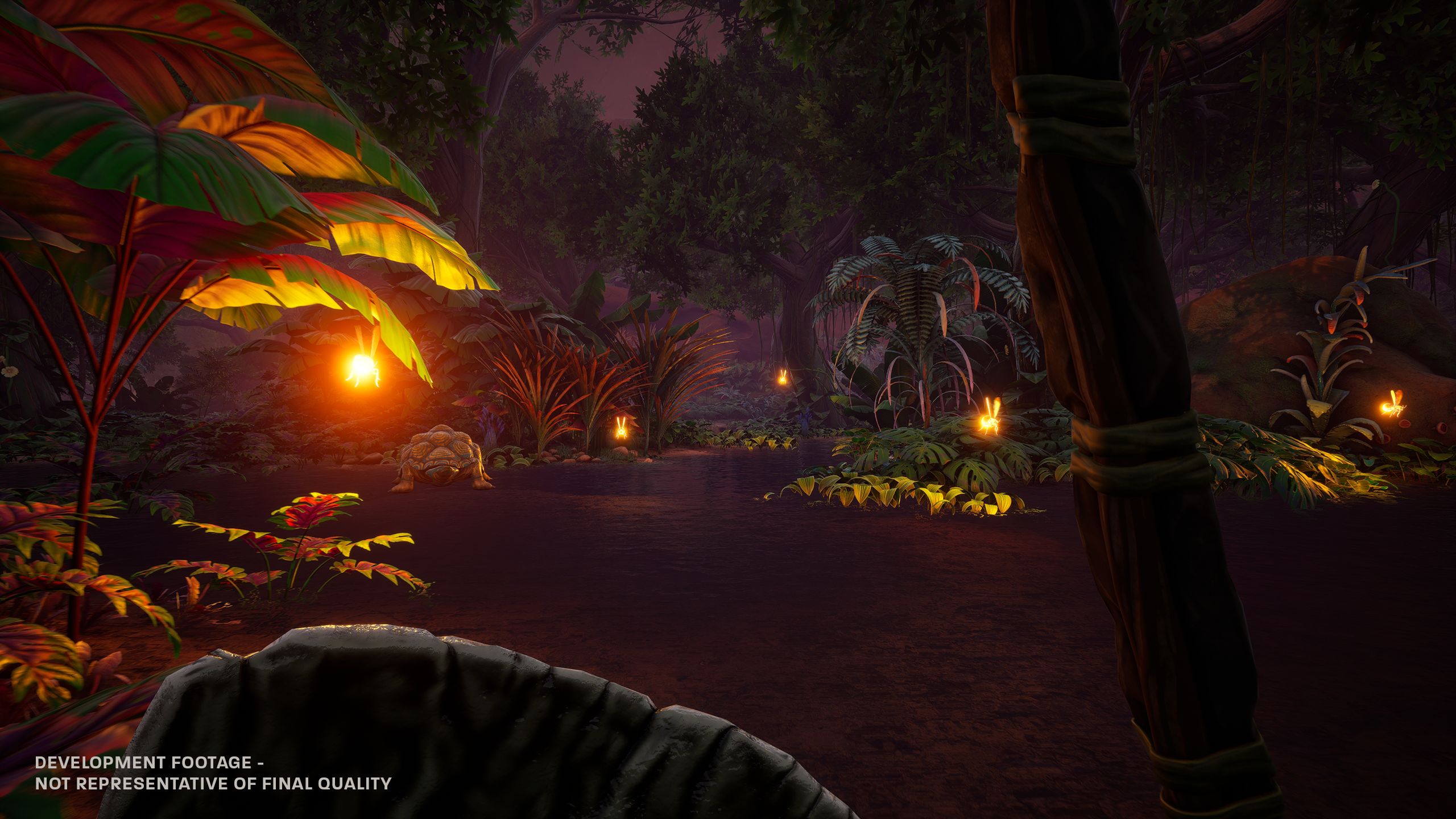
Blind Descent, Pokuch, 2025
MB: I’ve read that a few inspirations for Blind Descent include Jules Verne (Twenty Thousand Leagues Under the Sea, Journey to the Center of the Earth) and the animated show Scavenger’s Reign. Additionally, Jon Juarez, the production designer on Scavenger’s Reign, also contributed to the creation of some art for this game. What has it been like using these other, more traditional mediums for inspiration for an interactive format like a video game?
ES: Drawing from novels and animation has been immensely rewarding. I’ve read Jules Verne books as a child, and inspired by his stories, we wanted to show in the game how fantastical ideas can be grounded in plausible science, so our tools and ecosystems always feel discoverable and logical. Scavengers Reign showed us how to fuse atmospheric storytelling with a sense of constant and creeping wonder, the bizarre elements you don’t yet understand but are compelled to explore. Working with Jon Juarez has tightened that bridge between art and play: the key visuals capture the eerie majesty of our subterranean world and, at the same time, showcase its dangers. Everything mentioned keeps us honest, because every creature, every cave, needs both narrative purpose and gameplay function.
Fun fact: aside from Jules Verne’s works, one of our inspirations was Ice Age: Dawn of the Dinosaurs. Watching that film first sparked the idea of a hidden world beneath the surface.
MB: Those are some really great inspirations, but I am also curious if any particular video games influenced the team as well?
ES: Definitely, we drew inspiration from Subnautica, Ark, and Grounded. While we aim to deliver that same sense of adventure and fun, we’re also introducing a new, fresh experience.
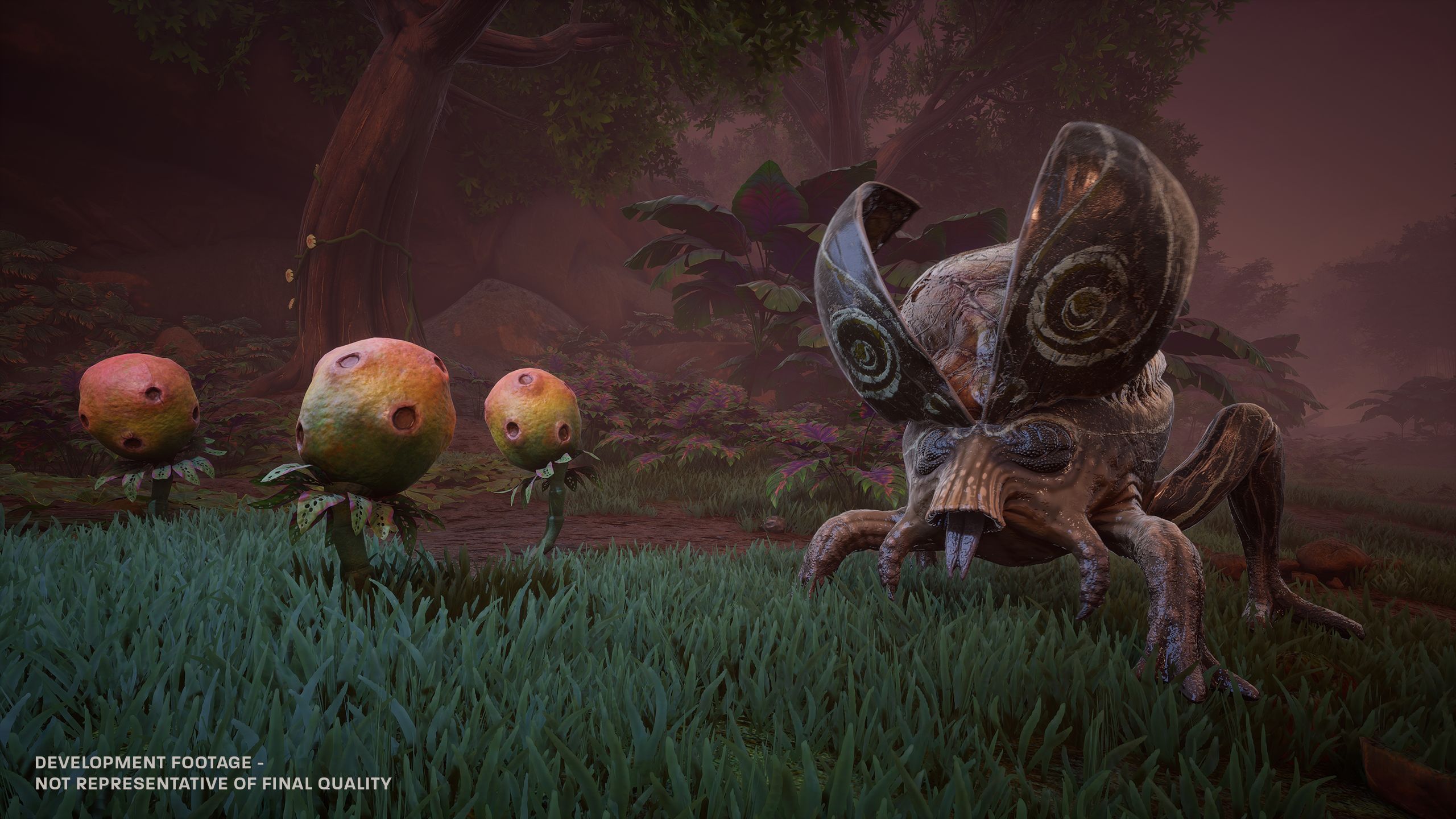
Blind Descent, Pokuch, 2025
MB: Blind Descent’s announcement trailer teases that “becoming part of the ecosystem is essential.” Maybe it’s too early to speak about this, but it does make me think of a Metroidvania in some ways, where gaining new powers allows you to access new areas or resources. What kinds of ways will players be able to become “part of the ecosystem?” Will it be traversal? Other powers? Or all kinds of things?
ES: Actually, it’s all of the above working together. On one hand, the player will unlock various mutations with some granting new traversal methods or easing access to certain areas, as you saw in the trailer. We also expect players, by studying the ecosystem, to uncover entirely new abilities. For example, a mutation that enhances your lungs lets you hold your breath longer. But if you find another way to extend your underwater time, you can set up another mutation, which perhaps will help you to explore previously unreachable caverns or simply move between regions more quickly. We’ll also include tools for vertical movement, such as grappling hooks. Additionally, we’ll be sharing more about our novel Symbiosis System soon.
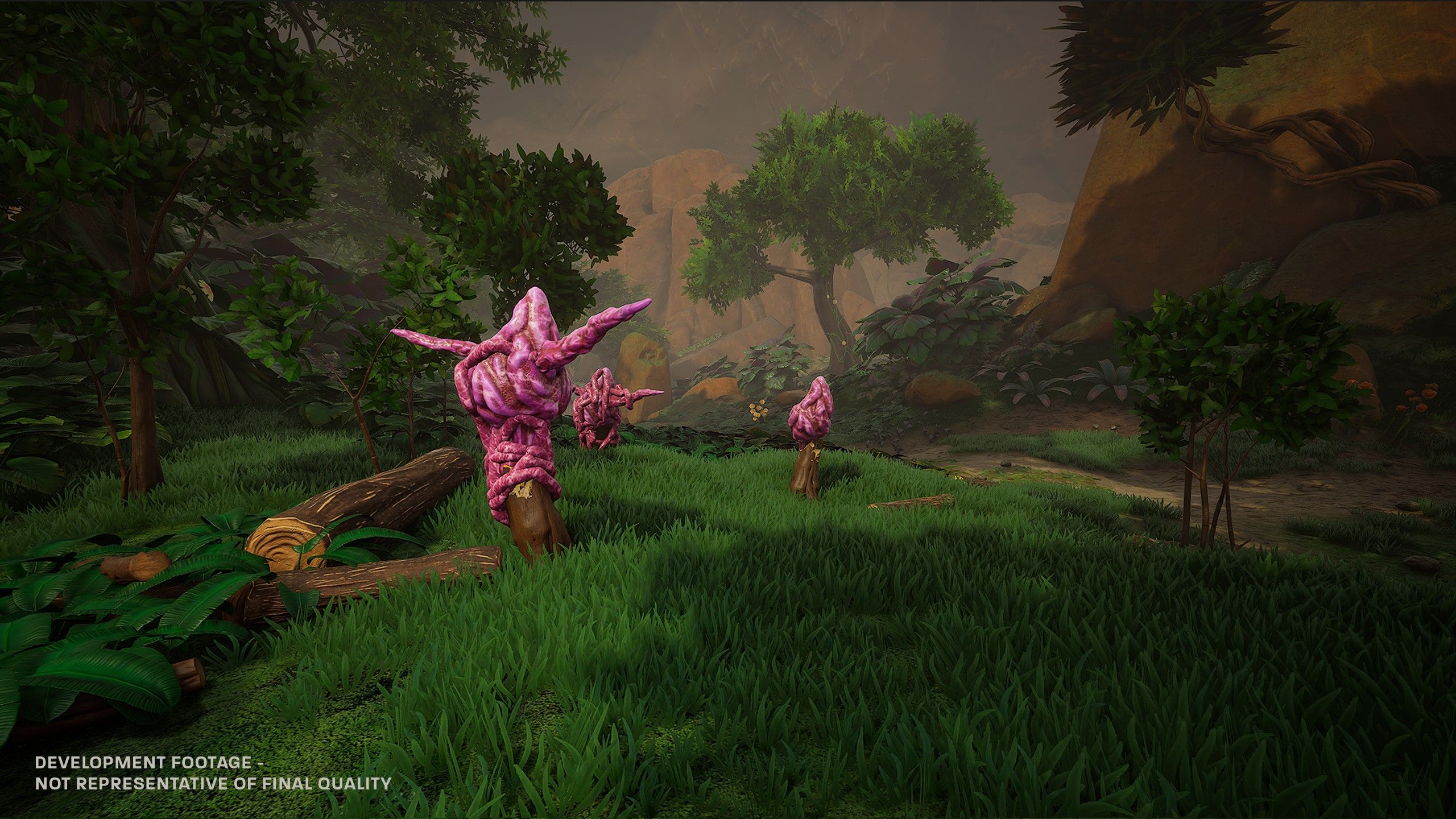
Blind Descent, Pokuch, 2025
MB: Blind Descent plans to launch in Early Access next year. Could you speak to the decision to launch in Early Access? Some players are wary of the practice as not all developers use it the same way. How does the team plan to utilize this early access period? Is there a roadmap for updates, or when players can expect the full release?
ES: Our top priority is to enter Early Access with solid core mechanics in place. Early Access will let us gather player feedback to refine the game, secure additional resources, and craft our vision into a polished experience. While we’re targeting a full release within a year of launching Early Access, we’ll extend that timeline if needed to finish the narrative and ensure quality. During Early Access, players can expect regular updates like new stories, biomes, creatures, resources, and gameplay features. Closer to Early Access, we will unveil more information about our upcoming plans and how we would like to improve the game with the support of our community.
MB: From the trailer, it doesn’t seem like combat will be that much of a focus. There are a few small creatures that the player whacks with an axe, but would you say Blind Descent is more about exploration? Or can players expect more action?
ES: Blind Descent is an exploration-focused game, but we also want combat to feel satisfying and engaging. Since our combat system is still in development, we avoided showcasing it in the trailer to prevent misleading the audience, but in our upcoming trailers we will reveal more combat-related features. For example, traversal mutations like wall-running will add action to encounters, and other mutations will unlock active combat skills. Plus, dungeon exploration plays a huge role in Blind Descent, and this means the players will often find themselves against creatures where combat encounters are inevitable.
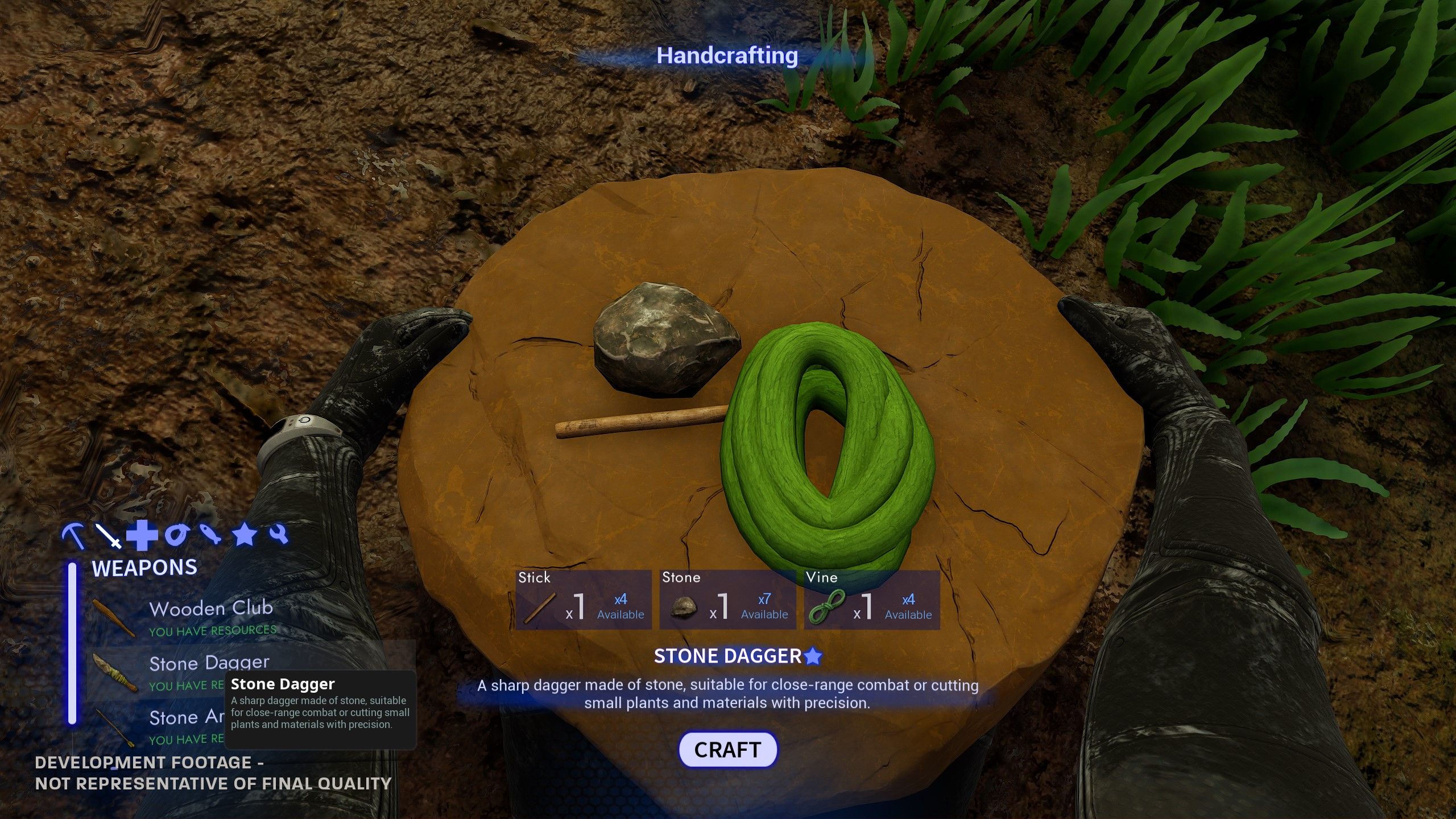
Blind Descent, Pokuch, 2025
MB: Many survival crafting games these days require a significant time commitment from their players. I get the sense that Blind Descent has a more linear story to explore, so it might not fit into that category. Is this the kind of game players could spend time in, or is there more of a linear expectation?
ES: We’ve struck a balance between a focused narrative and open exploration. You’ll follow the main storyline, which is to find the missing team and escape to the surface, while also uncovering every nook and cranny of this new ecosystem, full of hidden secrets. We aim to immerse you as a scientist thrust into the unknown, where each discovery can reshape your understanding. And, like classic survival games, you can build a base and venture into new biomes and locations solo or with friends.
MB: With games that go for simulation in some way, there’s always a balance between realism and fun. Where would you say Blind Descent falls on the spectrum? Does it lean towards hyper-realism or steer away from being too tedious in favor of an enjoyable game experience?
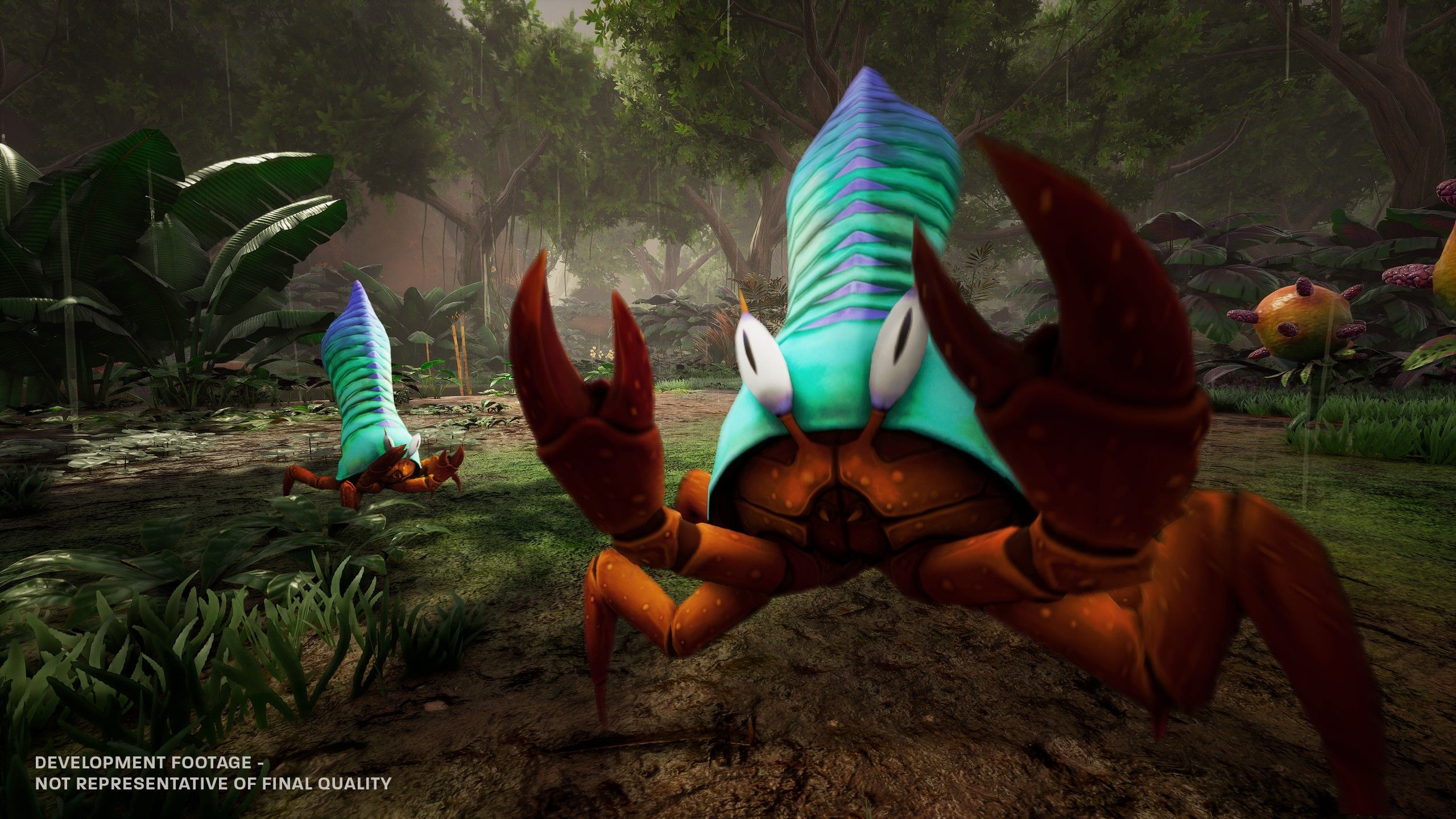
ES: We want to find a balance between immersion and accessibility: creatures and plants exhibit believable, Martian-inspired behaviors without the complexity of full ecosystem simulation; crafting remains satisfying, even chopping trees is also very detailed. Similar to the aforementioned Jules Verne’s stories, we want it to be a mix between realism and fantasy. It won’t be scientifically accurate, but we want it to be scientifically believable.
Blind Descent, Pokuch, 2025
MB: I’ve seen that Blind Descent will also feature online co-op, supporting up to four players in total. How does this impact the overall experience? Will players be able to drop in and out of the game, or will each character be tied to that group? If they can drop out, how have you managed for one player to have more abilities than another?
ES: Our co-op feels as easygoing as inviting friends over for an adventure — you can hop in or out whenever you like, and everyone’s progress stays in sync. Every upgrade you make — whether it’s a new way to climb or a handy tool — helps the whole group. The game automatically adjusts enemy behavior and resource availability so that players who love to explore worlds together, won’t feel left behind.
MB: What have been some of the biggest challenges in working on Blind Descent? What have been the highlights?
ES: Balancing ambition with polish has been our greatest challenge: crafting a living ecosystem meant endless tweaks not only to the in-game AI and resource spawns but also to the visual representation of flora and fauna. Everything needs to feel alive and operate independently of player actions. Working on mutations is incredibly fun, we want to offer a broad array of experiences, so players will unlock abilities like wall-running, telekinesis, and a few other surprises.
Thanks to Emrehan Seyihoglu for taking the time to answer some questions. If Blind Descent sounds like a game you’d be interested in, make sure to wishlist the game on Steam. It’s an easy, free way to show support for smaller teams like this. Plus, while you’re there, you can sign up for the ongoing playtest and get a chance to play Blind Descent ahead of its Early Access launch sometime in 2026.
