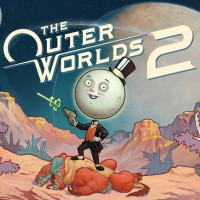
The Outer Worlds 2 review: Finding value in the flaws
The Outer Worlds 2 is the second epic RPG from Obsidian Entertainment this year, and its brilliantly executed flaws are genuinely the biggest highlight.
The review is based on the PS5 version. It's also relevant to PC, XSX version(s).

With any big Western RPG, I, like many others, tend to fall into the typical tropes of the role-playing experience. There is some level of fear of consequences if I act like a jerk. If I throw out an insult or a quip during a dialogue tree, it will either start a fight or lock me out of certain options. This usually means I default to roleplaying a similar character across many of these RPGs. My character is nice to people who are nice to me and mean only when it’s deserved. Generally, this comes from a level of immersion in trying to be a good person in real life, and that translates to gameplay, but the game also, on some level, encourages this behavior.
The Outer Worlds 2 felt like I was breaking those old habits. My character for The Outer Worlds 2 was exactly that, a character. Not just a version of me that’s good with a bow and arrow or can shoot a gun. The key to this success is The Outer Worlds 2’s brilliantly executed Flaws system. This was the absolute highlight of the whole experience for me. In character creation, you can pick two traits, but if you do, you’ll also have to pick a starting flaw. Then, throughout the game as you level up, depending on your choices, you might unlock more flaws. Thankfully, these are all optional, but unless you’re playing a run for a specific reason, I think it’s well worth your time to accept most flaws that come your way.

The Outer Worlds 2, Obsidian Entertainment, 2025
The character I made is dumb, literally. During dialogue, I will occasionally get an optional “dumb” response that is exclusive to my character. This could easily have been something I chose to avoid every time it came up, out of fear of consequences. But instead, I went for it nearly every time it popped up, and was pleasantly surprised at the results. Not only did I not get into trouble every time, but there were many instances where saying the “dumb” thing helped me get what I was after by making my character seem straightforward or wholly unassuming. Most NPCs are willing to humor or look past your stupidity in an effort to continue the conversation, which actually makes them feel more real in some ways. Most of the people in this game don’t want to get in a fight either, and maybe some level of politeness or superiority keeps them from sinking to my level.
The Outer Worlds 2, better than any open-ended RPG I’ve played, gives the player permission to take risks and roleplay a more questionable type of character. While Obsidian Entertainment’s second epic RPG of 2025 isn’t perfect in every way, I think there is something that all future RPGs could learn from this game.
Perfectly Flawed, As All Things Should Be
This Flaw system encourages more fun decision-making for the player in what would traditionally be the least exciting part of an action game, the dialogue. It also helps that the voice acting is solid and the writing is genuinely funny. I remember seeing those Outer Worlds 2 advertisements with Ben Schwartz, where he plays the Head of Sequels, and hoping that the actual game lives up to that level of comedy. Thankfully, I was not disappointed.

The Outer Worlds 2, Obsidian Entertainment, 2025
The Outer Worlds has some dark themes; nearly everyone in this game is either crushed under the boot of some corporate or religious regime, or they’re the ones doing the crushing. But the parody comes across quite well. Listening in on NPC conversations as you walk down the street often gave me a chuckle at just how backward many of the thoughts about the world are. The Auntie’s Choice followers constantly reference climbing the corporate ladder and reference each other depending on their status on that ladder. Meanwhile, the Protectorate is so afraid to do anything half the time, thanks to the threat of piling demerits. It often feels like if anyone took a step away from themselves for five minutes, they’d suddenly realize that everything is nonsense. Fortunately, this also played well into the overall roleplaying.
Throughout the game, there was no one faction I felt allied with. I can see how some players might find this frustrating, but in many ways, I felt it was liberating. It gave me the freedom to play the character as a freelancing outlaw, taking on jobs from anyone, but often doing it with a finger crossed behind my back, ready to turn cloak at the first better offer. But even this game can present you with difficult choices. While I might not have felt allied with any one faction, there were individuals I felt a connection with. When there are so many awful regimes vying for power, it almost feels like the game is reminding you that they are all the same, and all that really matters is the immediate community around you. Make decisions based on what you think is right, not by what someone on a higher rung said was right. In The Outer Worlds 2, my only loyalty was to the people I considered friends.

The Outer Worlds 2, Obsidian Entertainment, 2025
Which leads me to the companions. Before I jump into it, I will say that there is some fun in not knowing who the possible companions are before you start playing. Sure, some characters are going to immediately stick out among the other NPCs, but there was at least one time where I was completely shocked that this person was joining my team, so I don’t want to spoil who they are or their stories for now. In dialogue and personal quests, I consider the companions a highlight. But otherwise, in combat, I often would forget that they were there or that I could do something with them. I mostly kept around certain companions so I could try out their quests or hear their thoughts on certain conversations. The companions are a good part of the game, but not anything that stood out to me.
- Flaws system greatly enhances roleplaying;
- dialogue is genuinely funny and well-written, with important choices;
- allows for creativity in approaching missions and combat;
- high variance in experience for great replayability.
- Certain combat encounters can be frustrating, especially boss fights;
- story and action are serviceable, but not always the most memorable.
The Highs and Lows of Combat
In my time with The Outer Worlds 2, there are a few distinct combat encounters that come to mind when I think of the most memorable moments. I remember stealthing my way around dozens of overpowered enemies in a hideout, only to find myself stuck with minimal ammunition, but still overcoming the odds by strategically placing a few mines and throwing grenades through a vent. That fight may have taken half an hour, but I’ll never forget how rewarded I felt when that last enemy fell.

The Outer Worlds 2, Obsidian Entertainment, 2025
Conversely, there are a few boss fights that ultimately felt too boxed in and overwhelmed with minions. One fight in particular took place in a cave, and I must have spent over an hour trying again and again. Sometimes, when your primary options are a gun or a grenade and half a dozen enemies are running up to you to engage in melee with little room to breathe, it can quickly become overwhelming and frustrating.
Overall, The Outer Worlds 2’s combat gets better as you progress through the game. It may take some time to find the right weapons or modifications, or realize how much control you have over your weapon modifications, but I would say around halfway through the first world is when things start to kick up a notch. Overall, the combat wasn’t the highlight for me. It had its fun moments, but when I remember this game, it will be more for the dialogue and NPC interactions than anything else.
The Story Serves Its Purpose
Speaking of anything else, The Outer Worlds 2 also has a solid story. It’s difficult not to get into spoiler territory on this topic, which Xbox and Obsidian have asked me to avoid, but I do agree that this is a game that’s best experienced without spoilers. You play as a commander of an Earth Directorate task force. The “tutorial” explains how you have been sent to a galaxy on a mission against a rival faction, and soon enough, you find yourself stuck, tracking down an antagonist as they trapse across multiple planets, leaving destruction in their wake. You’re looking for answers, possibly a little revenge, and maybe there’s still a little loyalty to your original goals hidden in there somewhere.

The Outer Worlds 2, Obsidian Entertainment, 2025
Overall, the story serves the game well. It provides enough motivation to keep you moving from mission to mission, and there are meaningful choices. During dialogues with important characters, you will occasionally get the notification that “This will be remembered.” This doesn’t tell you if it’s a good thing or a bad thing, just that it will be remembered. In the first town, you must choose between two powerful figures to work with. But it’s not just one or the other, as I ultimately chose to work with neither. Later on, you also end up making difficult choices that can quite literally leave an impact on the world around you. But I’ll leave it at that for now.

The Outer Worlds 2, Obsidian Entertainment, 2025
For the review period, I did try my best to stick to the primary objective as much as possible to reach the end by the Early Access release, but even with that motivation, it was hard not to be distracted by side quests. There is plenty to explore in these worlds, and some memorable NPCs to interact with. But, like the combat, it works; it’s just not as much of a highlight as the roleplaying and dialogue options.
VERDICT:
Obsidian’s brilliant use of their flaws system in The Outer Worlds 2 makes it stand out as one of the best examples of how to encourage roleplaying in video games. Playing through this game really felt like I was breaking out of the shell that most other RPGs put me in. The world, its various factions, and characters all enhance this by encouraging you to make your own choices about who to be and what to do. Ultimately, this makes the game well worth your time, but also flawed in its own way, with occasionally frustrating combat, and a serviceable story to follow.
Find all our reviews on Metacritic, Opencritic, and CriticDB.
Final Thoughts
The Outer Worlds 2 is a great RPG. It encourages the player to roleplay in a way that’s rare to find in other RPGs. If future games take anything from The Outer Worlds 2, it should be that. Make your protagonist flawed in unique ways. Make it part of the gameplay, and make sure to make it fun to be any kind of character. But it is much easier said than done, and no other studio will have the same writers working on the dialogue as Obsidian, so it might be futile.
The roleplaying is the highlight that lifts up the whole experience, and unfortunately, it doesn’t have many other features functioning at the same level. The story and combat both serve the game well, but ultimately did not stand out and were even frustrating on a few occasions. But overall, I had a lot of fun playing The Outer Worlds 2. And I would play it again, if anything, just to see how choosing a different set of traits, perks, flaws, and allies pans out. Who knows? Maybe I’ll finally pick myself up by my bootstraps and climb up from this lower rung.


The Outer Worlds 2
The Outer Worlds 2 review: Finding value in the flaws
Obsidian’s brilliant use of their flaws system in The Outer Worlds 2 makes it stand out as one of the best examples of how to encourage roleplaying in video games. Playing through this game really felt like I was breaking out of the shell that most other RPGs put me in. The world, its various factions, and characters all enhance this by encouraging you to make your own choices about who to be and what to do. Ultimately, this makes the game well worth your time, but also flawed in its own way, with occasionally frustrating combat, and a serviceable story to follow.