After 21 years, this forgotten game is back on Steam. It's the last successful game of The Lord of the Rings: The Two Towers creators
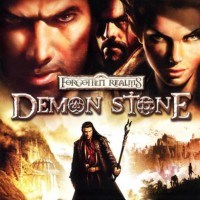
Stormfront Studios won the affection of many players with its Lord of the Rings: The Two Towers game. The launch on Steam of their latest successful title, Forgotten Realms: Demon Stone, is a good opportunity to recall this production.

I started my adventure with video games on PC. Although over two decades ago shooters and strategies, which I myself was fascinated by, dominated this platform, I was always interested in hack and slash games. Unfortunately, apart from a few exceptions, this genre was very popular on consoles. That's why, when I finally got my own PlayStation 2, one of the first games I played on it was The Lord of the Rings: The Two Towers.
I mention this game not without reason, because after developing the virtual adventures of Aragorn, Legolas, and Gimli, the Stormfront Studios decided to move from Middle-Earth to the Forgotten Realms. We're talking about Forgotten Realms: Demon Stone, a hack and slash that's prettier and definitely more expanded, as it uses RPG elements.
The August release of this game on the Steam platform (almost 21 years after its debut on PC) is a good opportunity to remind ourselves of what the first encounter with it looked like.
Three heroes
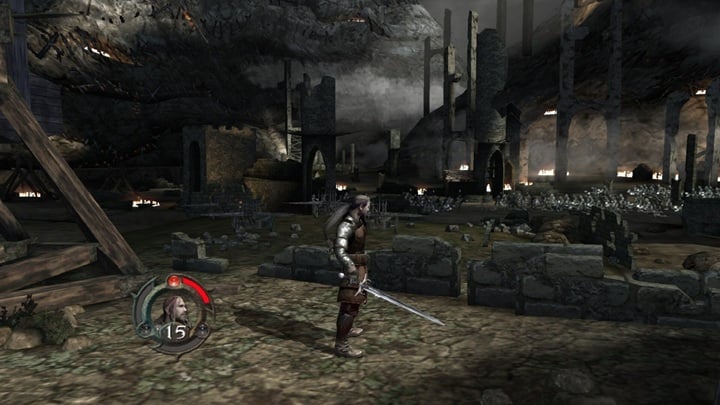
Despite the fact that Forgotten Realms: Demon Stone did a lot to stand on its own, the core of this game was noticeable from the first few minutes. Similar to The Two Towers, we had three playable main characters. However, unlike in that game, the developers did not force us to choose a hero before starting a mission, allowing us to freely switch between them at any time.
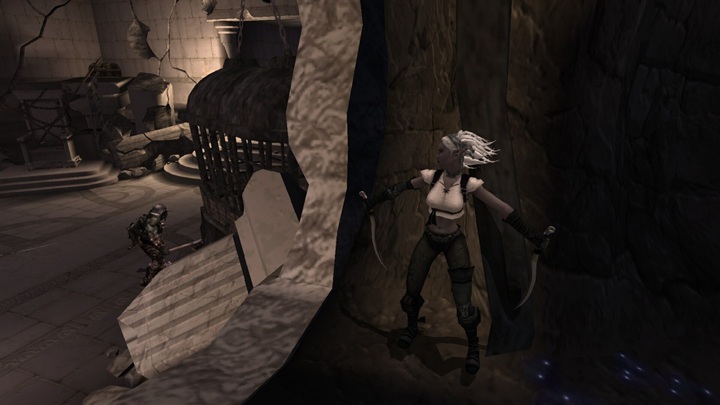
These characters are the warrior Rannek, equipped with a two-handed sword, the elf Zhai, who sneaks and attacks with her daggers, and the wizard Illius, who wields a magical staff. The first of the protagonists was my favorite, because both in RPG games and in hack'n'slashes, I prefer characters who fight in close combat, for whom a sword thrust into the chest is just a superficial wound, not a fatal blow. Nonetheless, the offered possibilities made me, with considerable pleasure, occasionally seek a "break" from this hero by playing as someone else. It was easy because in my "absence" the control over Rannek and his other companion was quite efficiently taken over by the artificial intelligence.
Besides, from time to time the game forced me to switch to a specific character. In one segment, we had to sneak behind the enemies as Zhai, while in another - we had to unleash chaos by casting spells as Illius. Besides, the title allowed stepping into the shoes of other characters, including a certain famous drow...
Hack and slash... but that's not all
As I already mentioned, Forgotten Realms: Demon Stone was a typical hack and slash. The game has been divided into missions, the action of which is set in various characteristic locations. The adventure led us, among other things, through the dwarven fortress of Mithrall Hall, the impenetrable jungle of Chult, or the Underdark (a must-have location).
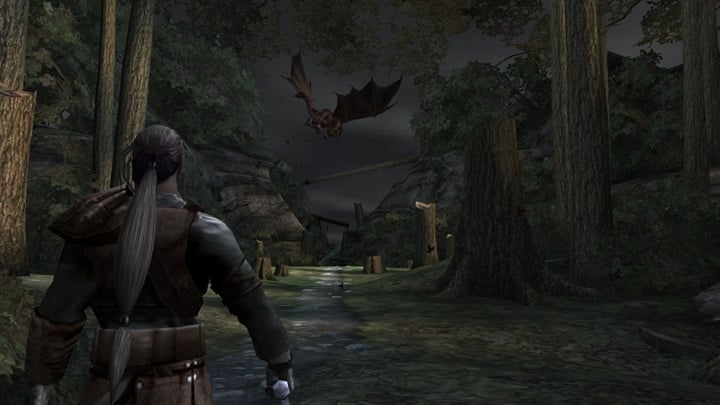
As befits a representative of this genre, along the way we were focused primarily on eliminating opponents. On our way, we encountered, among others, orcs, snake-like Yuan-Ti creatures, as well as trolls and a powerful dragon, which served as one of the bosses.
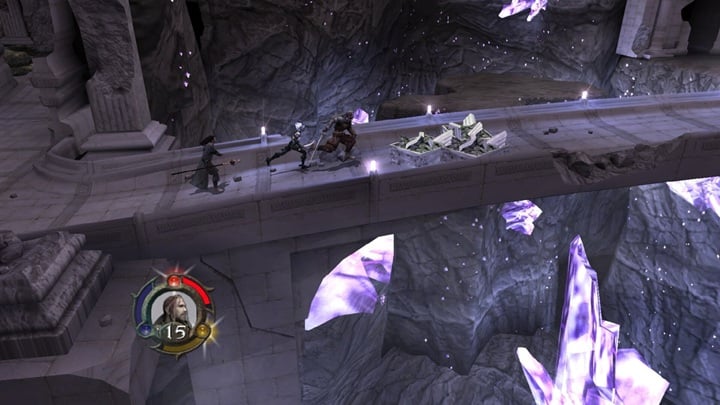
The combo-based combat system was satisfying - the characters differed significantly from each other, which, combined with the ability to freely switch between them, effectively prevented the gameplay from getting monotone. Additional variety was provided by super strikes and team attacks, which could be performed after filling the related bar.
Although Forgotten Realms: Demon Stone was not an RPG, it still used some elements from this genre. Apart from characters representing different classes, we were able to develop their skills between missions, as well as equip them with increasingly better gear.
What is all this fuss about?
The story of Forgotten Realms: Demon Stone was more than just a pretext to charge at enemies with a battle cry. All because R.A. Salvatore, the author of The Dark Elf Trilogy worked on it (by now, everyone probably guesses which famous drow appears in this production).
The game focused on the titular Demon Stone, in which the sinister Lord Ygorl and Githyanki General - Cireka were imprisoned. After our heroes accidentally released these villains, they had no choice but to find a way to put them back there, before their conflict brings about the destruction of the entire world.
Weakest link
Despite its pedigree (Lord of the Rings: The Two Towers is a production esteemed among players and reviewers), Forgotten Realms: Demon Stone was not a big hit, receiving only moderately good scores from players and reviewers. This applies especially to the PC version, which developers neglected around the time of the release.
There were complaints about the quality of the graphics, poorly developed keyboard controls, as well as various optimization problems and technical issues that could prevent further gameplay. I had a problem on my own computer, due to which the game simply turned off before launching one of the missions. Ultimately, this led me to get the game on PlayStation 2.
PC gamers also disliked the game's save system, which was based on checkpoints during missions and saves between them.
Graphics
Interestingly, I probably belonged to the minority who liked the graphic design of Forgotten Realms: Demon Stone even on PC (but I will honestly admit that from today's perspective it seems a bit too dull to me). The devs used the technology created for The Two Towers, which they significantly expanded.
However, probably no one complained about the voice cast of "Demon Stone", since it featured Patrick Steward and Michael Clarke Duncan.
What happened next?
Forgotten Realms: Demon Stone was not a hit, but it did not bury Stormfront Studios. Four years later, the developers gave us Eragon, based on the movie of the same title, and after another two years, they created another video game adaptation, The Spiderwick Chronicles. The last of the mentioned games was their swan song - as none of them became the new The Two Towers, after its release the developer disappeared from the industry map.
How to play Forgotten Realms: Demon Stone today?
Forgotten Realms: Demon Stone is available on the Steam platform. The remaster was released on August 12, supporting modern resolutions and widescreen image proportions, as well as enriched with "smoother gameplay", "optimized shadows", "full controller support" and a "new settings menu".
However, there are no versions for the PlayStation Store and Xbox Store. Prices for used copies of the boxed edition start at 10 USD.


0

Author: Christian Pieniazek
Started working with Gamepressure.com in August 2016. Although the Game Encyclopedia has been his pride and joy from the beginning, he also writes for the Newsroom and the Editorial section. Gained professional experience through a now-defunct service, in which he worked for almost three years. Graduated in Cultural Studies at the AGH University of Krakow. Runs his own business, jogs, cycles, loves mountain hiking, is a fan of nu metal, is interested in space, and of course, enjoys playing games. Feels best in action games with an open world and RPGs, although won't turn down good racing or shooting games.


Latest News
- KaM Remake, the fan-made version of the classic strategy game, is practically finished
- A fan has enhanced and fixed the classic Ultimate Spider-Man for PC
- Because of the final boss, I never gave up on entire genre, but the wonderful Rayman 2: The Great Escape hasn't aged a bit
- The free version of the cult classic shmup Tyrian has been updated after 4 years
- A new Nod campaign has been added to The Dawn of the Tiberium Age, a freeware Command & Conquer RTS