Heretical questions you're afraid to ask in the presence of the Inquisitor. Warhammer 40K FAQ: Space Marines
Have you got difficult questions about the Warhammer 40,000 universe and Space Marines? We've gathered the most pressing of them to have all the answers in one place. Without heresy, so you don't have to explain yourself to the Inquisition.
1

He gradually rose up from behind the desk where he had been reviewing reports on recent orc attack. His robes rustled slightly as he straightened up. He smiled - once again he would have to answer unusual questions. The Golden Throne has always been a beacon of knowledge amidst a sea of ignorance, and its students deserve to have its light shine upon them as well.
Leaning on his cane adorned with the imperial Aquila, he slowly walked to the nearest cogitator. He settled there comfortably, putting aside the token of his office. The time has come for difficult questions, and even more so -- difficult answers. That's his role. Such is his service. In the name of God-Emperor.
The information comes from official Games Workshop materials, and any exceptions are appropriately marked. Any attempt to deny the credibility of these sources are a sign of heresy.
What do Space Marines do in their spare time?
Space Marines undergo very invasive surgical procedures and specific genetic modifications, and not every recruit is able to withstand this process. Not only their bodies change, but so does their psyche -- they do not experience fear, joy or anger like ordinary mortals. Their thought processes run much faster, therefore they have a different approach to leisure. The Codex Astartes allows for fifteen minutes of free time per day, and grants them an extended form of rest for participating in intense combat operations during a quarter.

warhammer-community.com
In general, Space Marines rarely complain about a lack of tasks -- they're regularly sent on all kinds of combat missions, and individual orders have their own duties and chores. This means that marines are generally either fighting on the battlefield or regenerating in the infirmary. In those brief moments of free time, they mostly pray to the God-Emperor (a glorious act!), study treatises on the art of war, maintain their weapons, or engage in sparring matches with their brethren. Everything revolves around war, because war never ends.
Is the Blood Ravens Chapter canonical, and who is their Primarch?
The Blood Ravens as a new chapter first appeared in Warhammer 40,000: Dawn of War (2004). Their defining trait is the lack of knowledge regarding their Primarch (all records on the matter have been concealed), a relentless pursuit of ancient artifacts in search of truth, and a high number of psykers within their ranks. They were created for digital games in order to avoid interfering with the lore of other, already established Chapters.
After years of arguments inside the fandom and numerous online disputes on this, Games Workshop officially recognized the Blood Ravens as one of the canonical chapters. Though they have not received their own miniatures, hope dies last. However, the owner of the franchise isn't rushing to reveal who's the Primarch of the Blood Ravens and why it's such a mysterious chapter. Initially, they were associated with the Blood Angels, but the prevailing theory now is that their Primarch is the traitorous Magnus the Red, one of the Emperor’s sons who rose against him.

Warhammer 40,000: Dawn of War III, Relic Entertainment, 2025
Laurie Golding, former contributor to the Black Library series and author of official novels for Games Workshop, did in fact deny any connection between the Blood Ravens and the Thousand Sons Legion during one of the conventions. However, Golding hasn't been involved in this universe for many years, so his statement can be considered outdated.
Poop in power armor – how do Space Marines handle bodily functions?
The Space Marines' armors are advanced power armors, designed to maximize the survivability of these superhumans on the battlefield. Not only that -- they are adapted to their biology, so nothing gets wasted. Systems delivering meds and nutrients allow Space Marines to fight for weeks without the need to remove the armor. It also protects him from dangerous external conditions, including toxins or fire.
Officially, Games Workshop has never addressed the topic of defecation, but it is certain that the body of the Emperor’s Angel of Death does not waste resources. Most likely, the armor’s systems process the small amounts of waste to re-supply the user with any nutrients left. There's also a theory that Space Marines do not excrete anything from their bodies at all, and 100% of matter is used to fuel the superhuman physiology of the warrior.

warhammer-community.com
In one of the non-canonical books written by Ian Watson in 1993, there was a scene where the chaplain of the Imperial Fists confessed his brothers in a confessional, in which a toilet was installed. After confession, he "expelled" sins in the form of feces, symbolizing purification, and then they were used in strange religious rituals, which even included the consumption... of sinful feces. Currently, this is considered heresy, and any attempts to include it in the canon are punishable by execution.
Can Space Marines accumulate material possessions?
The Emperor’s Angels of Death are, by design, monastic warriors wholly devoted to the art of war. This means that they live solely for the glory on the battlefield and their life revolves exclusively around service, combat, and prayer. That's why material possessions are worthless to them, and few space marines own any private items. Both his armor and weapons are property of the Chapter, and in the event of his death or transfer to another Chapter, his equipment is returned to the armory. However, as long as a marine uses it, he has the duty to take care of it, so theoretically it is "his property."
However, this doesn't mean that marines cannot own little souvenirs or private items such as books or paintings. This culture is heavily dependent on individual chapters and the rules they observe. For example, before the Horus Heresy, the sons of Fulgrim (the Emperor’s Children) were encouraged by their Primarch to surround themselves with beautiful things and to engage in the creation of art themselves. In books from this universe, it is common for Space Marines to possess mementos from particularly fierce battles or as reminders of fallen brothers.
All in all, there is no official ban on possession, but monastic education makes the space marines uninterested in accumulating material goods. Private equipment is also dependent on the status and position of a given marine in his chapter.
Does the Warhammer 40k timeline overlap with ours?
Yes, to a large extent, events from the Warhammer 40,000 universe coincide with our current timeline. In official books and stories, there's no shortage of references to events that took place in antiquity, and characters occasionally mention artists from "our times." Dan Abnett, especially known for the "Gaunt’s Ghosts" series, is particularly fond of incorporating this motif. Many proper names and references in the characters' statements from this universe clearly indicate that the Empire is aware of the eras that preceded its existence. The most well-known custodian of 'ancient' history is Malcador the Sigillite. Among his private collections were, among others, the Rosetta Stone, an old Soviet satellite, and other artifacts related to human history.
However, these events take place in the 40th Millennium, which constitutes a huge gap in time. From the perspective of humanity living in the aforementioned times, 21st century, or even earlier events, are like prehistory to us. Much of the knowledge, chronicles, and facts about our era have been lost in the endless civil conflicts that took place in the cradle of humanity after our times. There were also nuclear wars, which completely destroyed our planet, and consequently -- the catalogs of knowledge.

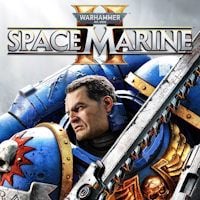
Warhammer 40,000: Space Marine 2, Saber Interactive, 2025
Among fans, there are also discussions about whether Star Trek and Dune theoretically take place in the same universe as Warhammer 40,000. Theoretically, events taking place in both of these universes could be incorporated into the timeline of the Games Workshop franchise. Of course, it is futile to expect these diametrically different worlds to intersect in any form of a crossover.
There are also those still waiting for the arrival of the God-Emperor. However, we, the faithful, are well concealed, ready to answer the call when the right time comes...
Barely had his fingers moved over the last words when he saw from the corner of his eye that the next notifications heralded new questions. He sighed. His work never ends. He leaned over the cogitator once more and resumed his replies. "By the Throne, guide me," he murmured, fingers brushing the keys once more.


1

Author: Mateusz Zelek
A graduate of journalism and social communication from the John Paul II Catholic University of Lublin in Krakow. He has been immersed in gaming and electronics since he learned to read. He plays most genres but particularly appreciates economic strategy games. He has also spent hundreds of hours in various cRPGs, from Gothic to Skyrim, but has not warmed up to Japanese JRPGs. He has been honing his skills in reviewing hardware since his studies, with a primary focus on computer peripherals and VR goggles. Eventually, he joined Webedia Poland, contributing to the editorial team at Futurebeat.pl and Gamepressure.com. In his personal life, he is a huge dinosaur enthusiast and can debate about them for hours. Seriously, discussing Mesozoic topics with Mateusz will lead to a conversation lasting as long as 65 million years.


Latest News
- The free version of the cult classic shmup Tyrian has been updated after 4 years
- A new Nod campaign has been added to The Dawn of the Tiberium Age, a freeware Command & Conquer RTS
- Fans have removed the time limit from The Blood of Dawnwalker
- Empire II: Total War now with two extra historical campaigns
- Someone has remastered Medieval 2: Total War and Rome: Total War so well that the AI's moves are now calculated in a matter of seconds [Updated]