Most famous simulator of a nonexistent 'invisible' jet feels like a CIA operation
In the late 1980s and early 1990s, MicroProse was the undisputed king of the simulator genre. Its games perfectly combined accessible gameplay with realism. One title, however, was somewhat at odds with realism.

In the early 90s, we were still playing a lot of games from the 80s. Among such titles, there was certainly the F-19 Stealth Fighter by MicroProse studio. Another flight simulator, after, among others, the best-selling F-15 Strike Eagle and Gunship, was even better and more playable.
Given that a "dream team" headed by Sid Meier and Andy Hollis was involved, and MicroProse, led by a former US Air Force pilot, already had a strong foothold in the military games market, it was unsurprising. F-19 Stealth Fighter, however, didn't make it to the pantheon of outstanding games of all time. Despite that, it's worth highlighting it in the Retro Gaming series because it has a really interesting "gaming-related" story.
Source: MicroProse
Realism and Cold War
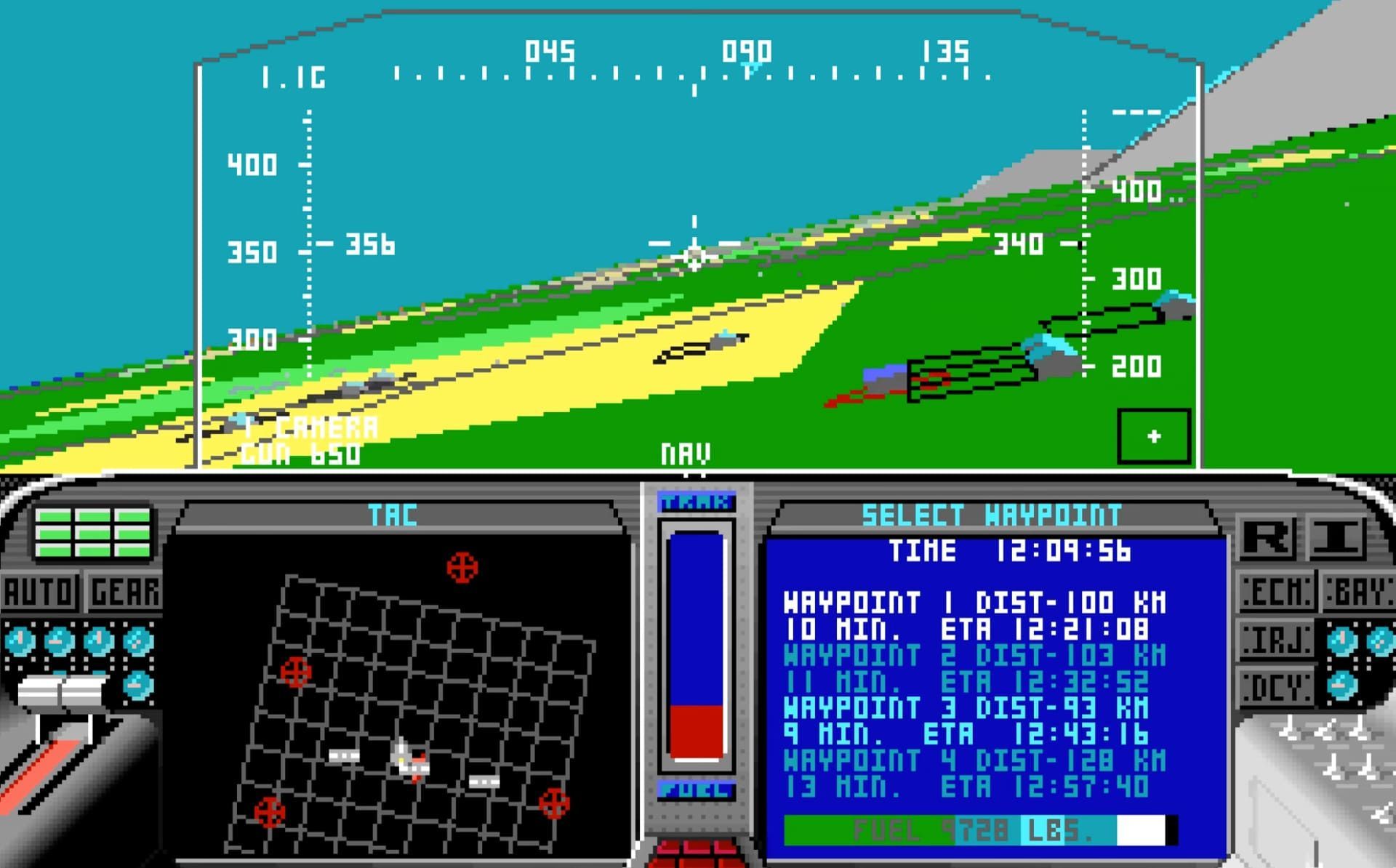
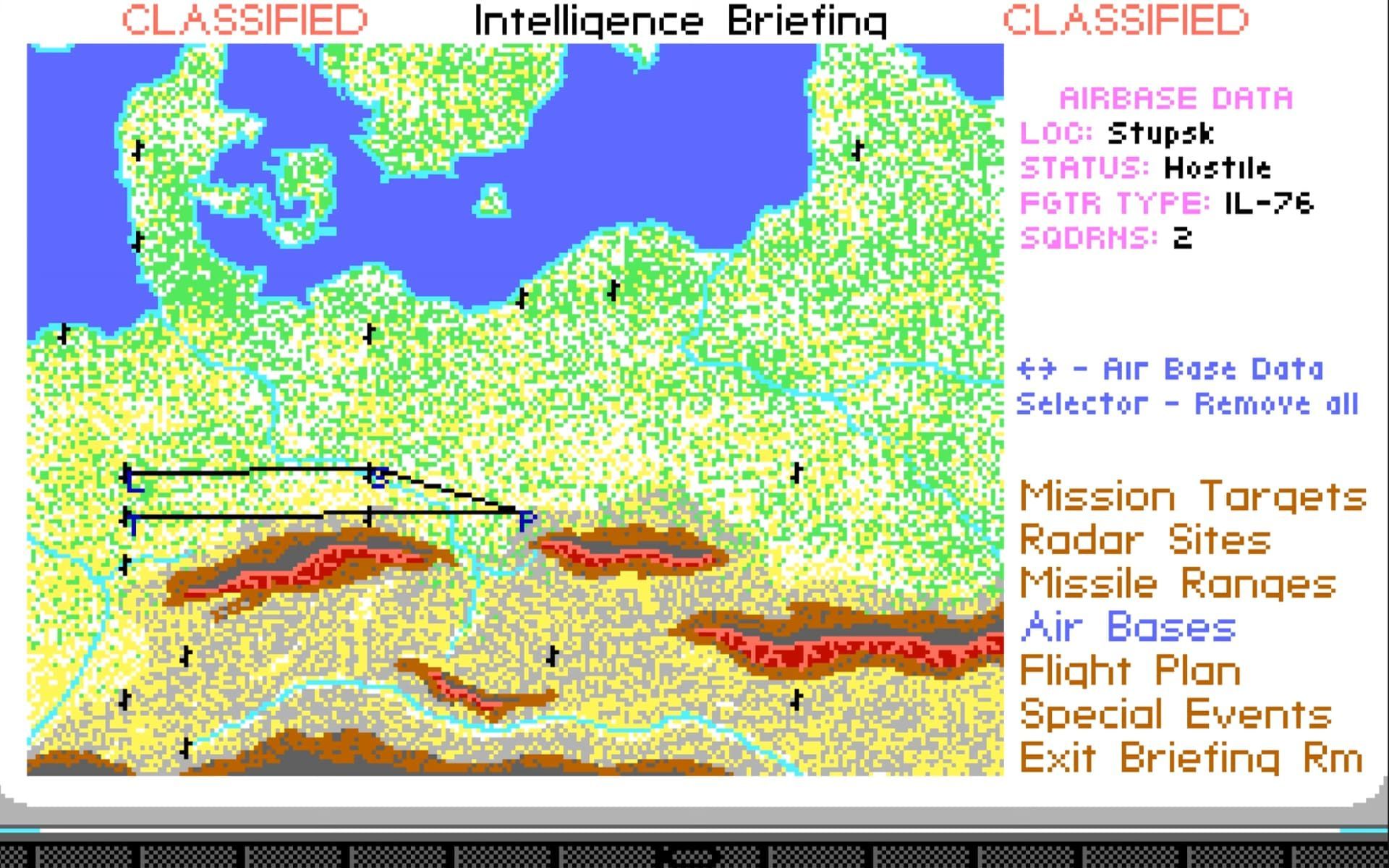
Just to clarify, let's quickly go over what F-19 Stealth Fighter was about. In the game, we took on the role of a pilot of a state-of-the-art multi-purpose aircraft to carry out missions in campaigns over Libya, the Persian Gulf, northern Norway, and Central Europe.
The game was released during the Cold War, which was brilliantly incorporated into the gameplay mechanics. Tasks could be carried out in such diplomatic tension, mainly involving aerial photography of enemy objects rather than their destruction.
The traditional form of full-scale war gameplay was also there, of course. For that time, very natural and credible behaviors of enemy units controlled by AI were implemented, and the use of radars during combat was recreated with extreme realism.
All of this resulted in great reviews and awards for the best simulator of the year. F-19 also impressed beyond the monitor with the extremely rich contents of the box. The game included a detailed manual with descriptions of authentic equipment and machines, paper maps of campaign locations, and keyboard overlays to facilitate mastering a considerable number of key commands.
Source: MicroProse
A remake that got its own remake
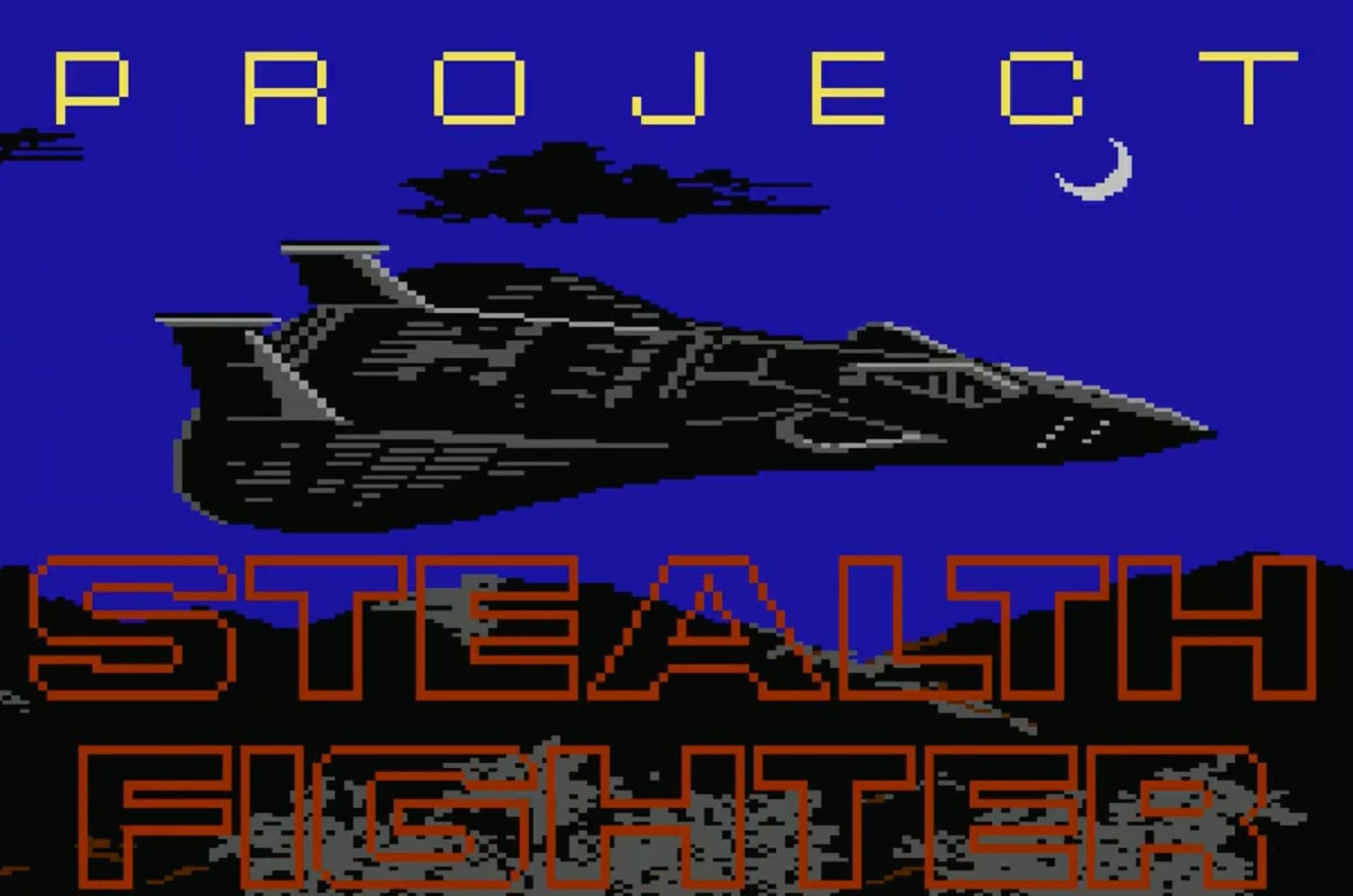
The F-19 Stealth Fighter wasn't an original project, but in a sense, a remake of a game from 1987 titled Project Stealth Fighter, also from the MicroProse studio. Main differences? The first game was released only for 8-bit computers: Commodore 64 and ZX Spectrum. The new version was made with 16-bit machines in mind. First, it hit PCs and the DOS system, and later also the Amiga, Atari ST, and the niche PC-98 of Japanese NEC computers.
Project Stealth Fighter was also unanimously recognized as a "gem" among sims. It was supposed to squeeze everything out of the graphic capabilities of 8-bit computers, and surprise with realism. It was even called the best simulator from this studio, leaving behind Gunship and F-15.
The remake was a game created almost from scratch. According to one of the designers, Arnold Hendrick, only "mission scenarios, data describing military machines, and some flight model algorithms" remain from the C64 version. The rest, especially the improved graphics, was created from scratch. The game looked pretty good, despite displaying images in the limited palette of 16 colors of EGA cards. The versions for Amiga and Atari looked a bit better.
All the game's shortcomings, including the quality of graphics, were improved in its third installment, Stealth Fighter 2.0, released in 1991. But the second remake introduced an even more important change, which was... the entire airplane. In the previous installments, we were flying... with a toy plane.
Source: MicroProse
How a toy shaped public opinion...
In the 80s, during the Cold War division of the world into East (Warsaw Pact) and West (NATO), there was still an ongoing arms race between the two superpowers: the USA and the USSR. Both sides did what they could to keep their advantages secret. This also concerned a new jet in the United States Air Force.
The media and public opinion knew that something was going on - that the USA had an ultra-modern, pitch-black aircraft invisible to radars, but nothing more. The government kept everything secret, so people could only speculate about its capabilities and that it was probably called F-19, which made sense after the previous machines.
In 1986, the American company Testors, which produces, among other things, car and airplane models, paints, and modeling tools, released its vision of the F-19 aircraft in the form of a model kit. The round shape of the bell or the sole of the shoe was just an idea of Testors' employees. Because there were no other options, this vision fit perfectly into the existing "void in the air." Testors' F-19 became the company's bestseller and its most popular product. Big players like Hasbro and Matchbox started making toys with the plane that the company invented.
But that's not all - the fictional F-19 model kit also started to appear in public media, especially when the real aircraft crashed in a California national park. All the news channels were using a Testors F-19 image to illustrate the accident. Even Tom Clancy himself fell for this idea - the famous writer described in his book Red Storm Rising the mission of the "invisible" F-19s, which were shaped like a "cathedral bell," with no sharp edges, and the pilots supposedly nicknamed the aircraft "frisbee" for this reason.
MicroProse also jumped on the bandwagon and used the Testors model kit as the main character in both of their Stealth Fighter games. But when the first remake hit the market in 1988, everything became clear. At the Pentagon, a blurred photo of a black aircraft, called the F-117, was finally officially shown, and apart from the color, it absolutely didn't resemble the F-19.
Art of three invisible airplanes
The government and the air forces kept a tight secret for 5 years - that's how long it took from the introduction of the F-117 into service and regular night flights to the world's unveiling of the extraordinary project. Three years later, in 1991, the airplane became one of the symbols of the "Desert Storm." Everyone already knew its shape, even those not interested in aviation.
Source: MicroProse
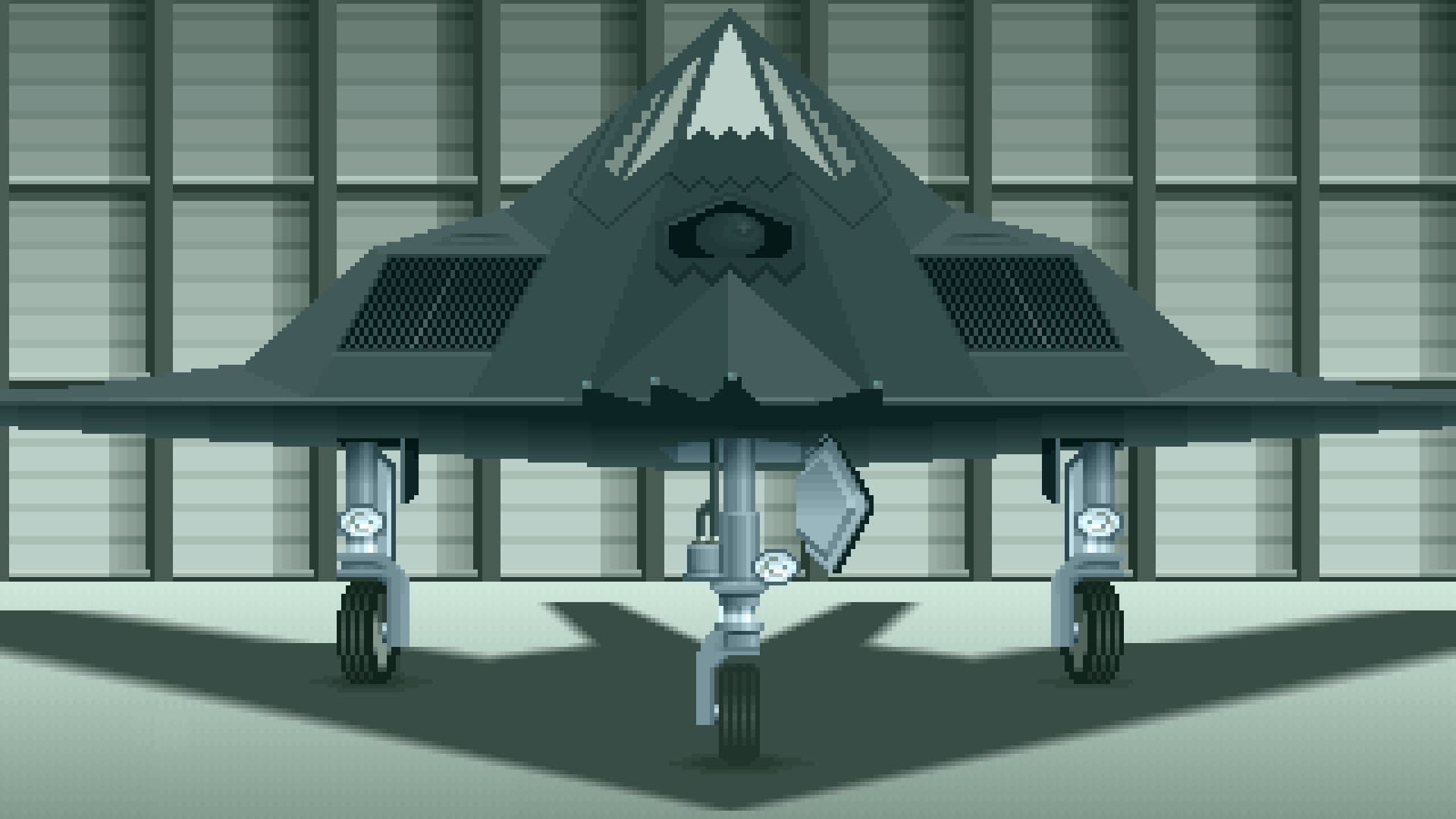
And MicroProse made another remake, or rather a sequel. In 1991, the developer released a game with the long title F-117A Nighthawk Stealth Fighter 2.0. On the box and on the screen, the totally angular, without any rounded edges, F-117A aircraft finally reigned - the real, truly existing one. The novelty was two levels of simulation realism: "MicroProse" and "Lockheed."
This first level allowed for more free gameplay and attacking air and ground targets - just like in previous games. The second one, signed with the name of the machine creator, limited the fun to only using bombs, in accordance with the purpose of the real counterpart. The graphics also got a big upgrade, finally catching up with Amiga and showing off the beauty of 256 colors on the latest VGA graphics card. The F-117A 2.0 didn't receive such positive reviews for the third time in a row, but the ratings didn't drop below 8/10.
How to play F-19 Stealth Fighter and F-117A Stealth Fighter 2.0 today?
The first edition of Project Stealth Fighter is only available through browser emulators or for lucky owners of physical copies of the game and 8-bit computers. But remakes in digital versions are already officially on sale on Steam and in the GOG.com store. In this first one, the price is $6.99. It's slightly cheaper on GOG - there you will pay $5.99 for each of these titles.
Source: MicroProse
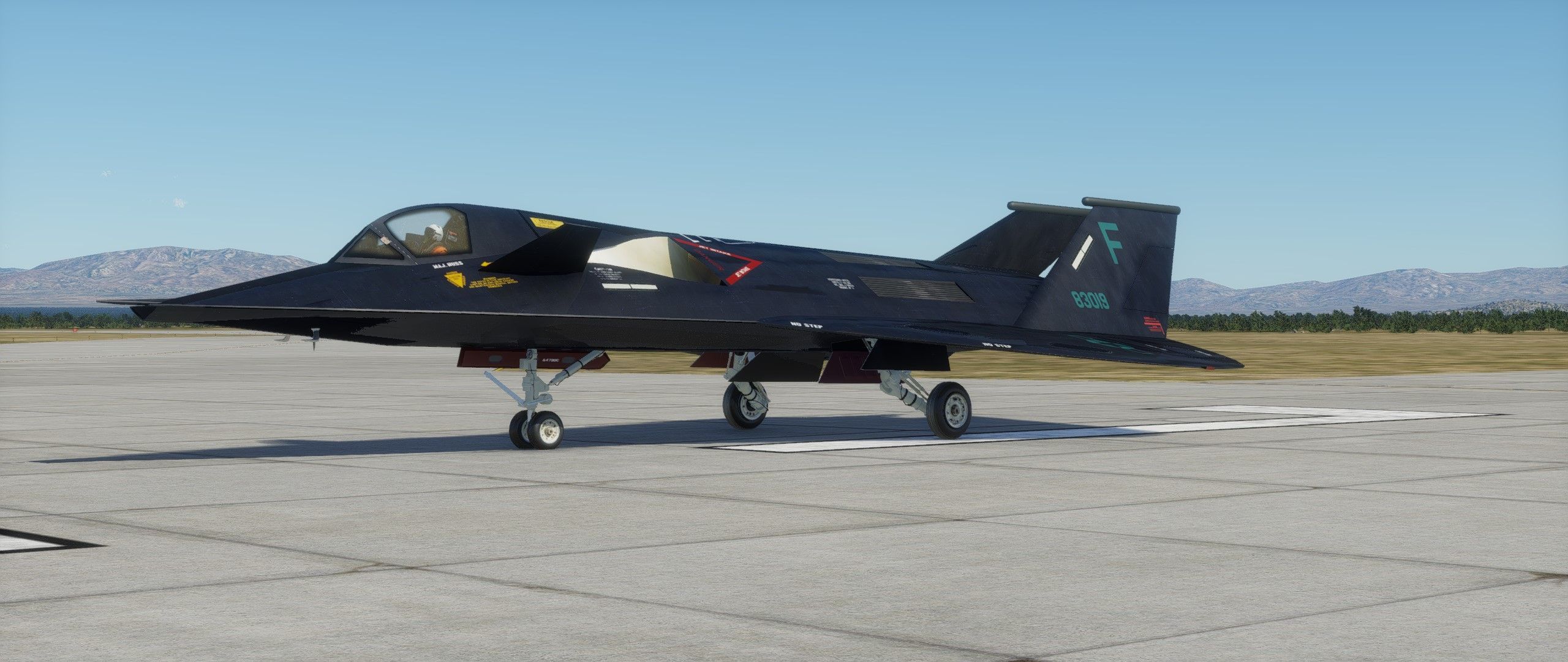
An interesting fact may be that the vision of the F-19 aircraft by Testors was recreated in a contemporary graphic design by VSkyLabs for the X-Plane 12 simulator. It's available as a paid add-on and offers a much more immersive cockpit experience, although, of course, a story campaign with combat missions is just a dream.

0

Author: Darius Matusiak
Graduate of the Faculty of Social Sciences and Journalism. He started writing about games in 2013 on his blog on gameplay.pl, from where he quickly moved to the Reviews and Editorials department of Gamepressure. Sometimes he also writes about movies and technology. A gamer since the heyday of Amiga. Always a fan of races, realistic simulators and military shooters, as well as games with an engaging plot or exceptional artistic style. In his free time, he teaches how to fly in modern combat fighter simulators on his own page called Szkola Latania. A huge fan of arranging his workstation in the "minimal desk setup" style, hardware novelties and cats.


Latest News
- A fan has enhanced and fixed the classic Ultimate Spider-Man for PC
- Because of the final boss, I never gave up on entire genre, but the wonderful Rayman 2: The Great Escape hasn't aged a bit
- The free version of the cult classic shmup Tyrian has been updated after 4 years
- A new Nod campaign has been added to The Dawn of the Tiberium Age, a freeware Command & Conquer RTS
- Fans have removed the time limit from The Blood of Dawnwalker