They promised a dark action RPG. Years later, Techland fans got something completely different and were disappointed
Today, Techland is mainly associated with the Dying Light franchise. Years ago, however, the developers had a more diverse portfolio to power Hellraid, an FPP action game with RPG elements in a dark fantasy universe.

Contents:
When Techland announced Project Hell in 2012, my heart skipped a beat. While I really liked Dead Island, an action game set in a dark fantasy universe with RPG elements resonated much better with my preferences. In my opinion, no confrontation with a horde of zombies can provide such sensations as charging at armies of skeletons and other monsters with a battle cry on your lips and a sword or axe in your hand.
Unfortunately, three years after the announcement, Project Hell, which was later renamed Hellraid, got the red light and went back to the drawing board, and after another five years, it returned as... a DLC for Dying Light. Let's remind ourselves of what we lost with the cancellation of this project, and see if we really have something to regret.
Dark adventure in dark world
In Hellraid, the storyline was supposed to play roughly the same role as in Dead Island or Dying Light. We could expect a moderately interesting story explaining where we ended up and why we do what we do.
The title was supposed to take us to a grim fantasy world, which, as a result of a certain mage's mistake, fell victim to an invasion by hellish hordes. Only the heroes, whom we would play as during the game, could save this land from total annihilation.
Classless characters
Why heroes, not a hero? Well, just like the aforementioned Dead Island or Dying Light, Hellraid was supposed to allow us to play both solo and in cooperation with other players. Although the devs initially planned to implement classes, over time they abandoned this idea, making the skills universal and placing them on one large skill tree. Thanks to this, we could play as a mage capable of wielding a sword or even a warrior who could use healing spells if necessary.
A spell, a bolt, and a sword
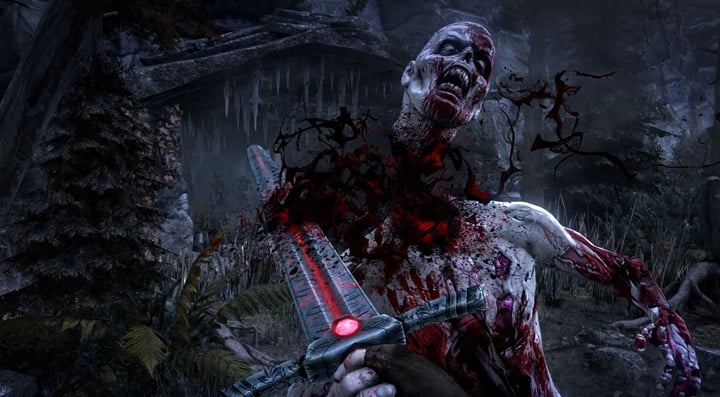
And speaking of weapons - fighting enemies was supposed to be the highlight of Hellraid. The developers worked on a system that takes into account the trajectory of attacks, thanks to which a horizontal swing would damage several enemies at once, while a vertical attack would inflict damage on a specific enemy. Thanks to this, dynamic clashes would gain a tactical aspect. Apart from that, however, we would have to demonstrate agility and reflexes, mainly in order to dodge in time, launch counterattacks and parry blows.
And what would we use to block, parry and attack? Since the developers clearly favored close combat, the title was supposed to offer a wide range of shields, swords, or even axes, which would be randomly generated and varied in terms of statistics. However, if everything else were to fail, we could resort to kicking.
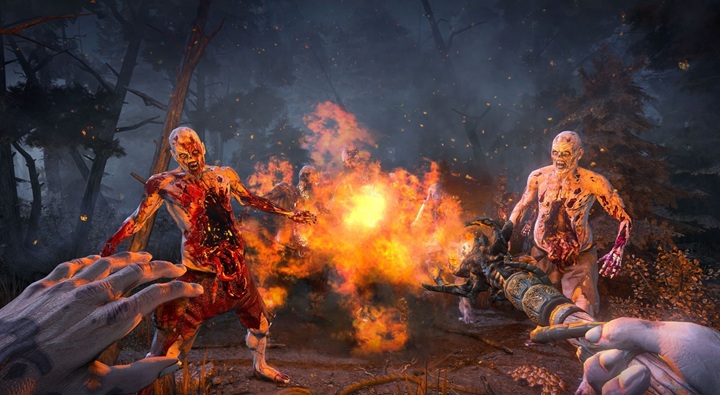
The game would also provide us with crossbows, as well as magical staves that allow us to use magic based on elements (including ice and fire). On the battlefield, we would also make use of explosive potions or elements of the environment, for example, dropping large chandeliers on the heads of our enemies.
Intelligent enemies
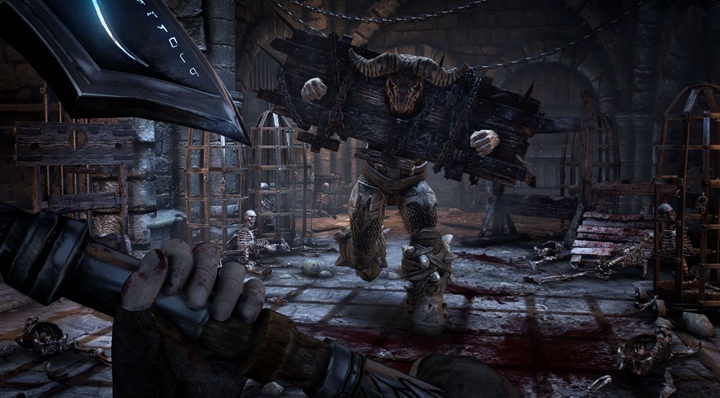
At first glance, the opponents we would have to face, like zombies, minotaurs or skeletons, would seem to not be particularly intelligent. However, as it turned out - nothing could be more wrong. Our enemies were meant to constantly analyze our style of fighting and the course of the battle, and adapt to them, for example, by flanking us from behind or splitting up if necessary.
Which mode do you want?
In addition to the possibility of playing solo or in cooperation, Hellraid was supposed to offer three gameplay variants. The basis would be a campaign mode. We were also suppose to have a Mission Mode, consisting of individual missions that we would go through, fighting for the best score. The list would end with the Arena, where we would face hordes of enemies.
Death and rebirth
Hellraid was supposed to run on the Chrome Engine 6, which was also used in Dying Light, so we probably wouldn't have to worry about the quality of the graphics. Unfortunately, we did not have the opportunity to find out, as the project described above was cancelled in 2015. In 2020, it was re-announced, now as Dying Light: Hellraid.
Instead of a separate game, we received an expansion to Dying Light, in which we explored a dark dungeon and eliminated hordes of enemies, while collecting equipment and useful items. "Mostly negative" reviews on the Steam platform clearly prove that this is not Hellraid the fans were waiting for. Nevertheless, in the end, the game met a better fate than most of the projects described in this series, because ultimately we were able to check it out... in one form or another.
Spiritual successor
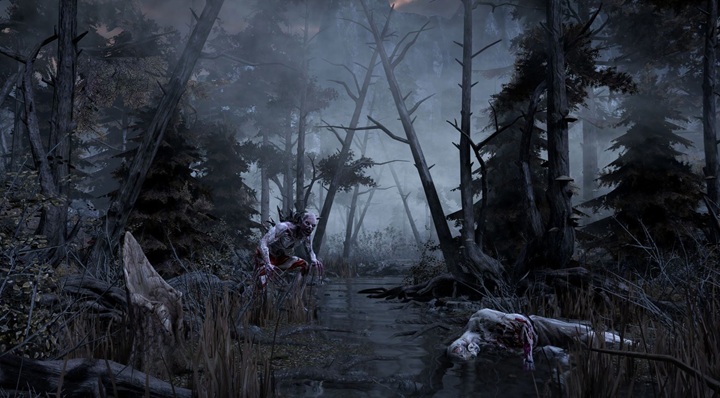
In August 2025, when these words are being written, hardly anyone remembers Hellraid anymore. However, the exceptions include developers from the Paraglacial studio, responsible for Fatekeeper - an FPP action RPG game, inspired by Hellraid and Dark Messiah of Might and Magic. Time will tell whether the developers are able to deliver a production that will fill the void after Techland's game described here. So far it looks very promising.



0

Author: Christian Pieniazek
Started working with Gamepressure.com in August 2016. Although the Game Encyclopedia has been his pride and joy from the beginning, he also writes for the Newsroom and the Editorial section. Gained professional experience through a now-defunct service, in which he worked for almost three years. Graduated in Cultural Studies at the AGH University of Krakow. Runs his own business, jogs, cycles, loves mountain hiking, is a fan of nu metal, is interested in space, and of course, enjoys playing games. Feels best in action games with an open world and RPGs, although won't turn down good racing or shooting games.

Latest News
- KaM Remake, the fan-made version of the classic strategy game, is practically finished
- A fan has enhanced and fixed the classic Ultimate Spider-Man for PC
- Because of the final boss, I never gave up on entire genre, but the wonderful Rayman 2: The Great Escape hasn't aged a bit
- The free version of the cult classic shmup Tyrian has been updated after 4 years
- A new Nod campaign has been added to The Dawn of the Tiberium Age, a freeware Command & Conquer RTS