Titan Quest 2 Early Access is a marathon, not a sprint. Devs have a long and difficult journey ahead, but the game has strong foundations
After spending several hours with Titan Quest 2, going through the entire available part of the campaign, I can say one thing: the developers have a long and difficult road ahead.

Almost twenty years have passed since Titan Quest offered hack'n'slash fans an alternative to Diablo's domination. It was a game that for many became more than just a clone - it was an escape into the world of mythology, offering a unique dual class system and a sense of adventure that was hard to find elsewhere. Today, in 2025, with the market full of giants like Path of Exile 2, Last Epoch, and the latest Diablo, the announcement of Titan Quest II brought both excitement and concern. Does returning to this formula still make sense? Can the creators from Grimlore Games live up to the legend of the original game and meet the modern genre standards?
Titan Quest II in its current form is a solid, but also problematic creation. On one hand, we have strong foundations that instantly bring back nostalgia and show that the developers understand the soul of the original. On the other hand, the game stumbles upon problems that are almost unforgivable for the aRPG genre in today's times. So here's the analysis of what's working, what needs fixing right away, and whether it's worth starting the journey to ancient Greece now or waiting for the gods from Olympus to arrive with specific improvements.
Joy of tinkering
Let's start with what's undeniably good in Titan Quest II, because these are the elements that give hope for the future of the project. Right from the start of Early Access, the game offers a solid chunk of content: four championships, 9 main quests, 14 side quests, over 50 types of enemies, and 6 bosses, which is about 10-20 hours of gameplay for one playthrough. However, strength lies not in numbers, but in the quality of the foundations.
The brightest point of Titan Quest II is undoubtedly the character development system. This is the essence of this series and I'm glad that the devs didn't try to reinvent the wheel. Being able to combine two out of the four available championships still brings a lot of satisfaction and encourages experimenting. Each skill tree seems well thought out, offering 37 active skills and 55 passive skills, which can be further modified using over 300 modifiers to give them new effects or completely change how the skills work. This is where I spent most of my time outside of battles, planning the perfect build. This flexibility is the heart of the game and it's already working quite well.
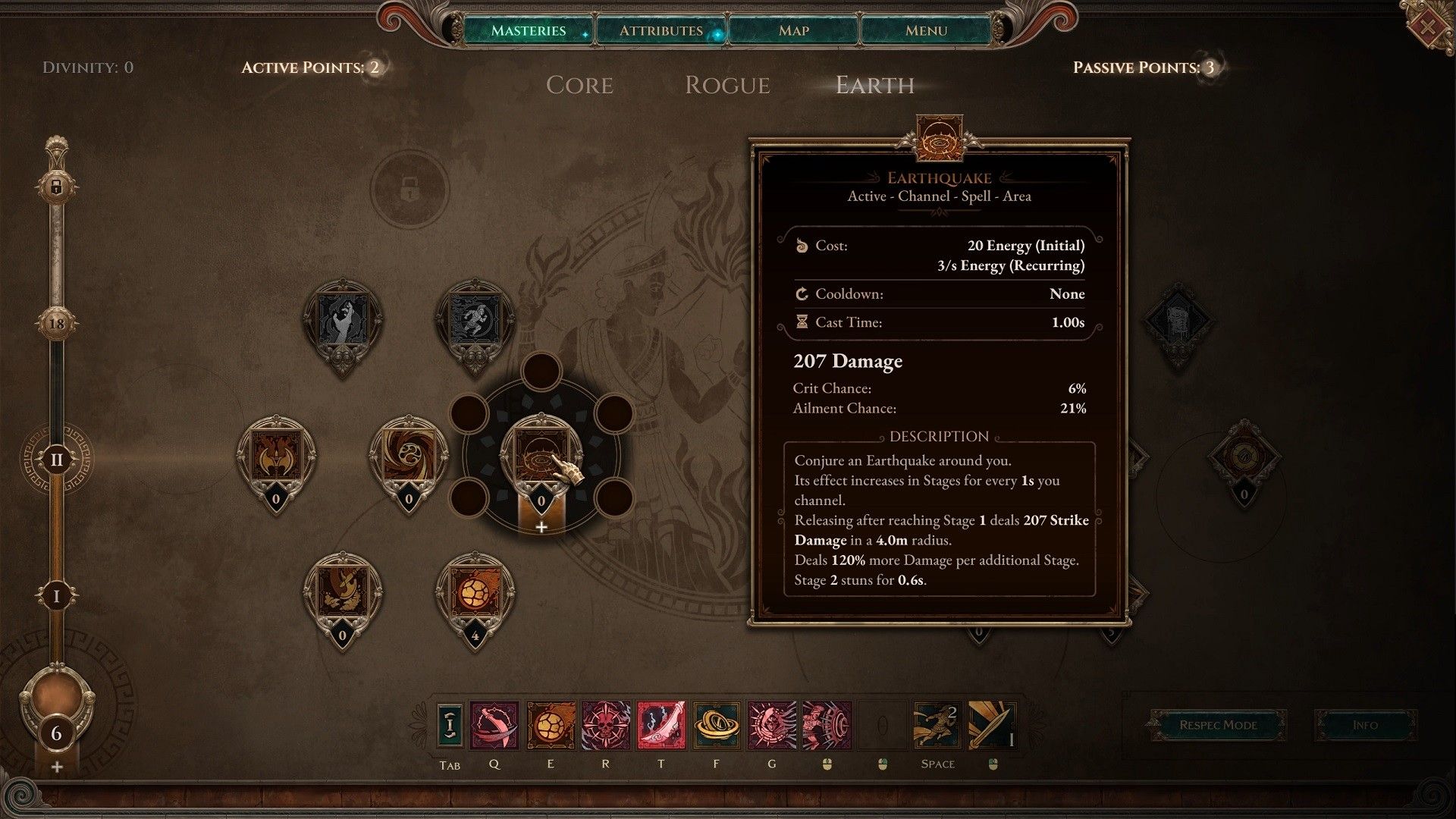
Titan Quest 2 allows for a lot of skill combinations.Titan Quest 2, Grimlore Games, 2025
Moreover, the game is not afraid of complexity. Basic stats can be a bit overwhelming at first, but they just take a little time to get the hang of. This is a signal to the genre veterans - your knowledge and analytical skills will be rewarded here. This impression is enhanced by a beautiful, clear interface and fantastically designed skill icons, which make navigating through complex trees a true pleasure.
Solid world project
In the era of hack’n’slash games with procedurally generated worlds, which are often huge but empty, Titan Quest II focuses on more condensed, hand-designed locations. And this is the solution that works best, especially for our first adventure. Here, the detail and depth of the environment should be praised. Every cave, ruin, or olive grove has its own unique character, and the atmospheric soundtrack adds to the feeling of an ancient adventure, even though it's not very diverse yet. Exploration here gives real satisfaction and encourages the player to look into various corners. The world (even on the first map) is full of paths, hidden caves, optional quests, and additional bosses. This approach makes the world seem more authentic and worth exploring on your own. Something interesting might really be waiting around the corner.
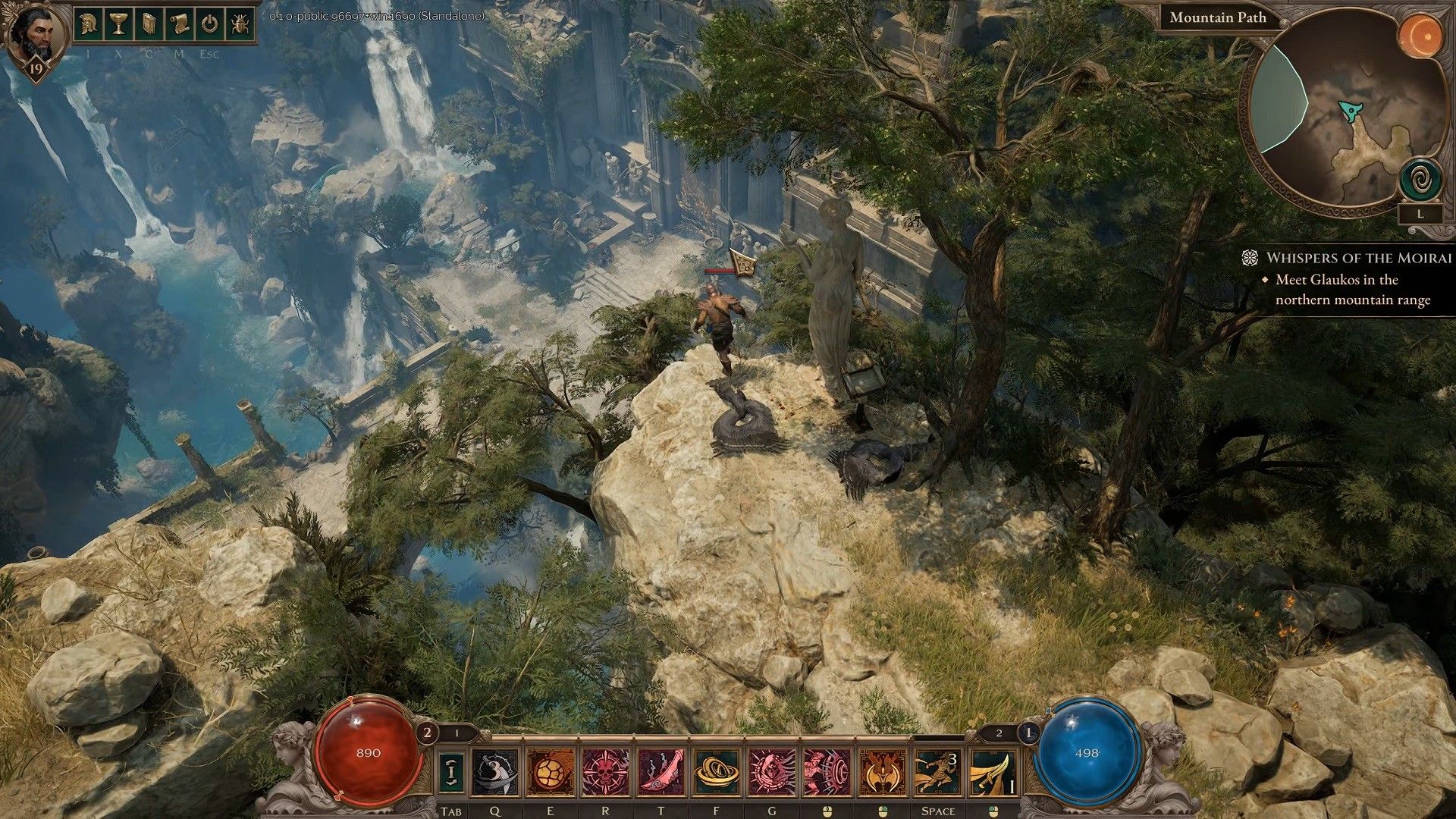
The locations have a lot of depth.Titan Quest 2, Grimlore Games, 2025
However, there is another, darker side of the coin. The handcrafted, static world makes the first playthrough an exciting adventure, but it can get boring with each subsequent play. Once we know all the secrets, know where the best opponents are hiding, and where to look for valuable treasures, the motivation to revisit the same paths drastically decreases. The challenge for the creators designing the endgame of Titan Quest II is to make sure players spend hundreds of hours, not just tens, in the game.
Soulless items
Unfortunately, this is largely where the positives of Early Access end. The current version of Titan Quest II has a few major issues that make it quickly go from exciting to disappointing. Let's start with the biggest problem that's casting a shadow over the whole game: the loot system. In a genre where hunting for ever better equipment is the main driving force, the items in Titan Quest II are simply boring. I've been playing for over 10 hours and haven't found a single item that would define my playstyle or change how my abilities work. Loot boils down to comparing numbers - more armor, more damage. There is a lack of exciting affixes, unique features that would prompt a character rebuild.
The situation is made worse by the fact that the game is flooding us with tons of worthless items, and there's a serious lack of a loot filter. Every big fight ends with having to manually wade through a sea of gray and blue items, which is just exhausting.
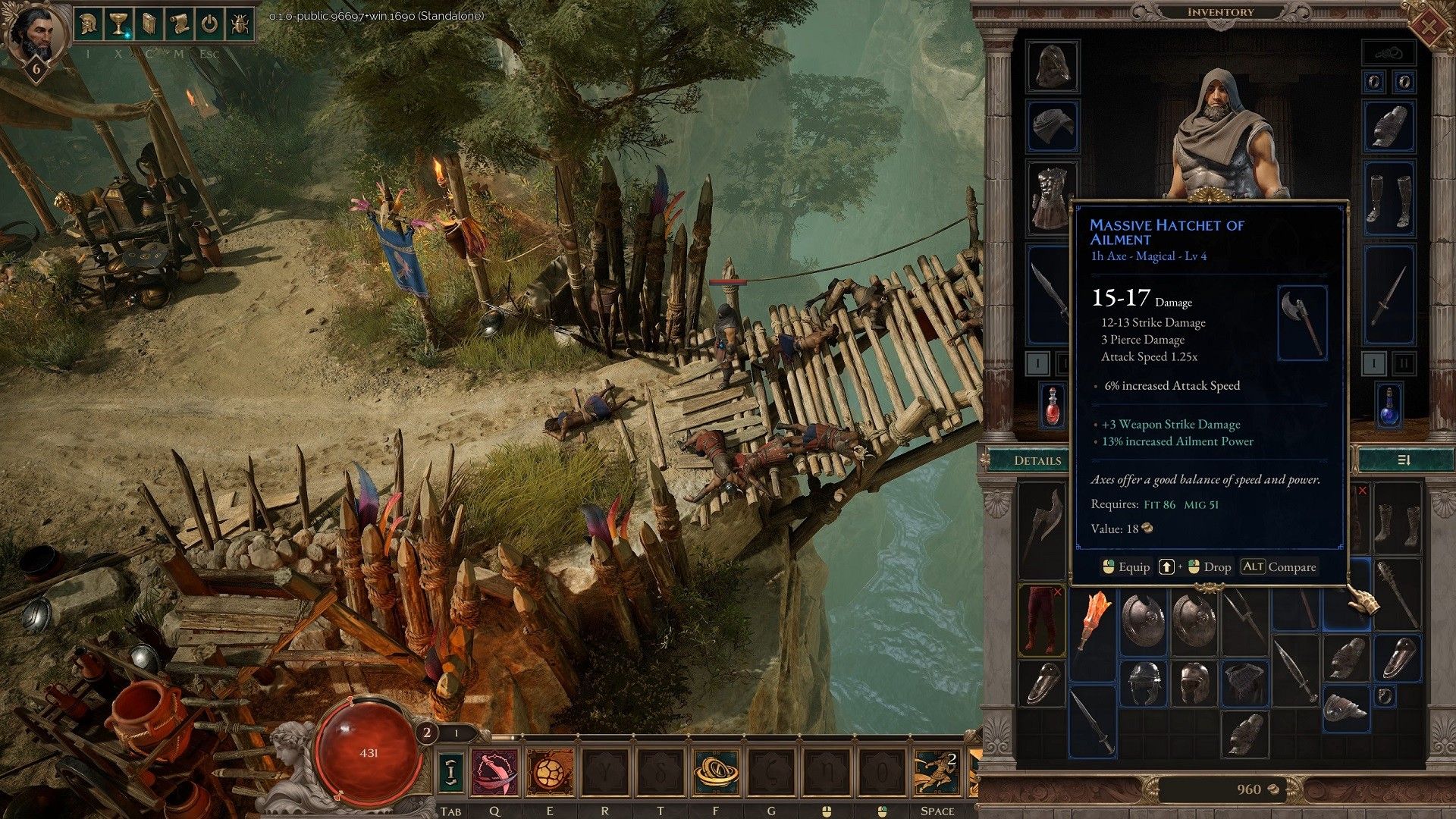
Items in Titan Quest are just boring.Titan Quest 2, Grimlore Games, 2025
This is compounded by the complete lack of a crafting system in Early Access. We cannot improve, modify or create items, which in today's aRPG is an absolute standard. Without it, the player is completely at the mercy of RNG, and since the loot itself is uninteresting, the whole gameplay loop loses its meaning. This is the most serious issue that the creators need to address if they want to keep players in the game for longer.
Fight without meat
Another serious problem is the "feeling" of the combat. It is, at best, okayish. The combat lacks weight, a satisfying impact, which makes defeating enemies a pleasure in itself. The animations are a bit stiff, the sound effects aren't impressive, and the character responsiveness can be problematic, which makes the fights less smooth. Compared to the fluidity of combat in Path of Exile 2 or its "fleshiness" in Diablo IV, Titan Quest II simply pales in comparison.
This problem is exacerbated by the unambitious project of opponents and bosses. The bestiary, at least in the available part of the game, is shockingly generic. We mainly fight against boars, crabs, wolves, skeletons, and humans. This raises the question: where has all the rich Greek mythology gone? Where are the centaurs, satyrs, maenads, harpies, or cyclops? Their lack makes the world, despite the beautiful views, seem empty and devoid of its unique identity. This is a huge, untapped potential, which makes the game lose its biggest asset - setting.
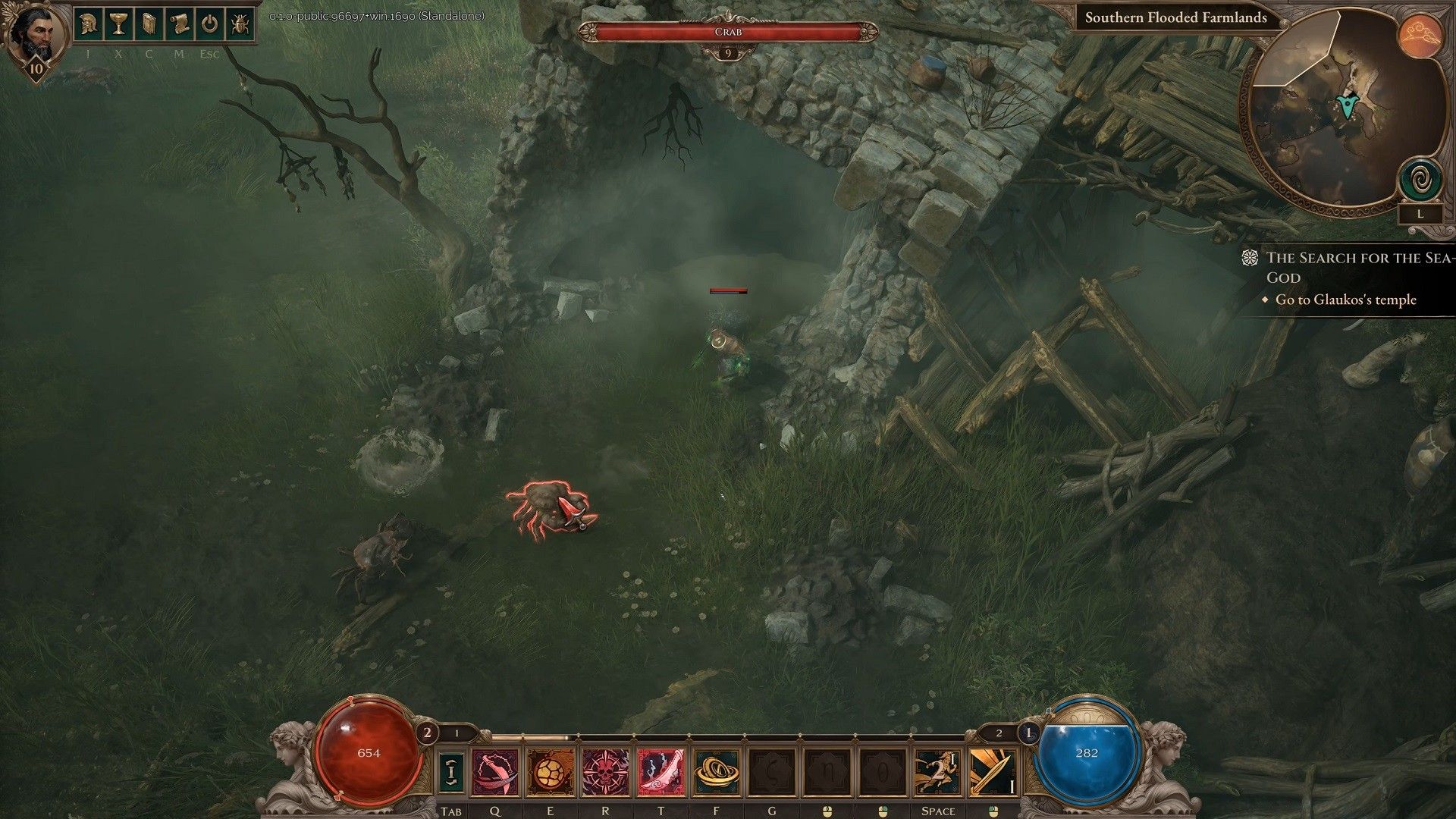
This game could use more interesting monsters.Titan Quest 2, Grimlore Games, 2025
Analysis of the devs' promises
Reviewing an Early Access game wouldn't be complete without looking into what the developers have promised. Fortunately, the creators have presented a clear development plan, which addresses some of my concerns.
The most important information - the creators plan to add a crafting system and transmogrification, but not until the first half of 2026. That's good news, but it also means a long wait for a key mechanic in this genre. In one of the first big updates, there's also going to be a full character creator that will replace the current presets.
The game is expected to receive major content updates every 3 months, with the first one expected around October 2025. The full version is planned for the end of 2026, which shows that the creators are taking a marathon approach to the project, rather than a sprint.
The approach to monetization is extremely fair. The game in Early Access costs $29.99 with a 20% discount at the start, so it's around 24 bucks. The final price will be $49.99. The devs swear that there will be no microtransactions in the game, although they don't rule out large, paid additions in the future. This is a model that deserves praise.
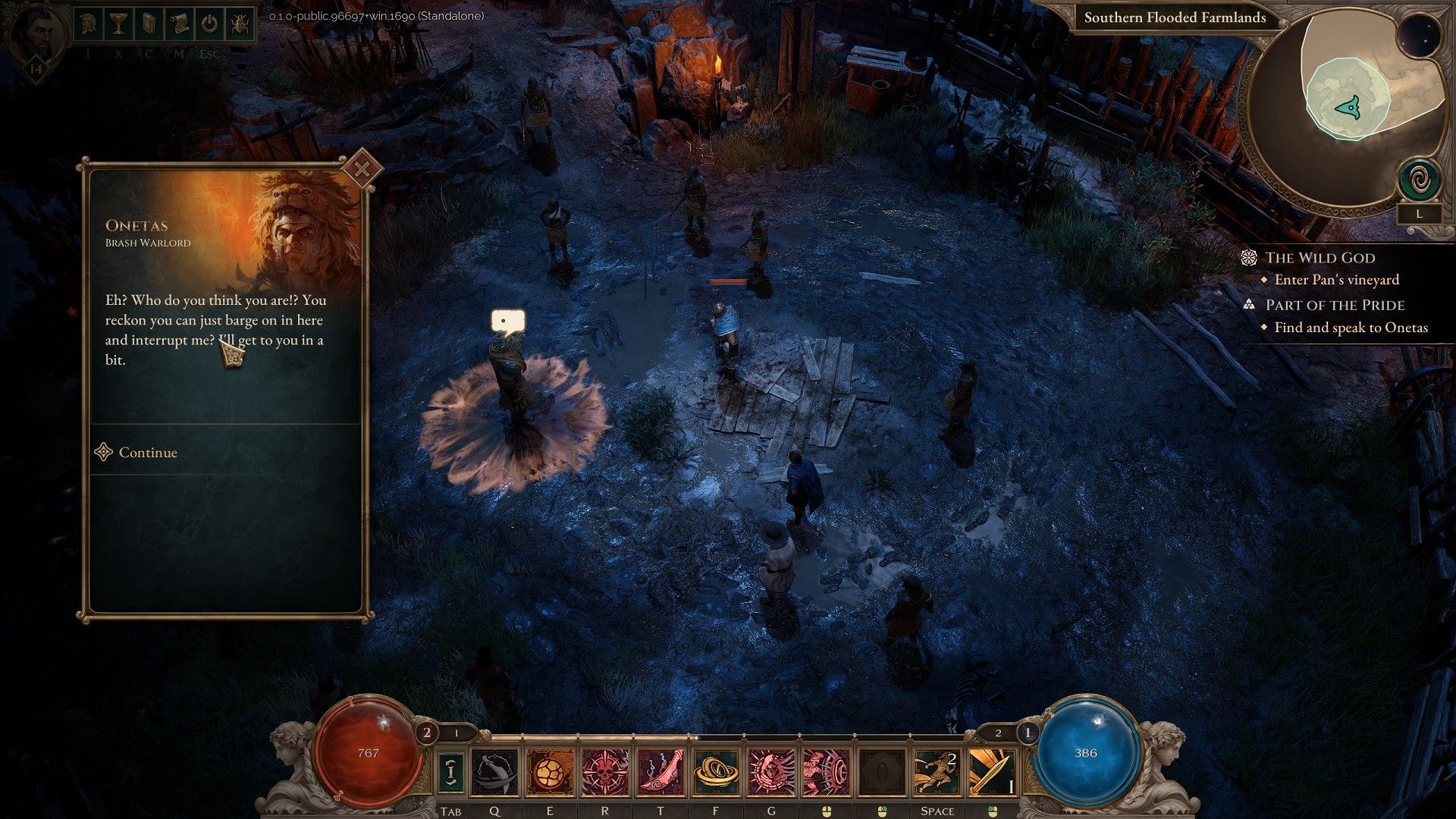
The game is not lacking in side quests.Titan Quest 2, Grimlore Games, 2025
The biggest question mark, however, arises when it comes to the endgame. The creators are talking about "dynamic and replayable experiences" that will allow players to strengthen their character after completing the main campaign, but they don't give any specifics. That's concerning because in aRPG, the post-story content is what determines the longevity of the title. I'm worried that without a strong and engaging endgame, Titan Quest II might struggle to keep players interested in the long run. Repeating the same static campaign could get boring quickly.
Is it worth starting the adventure right now?
Titan Quest II in its current state is a game full of contradictions. On one hand, its core - the character development system and world design - is incredibly solid and provides immense enjoyment. This is a game created with love for the original. On the other hand, the flawed loot and combat systems, as well as the lack of key genre features, make it hard to wholeheartedly recommend it to everyone.
So, answering the question posed at the beginning, it's worth buying Titan Quest II in Early Access if:
- You are a die-hard fan of the first installment and want to actively participate in the development process, sharing your thoughts.
- You really enjoy theorycrafting and creating unique builds, and you're willing to overlook the imperfections in combat and loot for now.
- A fair price and the absence of microtransactions are enough reasons for you to support the developers at an early stage.
Better wait with the purchase if:
- You expect a refined, dynamic combat at the level of modern genre leaders.
- Exciting loot that defines your playstyle is the key to having fun in aRPGs.
- You want to play a complete game with an extensive crafting system and engaging endgame.
The potential in Titan Quest II is quite large. The foundations are in place, and the development plan seems sensible. However, the path to version 1.0 is still long and bumpy. The devs need to show that they can not only recreate the magic of the original but also build a modern and engaging experience on top of it. I will be watching this project very closely, because if they manage to patch the current holes, we may get an aRPG that will stay with us for years. For now, patience seems to be a virtue worthy of a Greek hero.


0

Author: Paul Wozniak
Part of the editorial team since 2019, he started as a news writer and now works mostly on video content. Currently, he is mainly interested in RPG, soulslike and metroidvania games, but he has also devoted a large part of his gaming life to multiplayer. In games, he mainly values complex character development mechanics and freedom of action, and tries to look at the covered titles from different perspectives. He has also been running his YouTube channel since 2023.


Latest News
- Because of the final boss, I never gave up on entire genre, but the wonderful Rayman 2: The Great Escape hasn't aged a bit
- The free version of the cult classic shmup Tyrian has been updated after 4 years
- A new Nod campaign has been added to The Dawn of the Tiberium Age, a freeware Command & Conquer RTS
- Fans have removed the time limit from The Blood of Dawnwalker
- Empire II: Total War now with two extra historical campaigns