First and last such horror game from Ubisoft. In the forgotten classic from the Alone in the Dark 4 creators, the biggest enemy wasn't monsters at all
There was a time when Ubisoft's portfolio was truly diverse. From under the wings of the French publisher came a fairly successful survival horror, which, however, failed to put up an even fight against Resident Evil 4, released a little earlier.

DarkWorks Studio kicked off its journey in the video game industry with a bang, developing the fourth installment of an iconic survival horror series - Alone in the Dark: The New Nightmare. The game was warmly received by both players and critics, and still holds a 'mostly positive' rating on Steam to this day.
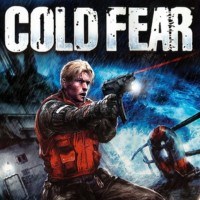
The studio later teamed up with Ubisoft, which led to the creation of another survival horror title. I’m talking about Cold Fear, a project that, in my opinion, was plagued by immense bad luck. The team had failed to release it before the launch of Resident Evil 4.
Since Capcom’s game was a truly groundbreaking release that reshaped the entire industry, Cold Fear stood little chance in a head-to-head clash - especially with just two months separating their launches. That doesn’t mean the game isn't worthy of attention though.
An unsolved mystery
The plot of Cold Fear was somewhat reminiscent of the movie Ghost Ship. The game’s protagonist was Tom Hansen, a U.S. Coast Guard officer sent to investigate the wreck of a Russian whaling ship left drifting in the Bering Sea. Once aboard, Hansen finds the crew gone without a trace - their place taken by bloodthirsty monsters. From that point on, Hansen must fight to survive, ultimately ending up on an infested oil rig.
While the premise was intriguing, the developers completely mishandled worldbuilding. As a result, Cold Fear never fully explained what caused the "ghost ship" to look the way it did. With the story falling flat, the focus shifted squarely to the game’s mechanics.
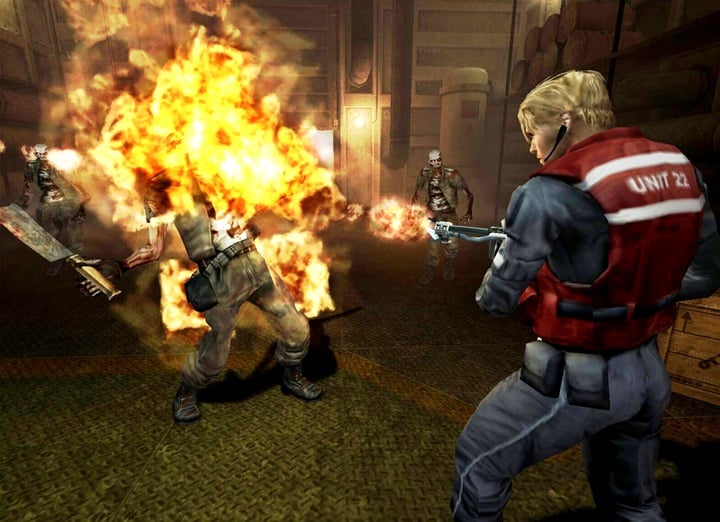
Resident Evil on a "ghost ship"
Fortunately, the gameplay in Cold Fear proved far stronger than its story. The developers went with a hybrid camera. During exploration, the game used various "cinematic" camera angles, but when aiming, the camera shifted to third person. Speaking of aiming, the game featured a relatively expansive arsenal of weaponry, mostly firearms - a handgun, rifle, shotgun, submachine gun and flamethrower.
Although there was plenty of ammo to be had, the game featured melee weapons as well. Hansen could also fend off attacking monsters through short QTE sequences.
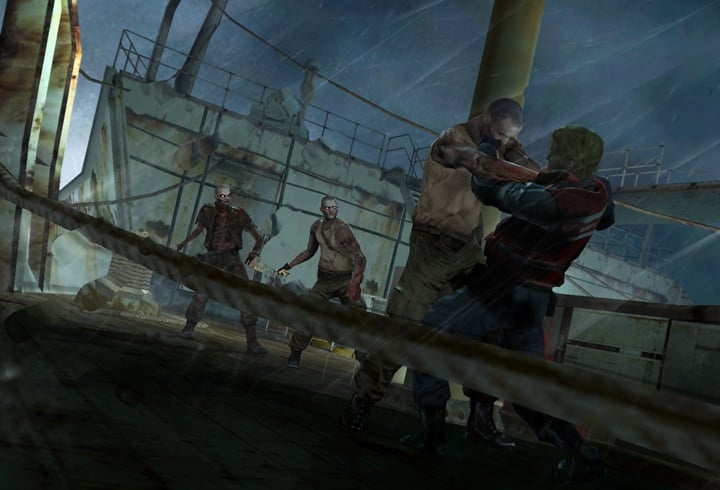
Monsters Inc.
As for the enemies, most of them were monstrous. The most common enemy type were zombies which, uniquely for the genre, could also run and wield guns. That wasn’t all - players also had to contend with other monsters and hostile humans.
Another threat we had to contend with was nature itself. The raging storm at sea not only enhanced the atmosphere but also directly affected gameplay. When outside, the camera swayed with the motion of the ship, and the waves could toss the protagonist around - sometimes injuring him or even throwing him overboard. All of this made the storm feel like the game's main villain. Unfortunately, when the game shifts to the oil rig, this mechanic is left behind.
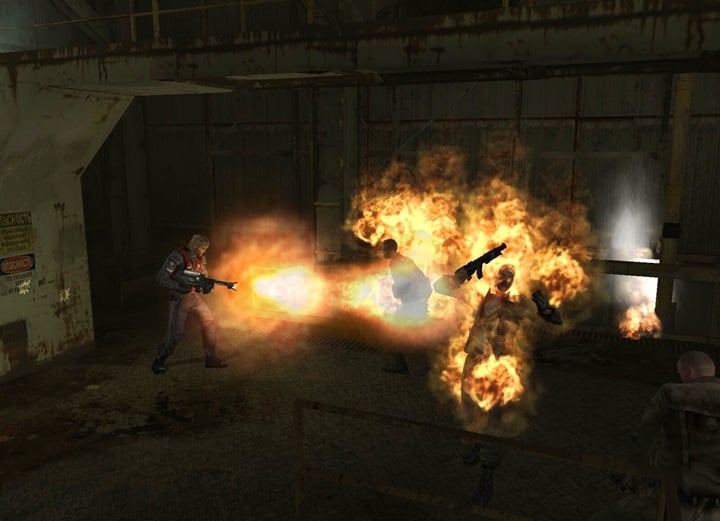
More of a gory shooter than a survival horror
As mentioned earlier, ammo was abundant in Cold Fear, and so combat was never all that challenging. There also weren't any complex environmental puzzles - only searching for items and using them at the right places.
All this meant the game was more of a shooter than a survival horror. As a result, shooter fans complained about the camera and slow pace, while horror fans complained about too much action.
Personally, it was an entirely different flaw that bothered me the most about Cold Fear. Exploring the ship and oil rig required a fair amount of backtracking. While it could have quickly become monotonous, the oil rig saved the game here, as it was much larger and more diverse. The backtracking was made even worse by the lack of a map, forcing players to blindly look for the next objective.
After all that criticism, it’s worth noting that Cold Fear featured very impressive graphics. Even today, the game holds up visually, and the frequently mentioned storm still manages to impress. The finishing touch was the game’s brutality, on par with Resident Evil 4 and the slightly newer Dead Space.
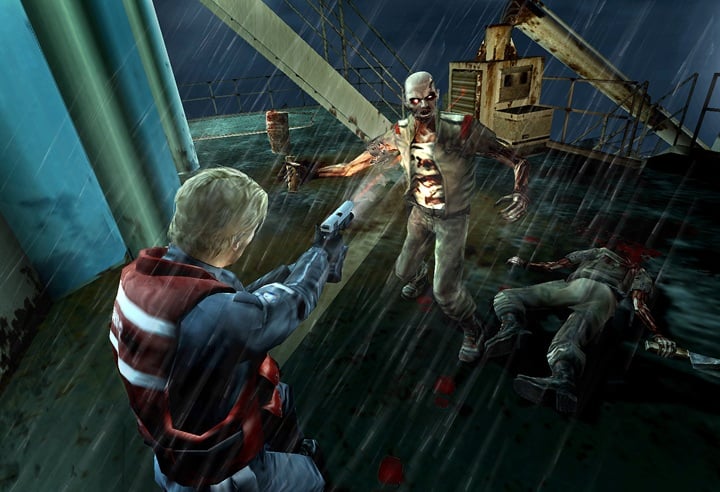
What happened next?
Cold Fear was released in 2005 for PlayStation 2, Xbox, and PC. Although the game was well received by players and critics, Ubisoft chose not to fund a sequel. DarkWorks, the studio behind it, tried to stay afloat by developing a survival horror game called Black Death. Unfortunately, the project never saw release, and its developers eventually vanished from the industry. But that’s a story for another time…
Until recently, Ubisoft held the rights to the franchise. At the end of August, news broke that the French publisher had parted ways with the rights, selling them to Atari. Only time will tell what the new owner plans to do with it.
How to play Cold Fear today?
Cold Fearis still available on Steam. Without any sales, it can be bought for 9.99 USD.
- February 12 is the judgment day. Ubisoft employees hold their breath for what's to come
- Shares crashed by 34%. Ubisoft's new plan for Assassin's Creed and AI terrified investors
- „Who approved that?” Leaked images of the „nearly finished” Prince of Persia from Prince of Persia: Sands of Time Remake spark one reaction among players


0

Author: Christian Pieniazek
Started working with Gamepressure.com in August 2016. Although the Game Encyclopedia has been his pride and joy from the beginning, he also writes for the Newsroom and the Editorial section. Gained professional experience through a now-defunct service, in which he worked for almost three years. Graduated in Cultural Studies at the AGH University of Krakow. Runs his own business, jogs, cycles, loves mountain hiking, is a fan of nu metal, is interested in space, and of course, enjoys playing games. Feels best in action games with an open world and RPGs, although won't turn down good racing or shooting games.

Latest News
- A fan has enhanced and fixed the classic Ultimate Spider-Man for PC
- Because of the final boss, I never gave up on entire genre, but the wonderful Rayman 2: The Great Escape hasn't aged a bit
- The free version of the cult classic shmup Tyrian has been updated after 4 years
- A new Nod campaign has been added to The Dawn of the Tiberium Age, a freeware Command & Conquer RTS
- Fans have removed the time limit from The Blood of Dawnwalker