Shiny Shoe CEO Mark Cooke explains why Monster Train needed a sequel instead of more DLC
The first Monster Train was already a hit, but then the team decided to improve upon it in every way with a sequel, and it seems like they succeeded. Let's talk with Shiny Shoe CEO Mark Cooke and ask him some uestions about the game and the whole genre.

Recently, some of the most popular games on Steam have been roguelikes, particularly deckbuilders. Some might point to games like Slay the Spire, which blew up in popularity back in 2019, but more recently, games like Balatro earned a Game of the Year nomination. No matter how it started or where it’s going, roguelike deckbuilding games are here to stay.
Interview with Mark Cooke, CEO and founder of the studio behind Monster Train series
Why roguelikes are so common these days was a topic of conversation between myself and Mark Cooke, the founder and CEO of a studio called Shiny Shoe. If you’re a fan of the genre, that name might sound familiar. Shiny Shoe is the studio behind two of the last five years' biggest roguelike hits: Monster Train and, more recently, the sequel, Monster Train 2, which has received rave reviews from fans and critics alike after launching in May of this year. There are still thousands of players jumping into Monster Train 2 at any given moment on Steam, and that’s not even mentioning the number of console players. The online community is also constantly discussing strategy, decisions, and more.
Cooke and I exchanged a handful of questions over email about why the team decided to create a sequel, how they go about balancing a game with over 400 cards, and why roguelikes seem to be popping up everywhere these days. Here is the interview.
------------------------------------
Matt Buckley, Gamepressure: First of all, if you don’t mind, could you introduce yourself? What is your name? What is your role on the team?
Mark Cooke, CEO of Shiny Shoe: Hi, I’m Mark Cooke, founder and CEO of Shiny Shoe. We’re currently a 19-person studio - relatively small - so in addition to overall studio management, I am the producer / project manager on all of our games.
MB: So, Monster Train 2 is a direct sequel. It’s becoming more common for games to just receive constant updates rather than release a new game. Were there any particular reasons the team decided to create a full sequel to Monster Train rather than continue to add DLC and updates?
MC: We wanted Monster Train 2 to feel like a new adventure and improve upon the first game in every way. To be able to accomplish that goal, we needed a reset to redo some past decisions from the first game. Therefore, we felt that a sequel made more sense compared to doing additional DLC for the first game.
Source: Monster Train 2, developer: Shiny Shoe
MB: What are some of the biggest changes from the original? Was there anything that was particularly challenging to implement? Were there mechanics or features you wanted to have in the first Monster Train, but had to wait until now?
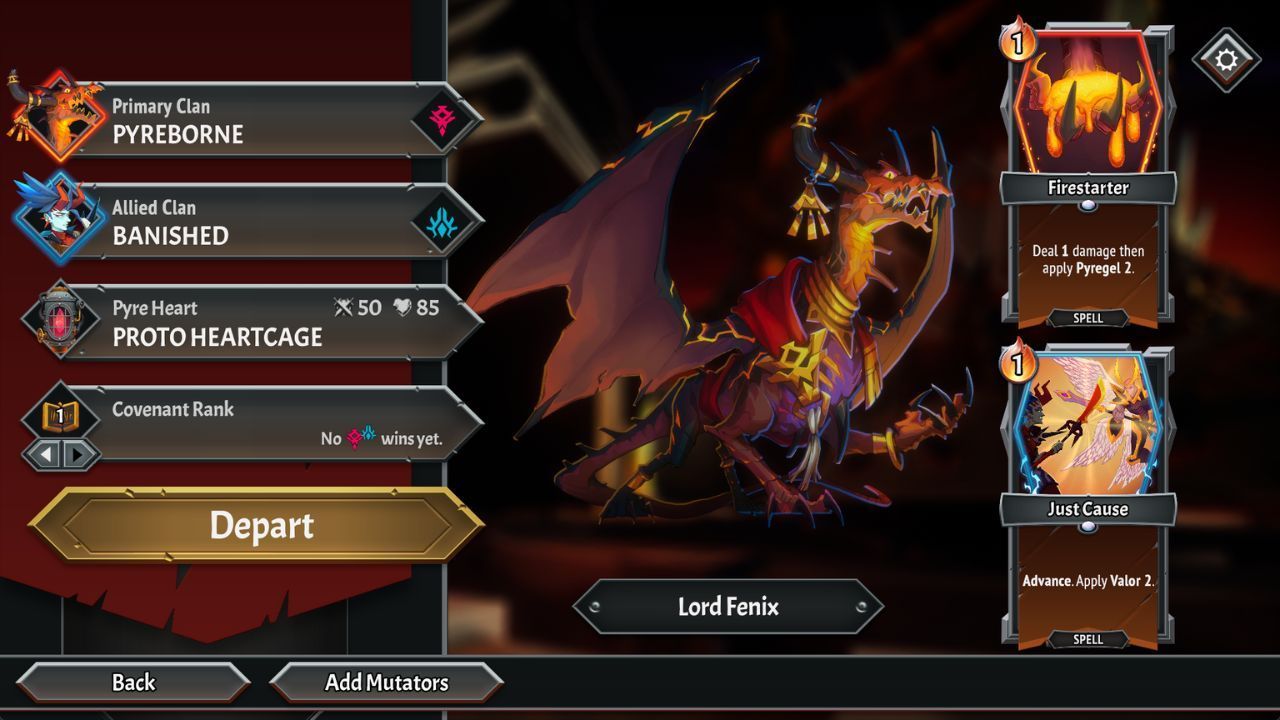
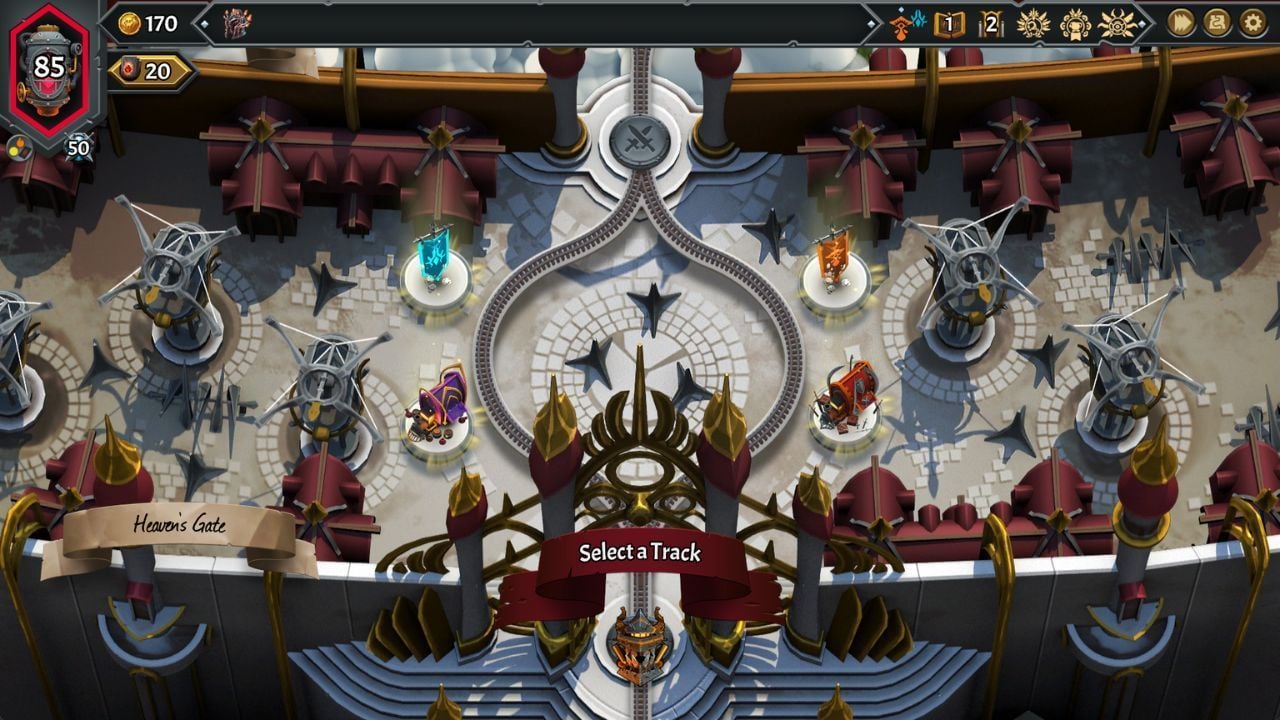
MC: The biggest gameplay changes include the new Equipment and Room card types, customizable Pyre Hearts with different gameplay, unit abilities, the deployment phase at the start of each battle, and the addition of the undo turn feature. The five new monster clans in the game make use of all the new mechanics.
We also corrected what I see as a design mistake from the first Monster Train, where we had these “Expert Challenges” that were runs with fixed starting conditions. A lot of people liked these challenges, but they required that the player had completed a run at the highest difficulty level to unlock, which means a lot of players never got to experience them. In Monster Train 2, we moved these challenges to a new area called the Dimensional Portal, which unlocks much earlier. This way, more players can enjoy these runs.
Another area of the game we improved was better support for handhelds like Steam Deck and Switch, along with TV scenarios. This includes both improved controller support compared to the first game and significantly improved text legibility.
Implementing and maintaining the "undo turn" feature in Monster Train was challenging due to the game's code architecture. Unlike typical undo functions that revert the last action's state change, Monster Train's system is unconventional. This is because supporting undo wasn't an initial design goal when the core combat engine was written for the first game. Instead, the sequel stores a complete replay of all battle decisions. When an undo occurs, all actions taken up to the start of the current turn are deterministically replayed.
Source: Monster Train 2, developer: Shiny Shoe
MB: I often see players asking online whether they need to have played the first Monster Train to jump into Monster Train 2. What would you say to those players? Are there benefits to playing both?
MC: I don’t believe it’s necessary to play Monster Train before playing the sequel. While there is a small amount of story context you miss out on, the Monster Train games are predominantly systems-driven roguelike deckbuilders. Monster Train 2 has a full tutorial to onboard new players into the gameplay systems, and there is no need to have played the first game to understand the rules. In fact, I’d recommend new players start with Monster Train 2. Like I said, we tried to make it better than the first game in every possible way, and I believe we pulled it off!
There are a few reasons why you might want to play the original, though. One, like I said, there is a bit of a different story, and there is a variety of gameplay content that is different compared to the sequel. So if you love Monster Train 2 and want more of it, the first Monster Train has some new things to see. Another reason is The Last Divinity DLC, which has some gameplay systems not present in Monster Train 2. One system in particular is “unit synthesis”, where it’s possible to merge two units into one, combining some of their gameplay elements. We decided that it was too complicated to include in the Monster Train 2 base game, but it is a deep system that is only available in Monster Train.
Source: Monster Train 2, developer: Shiny Shoe
MB: With over 400 cards in the game, do you think it’s possible to have everything on a balanced power level? Where no strategies are particularly powerful or falling behind? How do you go about balancing the game?
MC: It is challenging to balance all the content. We use a multi-faceted approach. One, we do a lot of playtesting both internally and with a private group of testers. I really appreciate all of their contributions in helping tune and improve the game.
We also look at various types of aggregate gameplay analytics, like how often a certain reward is picked in a Celestial Alcove event compared to the others. These data points do not paint the whole picture, but are helpful in getting a better understanding of how useful a particular piece of content is perceived to be.
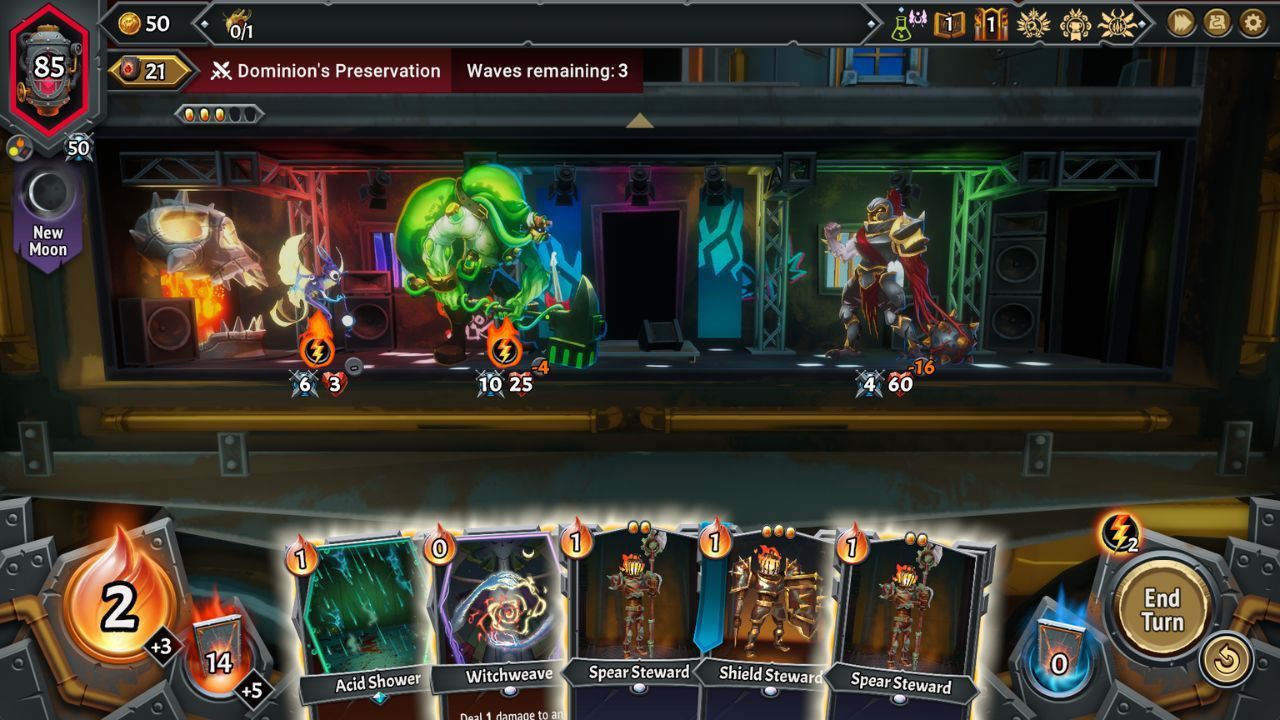
I don’t think we would ever claim that the game is perfectly balanced, but it’s important that clan combinations are viable up to the highest difficulty level. In Monster Train, you can mix and match clans, which define your starting conditions and which cards are available to draft in a run. Each clan has their own unique gameplay mechanics. Some combinations are easier to play than others. But we are certain that it is possible to clear the highest difficulty with all of them, and exploring all of those combinations is a big part of the fun of the game.
Source: Monster Train 2, developer: Shiny Shoe
MB: As a huge fan of roguelike games, I often see players joke online about how every other indie game is a roguelike these days. What do you think has led to this genre taking off over the last few years?
MC: I like roguelikes for two main reasons. One, they are generally good at getting to the interesting decisions quickly. Because of the run structure, developers can ramp up the power growth quickly in a satisfying way (when executed well) without resorting to things like grinding to gain XP to be able to move onto the next level. The second reason is lifestyle-related - I don’t have as much time as I used to for long, continuous gaming sessions, and the run-based structure allows me to have a fun, fully contained gaming session in less than an hour.
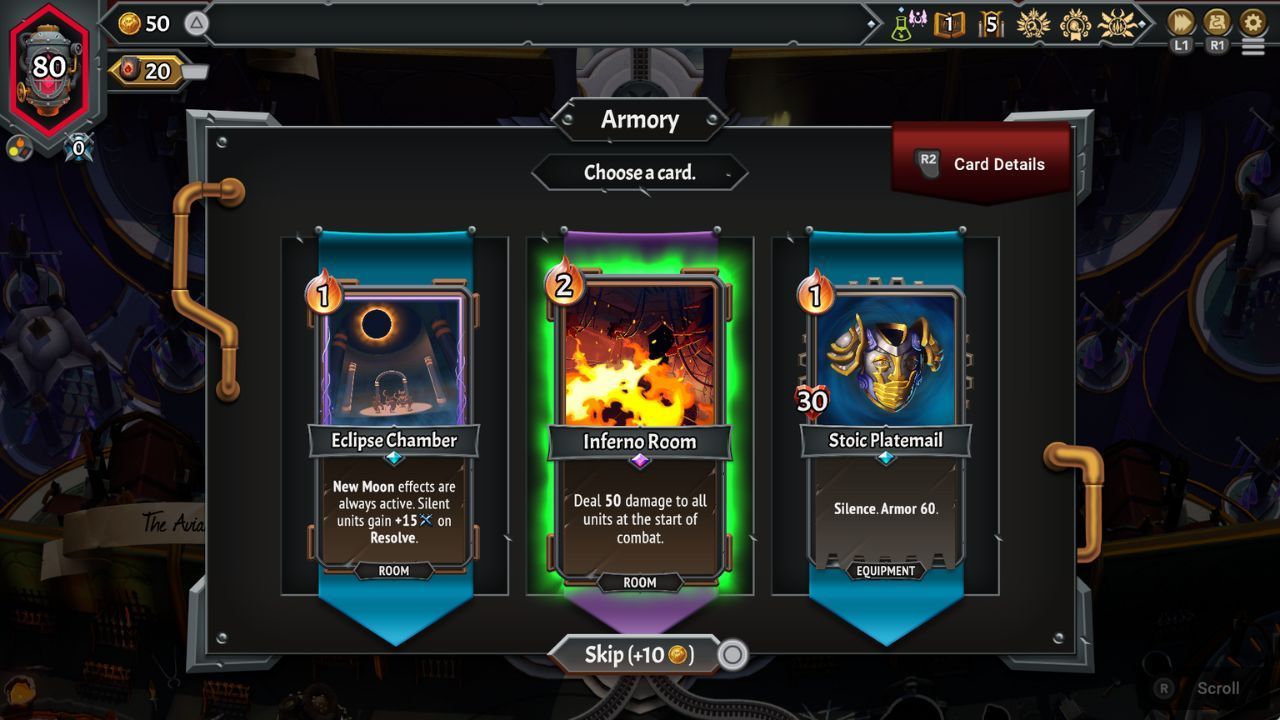
Source: Monster Train 2, developer: Shiny Shoe
MB: Are there any plans for future updates or DLC that you can talk about?
MC: We have a large free content update coming out on November 5th, 2025 [this interview took place before this launch], called Echoes From the Void. It features two new bosses, new clanless artifacts, more Dimensional Challenges, new Celestial Alcove events, and more. I’m excited to get it into players’ hands.
Separately, we are working on another free update and paid DLC that we plan to release in early 2026. More on that still to come at a later date.
MB: Do you have a favorite clan or pair of clans that you like to play?
MC: My favorite clan in Monster Train 2 is Luna Coven. Manipulating the phase of the moon to maximize the power of your spells is a fun puzzle! Plus, the visual theme of moon moths looks really cool.
------------------------------------
Thanks to Mark Cooke and Shiny Shoe for the opportunity to answer some questions. Monster Train 2 is available now on Nintendo Switch, PlayStation 5, Xbox Series X/S, and PC via Steam. You can jump in now to experience the Echoes From the Void update, which just launched earlier this month.


0

Author: Matt Buckley
Matt has been writing for Gamepressure since 2020, and currently lives in San Diego, CA. Like any good gamer, he has a Steam wishlist of over three hundred games and a growing backlog that he swears he’ll get through someday. Aside from daily news stories, Matt also interviews developers and writes game reviews. Some of Matt’s recent favorites include Arco, Neva, Cocoon, Animal Well, Baldur’s Gate 3, and Tears of the Kingdom. Generally, Matt likes games that let you explore a world, tell a compelling story, and challenge you to think in different ways.

Latest News
- A fan has enhanced and fixed the classic Ultimate Spider-Man for PC
- Because of the final boss, I never gave up on entire genre, but the wonderful Rayman 2: The Great Escape hasn't aged a bit
- The free version of the cult classic shmup Tyrian has been updated after 4 years
- A new Nod campaign has been added to The Dawn of the Tiberium Age, a freeware Command & Conquer RTS
- Fans have removed the time limit from The Blood of Dawnwalker