Want to play Silent Hill, but still afraid of horror games? Alan Wake can help you
Horror titles have a lot to offer, but the likes of Silent Hill may be too much for some. With help comes a writer running around psychedelic towns to the sound of metal ballads. Alan Wake provides a great start to a horror adventure.

The feeling of exclusion is a terrible thing. It's not always about events; sometimes it's about trends or phenomena that are hard to get involved in, maybe because we're just scared. As a long-time coward with extensive experience in panic, I struggled for years to approach horror. I was just scared it would mess with my head too much (my experience with the movie The Grudge back in middle school backs this up – I slept with the lights on for a week). As a result, I missed out on outstanding titles over the years, such as the Silent Hill series, System Shock, Resident Evil, F.E.A.R., and even the initial wave of collective fascination with Dead Space. I made an exception only for the parody-like Devil Inside and the relatively mild Alone In The Dark 4.
I caught up on a lot of those titles years later once I got used to horror. The process took a long time, but a key step was playing Alan Wake. This is a great pick for anyone looking to dive into the world of horror. It introduces the genre relatively gently while still taking the audience seriously. Alan Wake 2, on the other hand, could be an excellent complement to this journey.
WARNING: SPOILERS AHEAD
To discuss the expressive means of Alan Wake, I need to give you some story examples and a bit of the plot.
Risk and reward
I try not to push people into horrors if they've ever said they feel uneasy with the genre or, even worse, if they have anxiety. I'm not a therapist, so I can't really predict how a movie, game, book, or comic will affect people dealing with additional issues. I know one thing: even a pretty healthy person can get totally freaked out by a well-made horror production. There are people—both young and old—who still feel a slight discomfort at the thought of something as familiar as The Exorcist or Alien. The human psyche harbors fears that philosophers have never dreamed of.
Horrors are all about creepy visuals like violence, blood, guts, body distortions, darkness, jump scares, and monsters that tap into our deepest fears. Plus, when they do tell a story, it's usually about some pretty heavy stuff. Even serious one. About dealing with loss and guilt (Silent Hill 2), about social systems that destroy us (BioShock), about the insignificance and meaninglessness of humans (any story inspired by Lovecraft). They really lay it on thick, trapping the audience and often leaving no hope for a happy ending or even a chance to find a safe spot. In games, there's also the fear for the character, who can die at any moment.

Silent Hill f, Konami, 2025.
It can be tough. However, at the same time—if you have no medical contraindications and curiosity outweighs anxiety—engaging with horror provides many benefits and can stimulate the imagination. Horror is a broad genre that influences other trends (would Diablo be the same without its gothic-dark allure? Would Mass Effect be as impactful without the specter of cosmic horror—the Reapers?). Sure, there are some mindless zombie action games and slasher films out there (which can be a blast), but you can also find all sorts of creative gems in both.
A monster can serve as a metaphor for human weakness or a phenomenon, and the story's conclusion can bring us catharsis—putting us in that rare state where, while engaging with a game (or another medium), we experience something authentic that changes our perspective. Moreover, these games often surprised us with their unique take on fantasy, leaving us unsure about what's real and what's just a wild imagination. It often turns out that we are dealing with creations that are complex in terms of psychology, symbolism, or social commentary. And the fact that it is presented to us in a more or less entertaining form?... Well, that's just a bonus.
Alan Wake – a guide through horror
Nevertheless, there's always that nagging doubt about whether we can handle the fear – I totally get it. For years, I avoided "scary" stuff, but out of curiosity, I finally tried Alan Wake – and I was hooked. Sure, I felt uneasy, but it was a controlled fear, never overwhelming me. It's all because of the sources Remedy used. The Finns took inspiration from The Twilight Zone, The X-Files, and Twin Peaks. Sure, those shows could definitely creep you out (especially if you were younger), but whether it was Scully and Mulder or Agent Cooper, they always managed to keep their cool when facing the uncanny stuff.
The same goes for Alan Wake. He's just an ordinary guy, not a warrior, but he gets tools from fate (and the writers and game designers) that help him face monsters and a cruel destiny. He's got weapons, flares, and most importantly, a flashlight that cuts through the darkness. The mechanics needed some tweaking because they got a bit repetitive at times, but overall, it made the player feel in control and powerful, which helped ease any uncertainty. It also mattered that Alan's writing had a specific relationship with reality.

Alan Wake Remastered, Epic Games, 2021.
We meet our writer when he and his partner arrive in Bright Falls, so he can tackle his writer's block head-on. However, upon arrival, it turns out that the locals are at least strange, and darkness is just waiting to swallow Wake—starting with his wife. And that was a mistake. Alan may be in the shape of a couch potato in his forties, but you can't deny he's got a crazy amount of determination. So he ventures into the darkness, after his beloved and for answers.
Of course, it's a journey full of anxieties, monsters, and encounters with possessed people. And it could have been shown in an absolutely macabre, overwhelming, or ruthless way for the audience, but Remedy opted for a fiction play—drenched in darkness, but essentially playful. It's the level of horror found in some episodes of Twin Peaks or The X-Files. Sure, we'll feel discomfort, sometimes we'll fear for Alan's health, solitary stages will give us a thrill, and the psychedelia will knock the ground from under our feet, but it's a controlled fear.
The horror vibe here is spiced up with Alan's sarcastic, slightly desperate sense of humor, along with the creators' wild ideas and a soundtrack featuring Poets of the Fall. Their rock and metal ballads add a unique twist to Wake's eerie atmosphere. After the scene where we reach the farm belonging to the Old Gods of Asgard band, we defend ourselves from waves of enemies to the beat of a heavy-metal anthem played from a playback. At that point, you can really say there’s nothing to fear, and we continue, charged with endorphins. It's supposedly a game, yet it's total cinema (even if there was a similar stage in Left 4 Dead). And after this sequence, Children of the Elder God permanently made its way onto my playlist.
Of course, after that fun little break, we, as Alan, had to keep dealing with this mysterious enemy force. Moreover, the end of the game—even with the DLC and the standalone expansion American Nightmare—left us with more questions than answers. We couldn't really relax about the main character's fate either. Such are the ways of a horror game—there's a supposed climax and confrontation, but in the end, the developers tighten the screws so we don't get too cozy.

Alan Wake Remastered, Epic Games, 2021.
Nevertheless, all of this contributes to a creation that borders on thriller and horror. This level of fear is easier to accept and absorb, even though our active participation in the action will make us experience what happens on the screen more intensely. I tried it back when I was more easily spooked by all sorts of creepy stuff, but the transition turned out to be quite smooth. It was a good first step, after which I began to take a greater interest in this genre.
As a chaser between horror meals, you can actually consider another Remedy game – Control. First off, it gives "Alans" a broader context, and second, it's an unpredictable paranormal thriller with super-engaging gameplay (solid shooting mechanics, object manipulation, and character maneuvering) featuring an interesting protagonist and a gripping storyline. Control is more about making you feel uneasy and tense rather than scared, but it can also be a kind of stepping stone in learning.
Alan Wake 2 – more, better, scarier
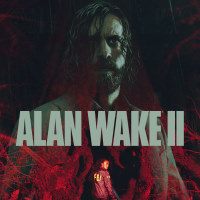
In this context, Alan Wake 2 acts somewhat like the next step in "therapy" for the faint-hearted. On one hand, it's simply a better, bigger game. It features more interesting mechanics for interacting with the story, like Alan planning scenes or Saga Anderson doing some mind palace detective work. Oh, and there's a second main character too, who's also caught up in the supernatural stuff but isn't as clued in about the issues haunting Bright Falls. Furthermore, she's a police officer, armed and trained, so at least initially she seems more prepared to face danger—and investigating the case of Alan Wake's disappearance means getting involved in supernatural troubles.

Alan Wake 2, Epic Games, 2023.
Moreover, AW2 is a more daring and crazy play on fiction. There's more metacommentary, play with subtexts, pop culture motifs, and breaking the fourth wall. These kinds of things, if they don't break the immersion, at least lighten the mood, make the story feel less intense, and make the game more fun. Usually, but not in this case.
First off, the first installment already broke the wall between fiction and the audience, and second, Alan's gone even deeper into the darkness than before, getting caught up in a unique story loop (or maybe a spiral). We're feeling overwhelmed and hopeless because of Wake's situation, and Remedy has been leaning more into straight-up horror elements. The screen hits us with some trippy jump scares, the artists use grittier, rustier colors (especially in Alan's city scenes), and the whole thing ends up being a bit more gruesome, bloody, and unsettling. The scenes of people getting possessed (and Mr. Scratch's performances) can be pretty unsettling—they're more sudden and devilish.

Alan Wake 2, Epic Games, 2023.
This time, the desperate humor and Herald of Darkness aren't just for fun – they're like pressure valves to help us chill out before the game really kicks our butts. The musical stage is a kind of heroic showcase that makes life easier in the land of eternal darkness and madness. That's why the horror in the second Alan works better and cuts deeper than in the first installment.
Alan entertains and educates
All of this makes the writer's adventures, inspired by those shows and Stephen King's books, really good at getting us into the horror genre. They provide a gentle yet serious introduction for the audience. Over time, they really ramp up the atmosphere and guide the player through the theme and different levels of creepiness. I think if you beat at least one game from the series, you'll know if the genre is for you. Seriously, don't push yourself into something that might harm you just because an editor or someone you know said it's cool.
However, if you can and are willing to go further, Alan Wake 2 awaits you - a crazy and outstanding game. Engaging with it is a value in itself because it offers a fascinating mix of playing with conventions and genre parodies, all tied together with a deeply human story about two characters facing horrors bigger than reality. The game mixes things up by blending live-action clips with in-game engine cutscenes, making the whole experience super creative and really engaging for your imagination.

Alan Wake 2, Epic Games, 2023.
If you've managed to handle Alan Wake 2, I think you can confidently try your hand at Cronos, Silent Hill 2 Remake (or the original), Resident Evil, and Dead Space. Then it might be time to dive into some gems like Sanitarium, Kuon, Alien Isolation, Signalis, Alien vs Predator 2, and loads more. Sure, these are gateways to truly hellish realms of imagination, but they are filled with unique experiences that can be not only cleansing but also enriching. Sometimes, even priceless.
PS While writing this, I totally didn't wear out the replay button on Herald of Darkness.
Would you like to get more articles like this or read interesting facts from the gaming world? Join our community on Google News and follow us there! Your support helps us grow and bring you even more content!


0

Author: Hubert Sosnowski
He joined GRYOnline.pl in 2017, as an author of texts about games and movies. Learned how to write articles while working for the Dzika Banda portal. His texts were published on kawerna.pl, film.onet.pl, zwierciadlo.pl, and in the Polish Playboy. Has published stories in the monthly Science Fiction, Fantasy, and Horror magazine, as well as in the first volume of the Antologii Wolsung. Lives for "middle cinema" and meaty entertainment, but he won't despise any experiment or Fast and Furious. In games, looks for a good story. Loves Baldur's Gate 2, but when he sees Unreal Tournament, Doom, or a good race game, the inner child wakes up. In love with sheds and thrash metal. Since 2012, has been playing and creating live action role-playing, both within the framework of the Bialystok Larp Club Zywia, and commercial ventures in the style of Witcher School.

Latest News
- Because of the final boss, I never gave up on entire genre, but the wonderful Rayman 2: The Great Escape hasn't aged a bit
- The free version of the cult classic shmup Tyrian has been updated after 4 years
- A new Nod campaign has been added to The Dawn of the Tiberium Age, a freeware Command & Conquer RTS
- Fans have removed the time limit from The Blood of Dawnwalker
- Empire II: Total War now with two extra historical campaigns