A forgotten pretender to the jRPG throne. The Legend of Dragoon was supposed to compete with the legendary Final Fantasy
At the end of the 20th century, Sony spent more than $16 million on a jRPG that would stand toe-to-toe with the Final Fantasy series. The Legend of Dragoon didn't knock Square's games off their pedestal, but fans still dream of a sequel.

Since the release of the first installment of Final Fantasy in 1987, the series has become a benchmark for the Japanese variant of the RPG genre and has successfully maintained this status to this day. However, this doesn't mean that the creations of Square Enix (formerly Square) have been without competition. In the '90s, Sony Computer Entertainment came out with a competitor called The Legend of Dragoon. The publisher had a team of 100 people and a budget exceeding 16 million dollars, making TLoD one of the most expensive games on the original PlayStation. While experts saw it as a contender for the jRPG crown, Shuhei Yoshida's team just dreamed of making something ambitious.
The game tried to win over players with bold mechanics and an engaging story, which led to pretty good reviews and a lot of love from fans. Despite this, the Japanese giant abandoned plans for a sequel.
Saving the world – Sony's version
The action of The Legend of Dragoon takes place in a classic fantasy world full of magical creatures. The main character is a young swordsman named Dart, who comes back to his hometown after being away for a while, just as it's being attacked by enemy soldiers. The raid ends with the kidnapping of Shana, the protagonist's childhood friend, prompting him to set out quickly to rescue her. It won't be long before the rescue mission turns into a desperate attempt to save the world from destruction.
Sounds cliché? A bit, especially since the game is not lacking in naive characters and fortunate coincidences. However, with each following disc, the plot becomes increasingly complex and multi-threaded. The Legend of Dragoon offers a rich, dark world with many plot twists.
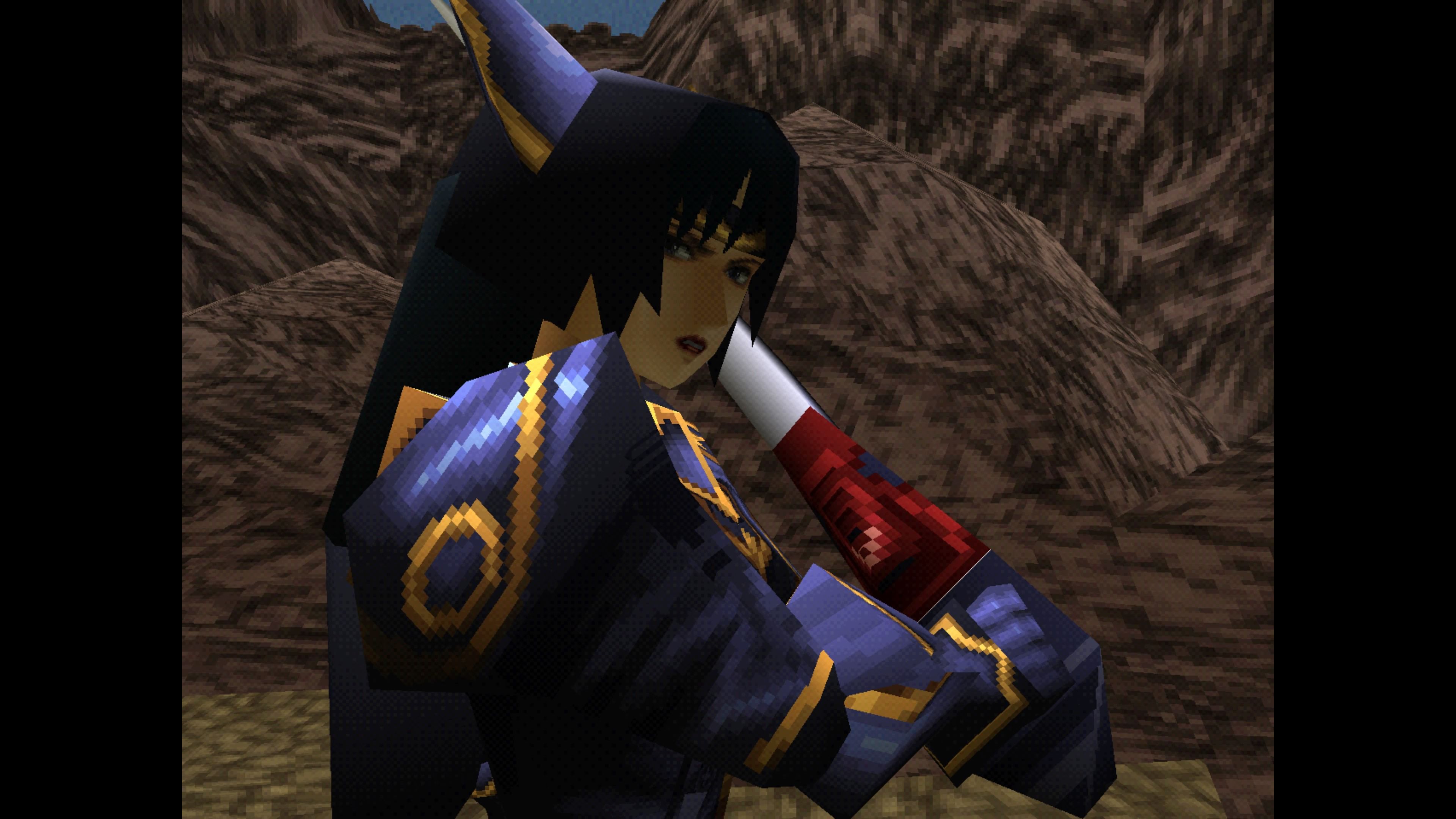
Rose is cool and distant, but over time she opens up to the party. Source: own
The party members, who form as the story progresses, are noteworthy. Dart starts off focused on taking down the Black Monster, who killed his parents, but eventually, his whole perspective and values shift. Giant Kongol might seem like a brute who can barely string a sentence together, but he's dreaming of a world without inequality, while King Albert leaves his people to fight for a greater cause. The most interesting character, however, is Rose, a cold warrior who has been wandering the world for thousands of years. Not only does she provide us with crucial information, but she also has a tragic past related to her cruel duty. She is also a member of the original Dragoons. Speaking of which...
In ancient times, there was a huge war where humans broke free from the control of a magical race called the Winglies. A key role in this was played by a handful of titular knights possessing the powers of dragons. Destiny steps in, and Dart and his companions become the new Dragoons just when the future of all races is hanging in the balance. The whole story has an epic anime vibe similar to the OVA The Record of Lodoss War and is equally captivating.

The antagonists in TLoD have strong motivations. Source: own
Unusual combat system
The Legend of Dragoon offers linear gameplay with optional bosses and quests. Unlike games like Suikoden or Final Fantasy VIII, you can't just wander around the world map freely; you're stuck following set paths instead. In this way, we explore a variety of locations like cities, deserts with quicksand, ancient ruins, or floating islands. The game tries to steer clear of boring, linear maps and often throws some exploration puzzles our way. The game's uniqueness, however, lies in the combat system, which is a mix of turn-based and action gameplay.
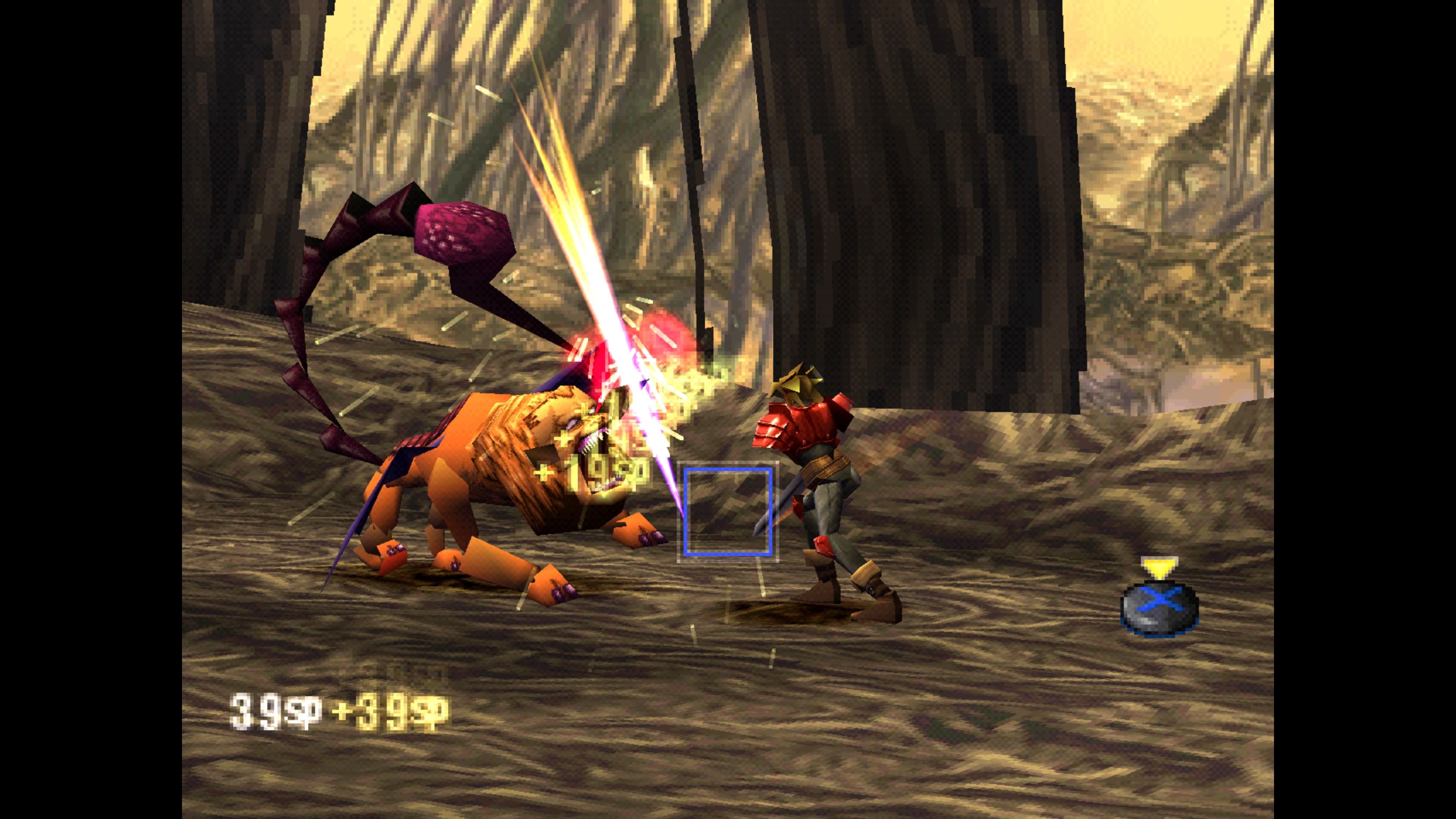
Additions in practice. Source: own
A big part of the battles is pulling off special attack combos (Additions), and each character has their own unique set. They let you create longer sequences by clicking the right button at the right time. It's similar to what we could have seen in games like Sea of Stars or Clair Obscur: Expedition 33. However, The Legend of Dragoon doesn't forgive mistakes, so if you miss the timing window, the series will be interrupted. Another tricky thing is that some enemies use counterattacks. The techniques of individual characters can be extremely difficult, but they are worth learning because they can deal massive damage and look spectacular.
Additions are our main way of injuring enemies. In their basic form, a party of up to 3 people cannot use spells, so we must rely on offensive or healing magical items. During battles, switching to a defensive stance has strategic importance. Unlike a lot of other games, in this one, blocking not only cuts down the damage you take, but also helps you regain some health and shields your characters from getting hit with negative effects. Skillful use of defense can change the course of battles.
The Legend of Dragoon has been adapted into a manga (by Ataru Cagiva) and a book (by Hiranari Izuno). However, they strayed from the game's storyline and never got a proper translation from Japanese. However, fan translations can be found online.
The cherry on top, though, is the transformation into a dragon knight – the transformation into a Dragoon is spectacular, as are the regular or special attacks in this form. The characters suit up like jRPG Power Rangers, becoming tougher and gaining access to attributes related to different types of magic. Dart uses the fire element, Shana is responsible for healing, and King Albert can reduce the damage received by all party members for a few turns. The coolest spells are the ones that summon dragons, but honestly, they're not worth the cost.
The combat is incredibly engaging, but it has a problem with the very long animations. Attack combinations or using magic really drags out the battles, which is one of the most common complaints about the game.
Development and internal economy
The game effectively discourages the frequent grinding often found in jRPGs. We mostly get valuable experience and gold from battling the main enemies. Despite this, character development is very extensive and multi-layered. Characters traditionally level up after gaining a certain amount of experience. Furthermore, each combination is upgraded after successfully executing the entire sequence of moves a specified number of times. By attacking, we earn special points that let us unlock new levels for our dragoons. This way, we constantly feel that the heroes are growing stronger. In The Legend of Dragoon, there's a high experience cap that lets you reach level 60, but by the final battle, most players are usually below level 40.
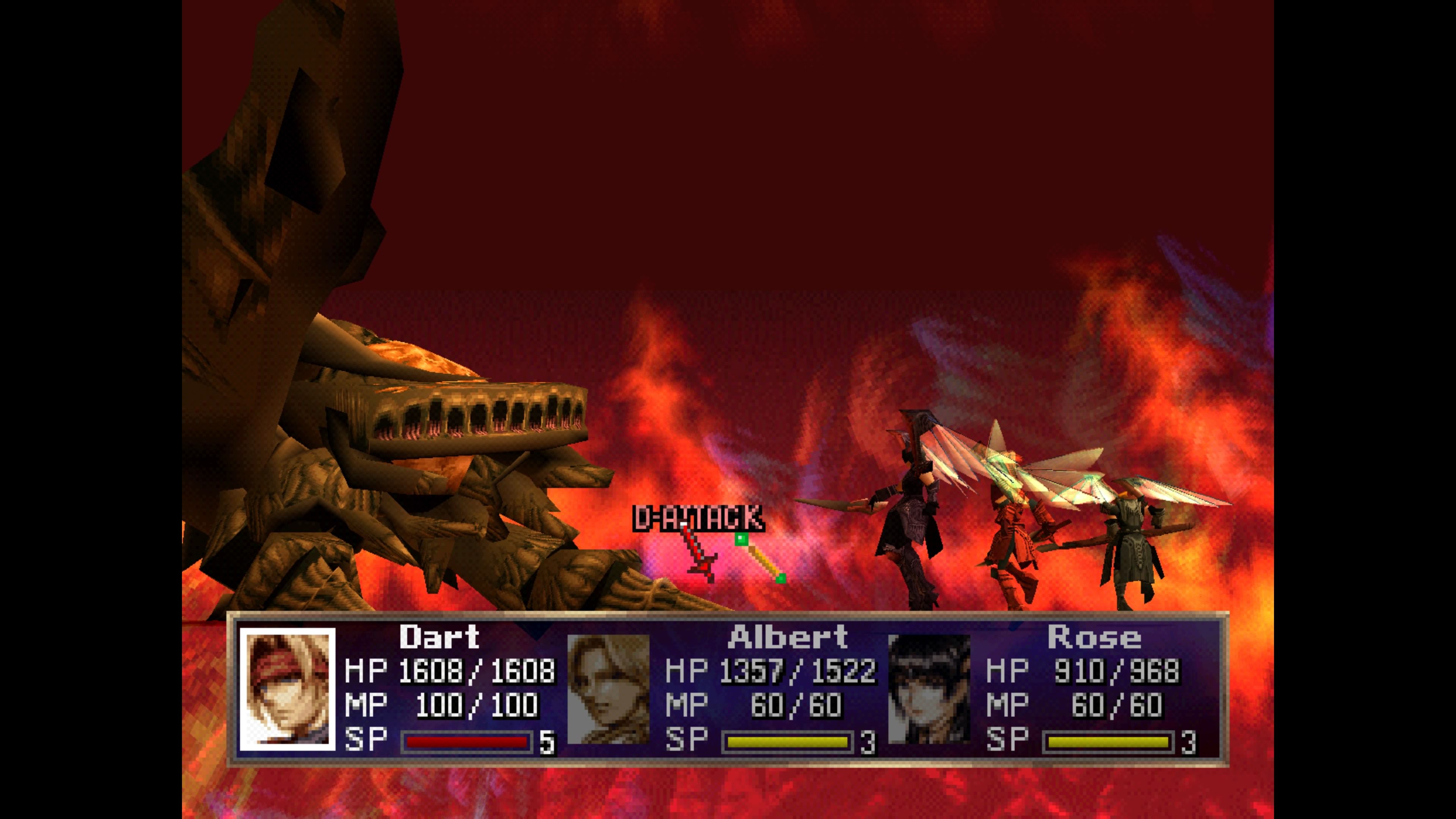
Dragoons in full swing. Source: own
The game avoids the pattern where we carry around a lot of potions and unnecessary gold. The party can have a maximum of 32 usable items, which forces a tactical approach to adventures. This is especially true since it's worth keeping offensive, healing, or reviving spells in the backpack. The game doesn't often make us feel like we're rolling in dough, since the top-notch armor can set you back 10,000 gold pieces. Compared to how fast we're saving up money, this amount is just insanely huge. Such solutions make money truly valuable, encouraging careful spending.
Reception and sales
The Legend of Dragoon is a game that received good reviews among critics. IGN gave it a 7/10, and the average expert rating according to Metacritic is 74/100. What's interesting, the title still divides players today, even within the fan community. Many complain about the difficult mechanics, bad voice acting, and graphics that aren't as good as those in Final Fantasy VIII. Others love it for the same reasons, and you can easily see why by checking out reviews on YouTube. However, the storyline and cutscenes are consistently praised. After all these years, I really have no complaints about the graphics (especially the pre-rendered backgrounds), and I enjoyed listening to the entire soundtrack. Fans especially love the main theme If You Still Believe.
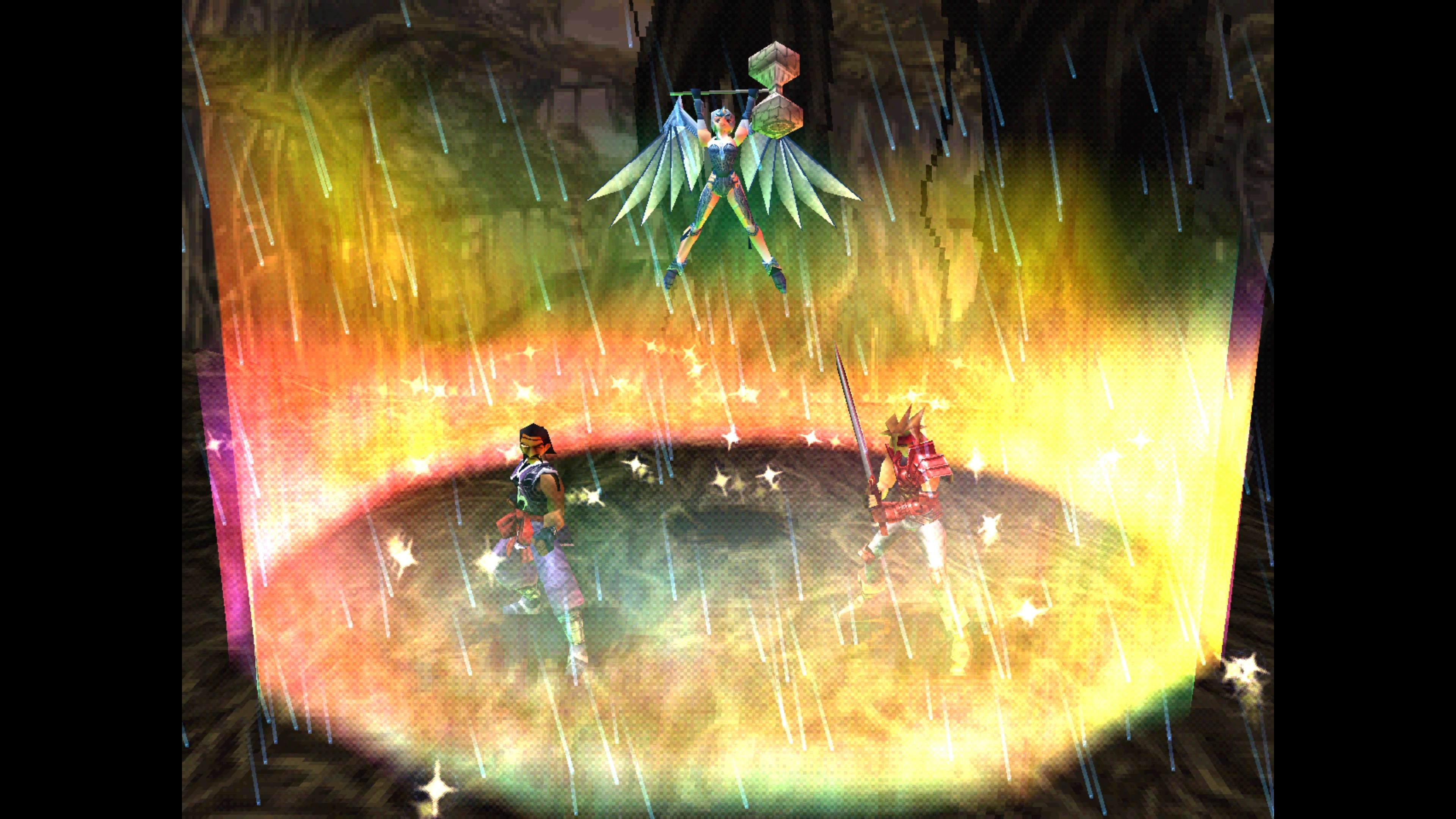
TLoD offers fun for more than 40 hours. Source: own
The Legend of Dragoon sold over a million copies, which helped cover its big budget. Sony's intense marketing really hit the mark with Americans – for a lot of them, it was their first taste of Japanese-style RPGs. It's no wonder it gained a cult status there. In the USA, the title sold almost three times better than in Japan, where the position of Final Fantasy was unassailable. This sounded like a great excuse to make a sequel. Unfortunately, although a sequel was planned, Sony abandoned it for unexplained reasons. However, the success of digital re-releases showed that the game hasn't been forgotten.
How to play The Legend of Dragoon today?
The title first came out in Japan in 1999, hit the U.S. a year later, and made its way to Europe in 2001. Now, you can buy the game in a slightly enhanced version available on the PlayStation Store for $9.99. The title can be easily launched on PS4 or PS5.

Ah, those prerendered backgrounds from the old RPGs. Source: own
However, if you own the original edition or plan to buy it, you can use it to run Severed Chains – an unofficial port for PC. The creators emphasize that it's not an emulator, but a special version with a new engine made through reverse engineering. It fixes many bugs and introduces widescreen support and 4K resolution.
Sony, don't you regret it?
Like most games, The Legend of Dragoon has its pros and cons, but I must admit that I returned to it with great pleasure. At first, the Additions mechanic was really frustrating, but I didn't turn it off because I enjoy experiencing the gameplay the way the devs intended. It was an excellent decision! Over time, practice paid off, and each successful combination gave me immense satisfaction. I also grew attached to the characters, who not only pursue their goals but also dynamically change them as the story progresses. It's a shame that Sony abandoned plans for a sequel – The Legend of Dragoon could have been the start of a very interesting series.
Would you like to get more articles like this or read interesting facts from the gaming world? Join our community on Google News and follow us there! Your support helps us grow and bring you even more content!

0

Author: Krzysztof Kaluzinski
At GRYOnline.pl, works in the Newsroom. He is not afraid to tackle various topics, although he prefers news about independent productions in the style of Disco Elysium. In his childhood, he wrote fantasy stories, played a lot on Pegasus, and then on a computer. He turned his passion into a profession as an editor of a gaming portal run with a friend, as well as a copywriter and advisor in a console store. He doesn't care for remakes and long-running series. Since childhood, he wanted to write a novel, although he is definitely better at creating characters than plot. That's probably why he fell in love with RPGs (paper and virtual). He was raised in the 90s, to which he would gladly return. Loves Tarantino movies, thanks to Mad Max and the first Fallout he lost himself in post-apo, and Berserk convinced him to dark fantasy. Today he tries his hand at e-commerce and marketing, while also supporting the Newsroom on weekends, which allows him to continue cultivating old passions.


Latest News
- The free version of the cult classic shmup Tyrian has been updated after 4 years
- A new Nod campaign has been added to The Dawn of the Tiberium Age, a freeware Command & Conquer RTS
- Fans have removed the time limit from The Blood of Dawnwalker
- Empire II: Total War now with two extra historical campaigns
- Someone has remastered Medieval 2: Total War and Rome: Total War so well that the AI's moves are now calculated in a matter of seconds [Updated]