A Japanese development studio owned by Koei Tecmo. They make games for PC and consoles and became famous worldwide for the Ninja Gaiden and Dead or Alive series. Its recent hits are NiOh (2017) and its sequel, released three years later.
The Japanese development studio Team Ninja traces its origins back to 1995, when it was established by Tecmo - now known as Koei Tecmo. The team, headed by Tomonobu Itagaki, was responsible for creating console adaptations of Tecmo's most popular arcade games. The new studio's first results appeared quickly.
Dead or Alive came out for the Sega Saturn in 1997, kicking off a hit fighting game series that's still around today. A year later, it made its way to the PlayStation. Because players and reviewers loved the game, the team made a sequel that hit arcades in 1999 and came to the PlayStation 2 and Sega Dreamcast a year later.
When Microsoft released its first console, the Xbox, in 2001, Team Ninja developed the third installment in the series for its launch. Given the series' enduring popularity, it seemed likely that the Japanese studio would soon develop a fourth installment. It took several years before Dead or Alive 4 finally reached players.
Team Ninja's next game for the Xbox was Dead or Alive Xtreme Beach Volleyball. The game was a sports title in which players led their chosen heroine to success in multiple competitions, with volleyball as the main focus. In 2004, Dead or Alive Ultimate was released, a game in which the developers combined the large arenas of Dead or Alive 2 with the more technical combat system of the series' first installment. Players could enjoy online matches through Xbox Live, and the box set came with a remastered version of the first game as a bonus.
In the same year, Ninja Gaiden debuted as a remake of the classic action game from the late '80s and early '90s, famed for its challenging gameplay. The core gameplay centered on highly challenging combat - players had to stay constantly on guard, as a single mistake could cost the protagonist, Ryu Hayabusa, his life.
Players and reviewers were thrilled, so, striking while the iron was hot, the developers created a more extensive version of the game. Ninja Gaiden Black debuted in 2005, featuring additional difficulty levels, a new gameplay mode, and several bonuses - among them, the classic arcade version of Ninja Gaiden stood out.
The highly anticipated Dead or Alive 4, developed since 2001, was released in 2005 as a launch title for Microsoft's Xbox 360. Along with improved graphics, the title offered robust online features, enabling global multiplayer competition.
A year later, the sequel to Dead or Alive: Xtreme Beach Volleyball, Dead or Alive: Xtreme 2, was released. Once again, players took control of female characters who could compete not only in beach volleyball but also in jet ski races, wrestling, and tug-of-war.
In 2007, Team Ninja's developers decided to take a "sidestep," returning, in a sense, to their roots. Team Ninja returned to Sony consoles for the first time since Dead or Alive 2 with Ninja Gaiden Sigma, a remaster of the original Ninja Gaiden for the PlayStation 3. It offered improved graphics and added Rachel as a playable character with her own storyline.
Riding high on success, the team kept pushing the Ninja Gaiden series for all it was worth over the next few years. The series soon expanded with sequels and special editions across platforms, becoming the main focus of Team Ninja's work - a fate later shared by Dead or Alive.
In 2008, Ninja Gaiden: Dragon Sword came out on the Nintendo DS, bringing the first game in the series to a handheld console. That year, the full sequel Ninja Gaiden II hit Xbox 360, and a year later, PlayStation 3 players got Ninja Gaiden Sigma II. It's worth noting that in 2008, Tomonobu Itagaki left Team Ninja to form his own studio, Valhalla Game Studios, taking many employees with him. However, this didn't appear to slow the studio down, as it returned to the Dead or Alive franchise in 2010. Dead or Alive Paradise, released on the PlayStation Portable, drew heavily on the legacy of Dead or Alive: Xtreme, letting players control scantily clad female characters competing in various sports events.
Team Ninja partnered with Nintendo in 2010, working on Metroid: Other M for the Wii and Dead or Alive: Dimensions for the Nintendo 3DS.
Between 2012 and 2013, multiple Ninja Gaiden and Dead or Alive titles were released. Following the launch of Ninja Gaiden Sigma Plus on PlayStation Vita, the third main installment debuted on PlayStation 3 and Xbox 360, with a Wii U version titled Razor's Edge released later that year. Razor's Edge was far better received than the original; the developers addressed its major issues, leading to its release on the series' original consoles in 2013. Before this, Dead or Alive 5 came out on Sony and Microsoft consoles, and less than a year later, both it and Ninja Gaiden II Sigma Plus appeared on PlayStation Vita.
Building on the success of the Dead or Alive franchise, Team Ninja and Koei Tecmo released two additional editions of the fifth installment: Dead or Alive 5 Ultimate (2013) and Dead or Alive 5 Last Round (2015), with the latter available on PC and eighth-generation consoles.
In 2013, Koei Tecmo underwent restructuring that affected Team Ninja, splitting the team into two divisions: Ichigaya Development Group 1 and Ichigaya Development Group 2. However, most gamers had to wait to experience the impact of these changes, as Dead or Alive: Xtreme 3 (2016) remained exclusive to Japan. Shuhei Yoshida, CEO of Sony Interactive Entertainment, cited "cultural differences" as the reason, referring to the differing portrayals of women in Western and Japanese video games.
Team Ninja's portfolio might have given the impression that the studio had experienced a decline over time. Things turned around with NiOh, a third-person action game that came out in 2017 on PlayStation 4 and PC. NiOh borrowed heavily from the Dark Souls and Onimusha series, and players and critics noticed - sales were strong, and reviews were very positive. Team Ninja was unmistakably getting back on track. Given the artistic and commercial success of the first NiOh, the announcement of the second installment at E3 2018 was almost a formality. Players waited until March 13th, 2020, for the release of the game on PlayStation 4. Was it worth it? Early reviews suggested that NiOh 2 was a hit, keeping what fans loved about the first game while adding a bigger combat system and better graphics.
Meanwhile, in February 2020, Team Ninja said they were ready to start work on a completely new franchise for the PlayStation 5. No specific information about the game was revealed at the time.First, however, remastered versions of two NiOh installments, along with their compilation, were released on PlayStation 5. The remastered games received widespread praise from reviewers, who highlighted the improved graphics, the 120 FPS mode, and the significantly reduced loading times. This resulted in an average Metacritic score of 86/100.
Furthermore, in February 2021, NiOh 2 was released on PlayStation 5 and also on PC. The title experienced significant popularity on the latter; more than 30,000 players engaged with it on launch day, outperforming both the original NiOh and Dark Souls, including its remastered edition. Player reviews, however, were somewhat less enthusiastic, with the game receiving only "mostly positive" ratings. Reported issues included performance glitches, weak keyboard and mouse support, and an overall lack of polish.
In June, Ninja Gaiden: Master Collection was released, featuring remastered versions of the three games in the Ninja Gaiden series. It launched for PC and console platforms. The collection earned mixed reviews from industry outlets (71-73/100 on Metacritic) but was rated "very positive" on Steam.
For Team Ninja, 2022 was all about Stranger of Paradise: Final Fantasy Origin, an action RPG spin-off of the classic Final Fantasy series. At first, there were complaints - PC players in particular had issues with optimization and other technical problems - but the game's reception eventually got much better. This is especially true on Steam, where it received "very positive" reviews, in contrast to the more moderate ratings from industry media, which ranged from 66 to 72 out of 100 on Metacritic. Also in 2022, Yosuke Hayashi stepped down, with Fumihiko Yasuda taking over as president.
In 2023, Wo Long: Fallen Dynasty was released, another action RPG inspired by the Souls-like genre. Released on PC, PlayStation, and Xbox, the game failed to match the success of the NiOh series, earning average ratings of 79-80 out of 100 from industry media. Player feedback was less favorable, resulting in mixed Steam reviews.
The PlayStation 5 project that the team mentioned in 2020 turned out to be Rise of the Ronin. This action RPG is also Team Ninja's first open-world game. Set in 19th-century Japan, the game was released on PS5 in March 2024. Although players and reviewers criticized its graphics and other aspects, the game ultimately earned an average score of 76/100 from industry media and 8.7/10 from players, according to Metacritic.
In January 2025, Team Ninja revealed previously well-guarded plans and announced its next project. As it turned out, the studio had secretly teamed up with PlatinumGames.The collaboration resulted in the announcement of Ninja Gaiden 4, both a continuation of the third installment and a fresh start, as the developers chose to focus on a new protagonist.
The announcement of this title was accompanied by the reveal and swift release of Ninja Gaiden II Black, developed by Koei Tecmo, the company behind the brand.
List of all games in development by Team Ninja.
Wo Long 2: Wings of Ember - March 4, 2027 - PC, NS2, XSX, PS5
Dead or Alive 7 - TBA - PS5
List of all released games developed by Team Ninja.
NiOh 3: Hell Rising - August 19, 2026 - PC, PS5
Dead or Alive 6: Last Round - June 25, 2026 - PC, PS5, XSX
Ninja Gaiden 4: The Two Masters - March 4, 2026 - PC, PS5, XSX
NiOh 3 - February 6, 2026 - PS5, PC
Ninja Gaiden 4 - October 21, 2025 - PC, XSX, PS5
Rise of the Ronin - March 22, 2024 - PS5
Wo Long: Fallen Dynasty - March 3, 2023 - PC, XSX, PS4, PS5, XONE, NS2
Stranger of Paradise: Final Fantasy Origin - March 18, 2022 - PC, PS4, PS5, XONE, XSX
Ninja Gaiden: Master Collection - June 10, 2021 - PC, PS4, XONE, Switch
NiOh Collection - February 5, 2021 - PS5
NiOh 2 - March 13, 2020 - PS4, PC, PS5
Marvel Ultimate Alliance 3: The Black Order - July 19, 2019 - Switch
Dissidia Final Fantasy NT: Free Edition - March 12, 2019 - PS4, PC
Dead or Alive 6 - March 1, 2019 - PS4, XONE, PC
Dissidia Final Fantasy NT - January 30, 2018 - PS4
NiOh - February 7, 2017 - PS4, PC, PS5
Dead or Alive: Xtreme 3 - March 24, 2016 - PS4, PSV, Switch
Dead or Alive 5: Last Round - February 20, 2015 - PS4, XONE, PS3, X360, PC
Dead or Alive 5 Ultimate - September 3, 2013 - X360, PS3
Dead or Alive 5 Plus - March 19, 2013 - PSV
Ninja Gaiden II Sigma Plus - February 26, 2013 - PSV
Ninja Gaiden 3: Razor's Edge - November 18, 2012 - X360, PS3, WiiU
Dead or Alive 5 - September 25, 2012 - X360, PS3
Ninja Gaiden 3 - March 20, 2012 - X360, PS3
Ninja Gaiden Sigma Plus - February 21, 2012 - PSV
Dead or Alive: Dimensions - May 19, 2011 - 3DS
Metroid: Other M - August 31, 2010 - Wii
Dead or Alive Paradise - April 2, 2010 - PSP
Ninja Gaiden Sigma II - September 29, 2009 - PS3
Ninja Gaiden II - June 3, 2008 - X360
Ninja Gaiden: Dragon Sword - March 25, 2008 - NDS
Ninja Gaiden Sigma - July 3, 2007 - PS3
Dead or Alive: Xtreme 2 - November 21, 2006 - X360
Dead or Alive 4 - December 29, 2005 - X360
Ninja Gaiden Black - September 20, 2005 - XBOX
Ninja Gaiden - March 2, 2004 - XBOX
Dead or Alive Ultimate - January 1, 2004 - XBOX
Dead or Alive Xtreme Beach Volleyball - January 22, 2003 - XBOX
Dead or Alive 3 - November 15, 2001 - XBOX
Dead or Alive 2: Hardcore - October 25, 2000 - PS2
Dead or Alive - March 31, 1998 - PS1
List of all upcoming games that will be published by Team Ninja.
Dead or Alive 7 - TBA - PS5

Starting on December 16th, nine more games will be added to the PlayStation Plus Game Catalog. This could be your chance to try out some great games.
video games
December 10, 2025
We learned the titles of the next two bonus games for PS Plus Extra and Premium subscribers for December. One of them is Assassin's Creed: Mirage.
video games
December 10, 2025

Today, Xbox and PC Game Pass subscribers can enjoy two games. The first is the fourth installment of the cult slasher series, and the second is a western with vampires.
video games
October 21, 2025
This week, games such as Vampire: The Masquerade - Bloodlines 2, Ninja Gaiden 4, Jurassic World Evolution 3, VEIN, Once Upon a Katamari, Tormented Souls 2, PowerWash Simulator 2, Plants vs. Zombies: Replanted, and version 1.0 of Farthest Frontier will be released on Steam.
video games
October 20, 2025

Japanese developer Tomonobu Itagaki has died. He was best known for the Dead or Alive series and Ninja Gaiden.
video games
October 16, 2025
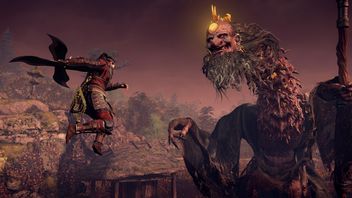
NiOh 3's release date has leaked, and it should please PC players in particular.
video games
September 24, 2025
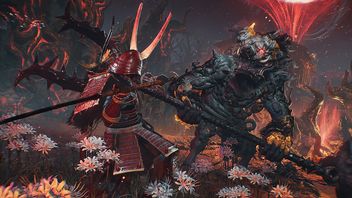
The developers of NiOh 3 are slowly beginning to unveil their cards. We can check out a video showing a long and challenging clash with one of the bosses.
video games
September 4, 2025

The Ninja Gaiden series returns in 2025 with another full-fledged installment that brings a lot of new stuff, but is also aware of what players have come to love the series for.
Opinions
August 7, 2025

Ninja Gaiden 4 will be released in the fall, as confirmed at Xbox Games Showcase 2025 with a new gameplay trailer.
video games
June 9, 2025

Taka Murayama is a character with a tragic ending in Rise of the Ronin? But can you change her destiny?
How to
March 19, 2025