Sierra is a publishing brand under Activision, active since 2014, and the direct successor of the historic and highly regarded video game company Sierra Entertainment (formerly known as Sierra On-Line and On-Line Systems). In 2008, the original Sierra Entertainment was acquired by Activision Blizzard, a holding company formed through the merger of Activision and Vivendi Games. Just a few months after acquiring the company, the new owner chose to shut it down. Six years later, Sierra was revived, keeping the rights to all the titles it had previously released.
Sierra as a game producer
As a developer, Sierra On-Line revolutionized the video game industry, creating some of the first adventure games featuring graphics in the 1980s (before Sierra, adventure games used to be text-only). During its heyday around 1995, Sierra was known primarily as the creator of iconic adventure series such as King's Quest, Police Quest, Space Quest, Leisure Suit Larry, Quest for Glory, Gabriel Knight, Phantasmagoria, and Shivers. After parting ways with the biggest pillars of the company, that is, after 1999, Sierra Entertainment practically ceased development activities, focusing almost exclusively on publishing games from other producers.
The most important development studios owned by Sierra Entertainment over the years included the following (in alphabetical order):
- Coktel Vision, based in Paris, France, was founded in 1985, acquired by Sierra in 1993, and sold to Mindscape in 2005. The studio was responsible for games such as Urban Runner and the Gobliiins series,
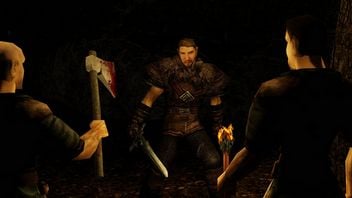
- Dynamix, based in Eugene, USA, was founded in 1984, acquired by Sierra in 1997, and closed in 2001. The studio was responsible for games such as Betrayal at Krondor, the 3D Ultra Pinball series, EarthSiege, The Incredible Machine, and Tribes,
- Headgate Studios (now EA Salt Lake), based in Bountiful, USA, was founded in 1992, acquired by Sierra in 1996, and sold to its original owner, Electronic Arts, in 1999. The studio is known for games such as Front Page Sports: Golf and PGA Championship Golf 2000,
- High Moon Studios, based in San Diego, USA, was established in 2001. It was acquired by Vivendi Games in 2006 and later transferred to Activision in 2008. The studio is best known for Robert Ludlum's The Bourne Conspiracy,
- Impressions Games, based in Cambridge, USA, was founded in 1989, acquired in 1995, and closed in 2004. The studio was best known for the strategy series Lords of the Realm and Caesar, along with their derivatives, including Pharaoh and Zeus: Lord of Olympus ,
- Massive Entertainment, now known as Ubisoft Massive, is based in Malmö, Sweden. It was founded in 1987, acquired by Vivendi Games in 2002, and sold to Ubisoft six years later. The studio is known for games such as World in Conflict and the Ground Control series,
- Papyrus Design Group, based in Watertown, USA, was established in 1987, acquired in 1995, and closed in 2004. The studio is known for creating the IndyCar Racing and NASCAR Racing series,
- Radical Entertainment, based in Vancouver, Canada, was founded in 1991, acquired by Vivendi Games in 2005, and transferred to Activision in 2008. The studio is known for Scarface: The World Is Yours and several installments of the Crash series,
- Swordfish Studios, based in Birmingham (UK), was established in 2002. It was acquired by Vivendi Games in 2005 and later sold to Codemasters in 2008,
- Synergistic Software, based in Seattle, USA, was founded in 1978. It was acquired in 1996 and closed in 1999. The studio is known for developing Diablo: Hellfire,
- Yosemite Entertainment, based in Oakhurst, USA, was founded in 1998 and sold to Codemasters in 1999 before being closed. The studio is known for Quest for Glory V: Dragon Fire and Police Quest: SWAT 2.
Sierra as a game publisher
During its first twenty years, Sierra On-Line rarely published games from external developers, focusing primarily on titles developed in-house or by its subsidiary studios. However, the company ramped up its publishing efforts in the late 1990s. After parting ways with several key creators - such as Ken and Roberta Williams, Scott Murphy, and Al Lowe - Sierra virtually halted its own development activities. Until its dissolution in 2008, Sierra Entertainment published numerous notable games from third-party developers, including well-known brands such as:
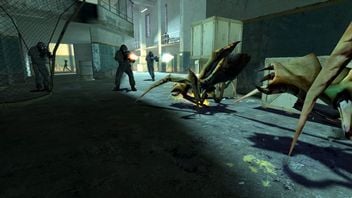
- Action games: The Chronicles of Riddick: Escape from Butcher Bay, Men of Valor: Vietnam, TimeShift, the No One Lives Forever series, as well as the first installments of the Aliens vs. Predator, F.E.A.R., Half-Life, and Counter-Strike series,
- Strategy games: Evil Genius, Joint Task Force, The Lord of the Rings: War of the Ring, as well as the Empire Earth and Homeworld series,
- Adventure games: Eragon, The Hobbit, The Lord of the Rings: The Fellowship of the Ring,
- Platformers: The Spyro series,
- RPG games: Arcanum: Of Steamwork and Magick Obscura,
- sequels to their own series, such as Caesar IV and SWAT 4.
After the company's revival in 2014, Sierra - operating as a publishing brand under Activision Blizzard - focused on re-releasing classic games and publishing new titles developed by external studios.
History
On-Line Systems and Sierra's first successes
Sierra's origins trace back to 1979, when Ken and Roberta Williams founded On-Line Systems in Simi Valley, California (USA). At the time, Ken Williams worked as a programmer at IBM, while Roberta Williams spent her free time playing text-based adventure games on her Apple II computer. The immediate motivation for founding the company was the desire to take advantage of the graphical capabilities of contemporary home computers, enriching the experience of adventure video games beyond purely text-based gameplay. After the company’s early successes, in 1982 On-Line Systems was renamed Sierra On-Line and relocated its headquarters to Oakhurst, California. By 1984, Sierra had grown rapidly and was recognized as the twelfth-largest home computer company in the world.
In the early 1980s, the company’s first games were developed collaboratively by Ken and Roberta Williams, with one handling the writing and graphics while the other focused on programming. On-Line Systems’ debut game, Mystery House, part of the Hi-Res Adventures series, made history as the first adventure game to combine graphics with text. In 1983, the Williamses pitched a game concept to IBM for the newly released IBM PC. The proposal was accepted, and in the summer of 1984, Sierra released the adventure game King's Quest: Quest for the Crown, built on its proprietary Adventure Game Interpreter engine. It became the company's first major success and launched one of its most iconic series.
In the years that followed, Sierra On-Line welcomed young, talented developers who went on to create other key franchises for the company, including Space Quest and Leisure Suit Larry. The first Leisure Suit Larry installment, released in 1987, was widely regarded as the best adventure game of that year and also became notorious as one of the earliest widely pirated computer games. Roberta Williams’ friendship with a police officer inspired the 1987 release of Police Quest: In Pursuit of the Death Angel, which went on to become another long-running adventure series for Sierra. In 1989, Sierra released the first installment of another key series, Quest for Glory, which blended elements of adventure games with role-playing mechanics. In the late 1980s and early 1990s, Sierra On-Line focused most of its efforts on developing its four flagship series. In 1987, the company also launched its own video game magazine, initially titled The Sierra Newsletter, later The Sierra News Magazine, and finally InterAction, which was published until 1999.
In 1990, Sierra released King's Quest V: Absence Makes The Heart Go Yonder, which became the company’s first title to surpass 500,000 copies sold. That same year, Sierra also acquired Jeff Tunnell’s Dynamix studio, which would later go on to create the cult puzzle game series The Incredible Machine. In 1991, another series of logic games was launched - Dr. Brain - which went on to receive several successful sequels in the following years. In the mid-1990s, Sierra On-Line wrote an important chapter in the history of electronic gaming by releasing the first adventure games that used FMV (Full Motion Video) - video sequences recorded with live-action actors. Games such as Phantasmagoria and The Beast Within: A Gabriel Knight Mystery became a lasting part of video game history, serving for many years as unmatched examples of adventure games with strong horror elements. The company's rapid and dynamic growth eventually forced Sierra On-Line to seek a new headquarters, and it ultimately relocated to Bellevue, Washington. However, one of Sierra’s internal development studios remained in its former location in Oakhurst, which was later renamed Yosemite Entertainment.
A fall from grace
At that time, Sierra On-Line consisted of five separate units, each responsible for different aspects of the company's operations, such as game production, marketing, distribution, and sales. 1995 was a very successful year for the company. Sierra acquired the British studio Impressions Games, known for the Caesar series, and the American Papyrus Design Group - creators of the NASCAR Racing and IndyCar Racing series. Sierra also signed an agreement with Pioneer Electric Corp. to distribute its titles in Japan, resulting in the debut of more than 20 of the company's previously released US productions in the Japanese market. A year later, however, Sierra was caught up in a whirlwind of ownership changes. In July 1996, Sierra On-Line was acquired by CUC International, and Ken Williams resigned as president, leaving the parent company a year later along with his wife. After the departure of its founders, Sierra underwent a major restructuring in November 1996, leading to the creation of three distinct organizational units. In December 1997, CUC International merged with HFS Incorporated to form Cendant Corporation, and a few months later, Sierra was reorganized into four independent divisions: Sierra Attractions, Sierra Home, Sierra Sports, and Sierra Studios.
In March 1998, following revelations of CUC International's tax fraud, Cendant Corporation's shares plummeted, and the company reported multi-million-dollar losses. As a result, in November of the same year, Sierra On-Line was sold to Havas SA, which was subsequently acquired by the French media giant Vivendi. A few months later, Sierra underwent another major reorganization, resulting in the layoffs of approximately 250 people, including much of the Dynamix studio, as well as Al Lowe, creator of the Leisure Suit Larry series, and Scott Murphy, creator of the Space Quest series. The Yosemite Entertainment studio was also closed, with its employees subsequently finding employment at Codemasters Software. This "revamped" Sierra was divided into three business units - Core Games, Casual Entertainment, and Home Productivity - and, despite these drastic changes, it actively continued its publishing activities. During this period, important titles such as Diablo: Hellfire, NASCAR Racing 3, Caesar III, Pharaoh, the legendary Half-Life, and the renowned Homeworld, which revolutionized the space RTS genre, were released.
In June 2000, following ownership changes involving Vivendi, Seagram, and Canal+, Sierra-Online became a subsidiary of the newly established Vivendi Universal, under which the electronic entertainment division Vivendi Universal Games (later simply Vivendi Games) was created. On February 19, 2002, the company officially changed its name, which it had used for two decades, to Sierra Entertainment, Inc., highlighting its commitment to a wide range of entertainment products, including games for PCs and next-generation consoles. After 1999 and the departure of the company's key figures, Sierra was little more than a shadow of its former self. It also effectively suspended nearly all development activities, with the exception of the Police Quest series, which in the meantime evolved from an adventure game into a tactical strategy series, and ultimately into the first-person SWAT action games. In 2004, an attempt was made to revive the Leisure Suit Larry series, but the new game - developed for the first time without the involvement of the series’ creator, Al Lowe - proved to be a complete flop.
In the early years of the 21st century, Sierra released several iconic titles, such as Aliens vs. Predator 2, Counter-Strike: Condition Zero, the RPG Arcanum: Of Steamwork and Magick Obscura, the strategy games Empire Earth, Homeworld 2, and Lords of the Realm III, the next installments of the NASCAR Racing and Spyro series, as well as three games set in the fantasy universe of J.R.R. Tolkien. Hoyle Games, a series of casual gambling games from the late 1980s under the name of Edmond Hoyde, an eighteenth-century writer and author of many guides to such games as chess and dice, was also revived. Despite the good sales of the aforementioned titles, lack of revenue from development activities and further financial problems led to further cuts in the ranks of Sierra Entertainment. In the spring of 2004, Impressions Games and Papyrus Design Group were closed, while the Hoyle Games brand was sold to an external developer. A few months later, Vivendi Games decided to close Sierra's Bellevue studio, and those who retained their jobs were relocated to a new location in Fresno, California.
Sierra's closure and reactivation
At the end of 2005, an attempt was made to restore Sierra's former glory with the Sierra On-Line brand, which was to focus exclusively on online titles. Over the next dozen or so months, several promising studios were incorporated into Sierra's structures, such as the Swedish Massive Entertainment, the American High Moon Studios, the Canadian Radical Entertainment, and the British Swordfish Studios. The fourth installment of the Caesar series was also released, the development of which was entrusted to the Tilted Mill Entertainment team after the closure of Impressions Games. Between 2005 and 2007, Sierra released a few simple arcade games for the Xbox 360, several installments of the iconic Crash series, two more installments of the Empire Earth series, and several other important titles such as FEAR, World in Conflict and TimeShift. In the summer of 2008, Sierra's owner, Vivendi Games, merged with Activision, resulting in the creation of the Activision Blizzard holding company. As a result of the merger, Vivendi Games ceased to exist and its existing studios were taken over by Activision. A few months later, Sierra's new owner decided to close the studio (with the possibility of later sale).
After nearly six years of inactivity, on August 7, 2014, the existing Sierra Entertainment website, which previously redirected to the Activision website, was updated with a new company logo. During gamescom 2014, it was confirmed that Sierra had been revived as an Activision publishing brand. It was also revealed that the company would focus on re-releases of its old bestsellers and refreshing many of its iconic brands, as well as collaborating with other developers to create new, innovative projects for the Steam, PlayStation Network, and Xbox Live platforms. The first announced games from the reactivated Sierra were the arcade game Geometry Wars 3 by Lucid Games and an episodic reboot of the classic King's Quest series by The Odd Gentlemen.