Open-world MMORPG once expected to impress at every turn. EverQuest Next would offer environmental destruction and „living” AI
The EverQuest series may not have threatened World of Warcraft's position, but it did attract many devoted fans. Its third installment was to bring a real revolution.

While the video game industry is huge, there really isn't much room for MMORPGs that can even come close to challenging World of Warcraft's top spot, let alone carve out their own niche while it continues to dominate. For a long time, the EverQuest series was part of this group, mainly due to the cult status of the brand, which has been developed since 1999. The third installment, titled EverQuest Next, was supposed to be the crown jewel of this series.
Well, it was supposed to happen, but ultimately it didn't, and fans of the series were left with no choice but to make do with the previous installments, which fortunately received extensive support from the devs. Let's recall what the creators promised us and trace the fate of this project.
A vibrant, open world
EverQuest Next was supposed to be built on the foundations laid by the first two games in the series. The title would let us explore the amazing land of Norrath all over again, but this time it would get a major makeover and upgrade, making it feel like a whole new world.
Of course, the driving force of the adventure would be quests pushing the story forward. However, there would be no marker indicating that a quest awaits us in a given location. Instead, tasks were supposed to be taken on and completed in a more natural, go-with-the-flow kind of way. For instance, while wandering around Norrath, we might stumble upon a village being attacked by a group of orcs, and it would be up to us to decide whether to help the villagers, support the aggressors, or leave both sides alone.
Complementing all this would be the so-called Rallying Calls, large-scale community events that could last for weeks or even months. As part of these, we would participate in activities such as building cities or having big battles.
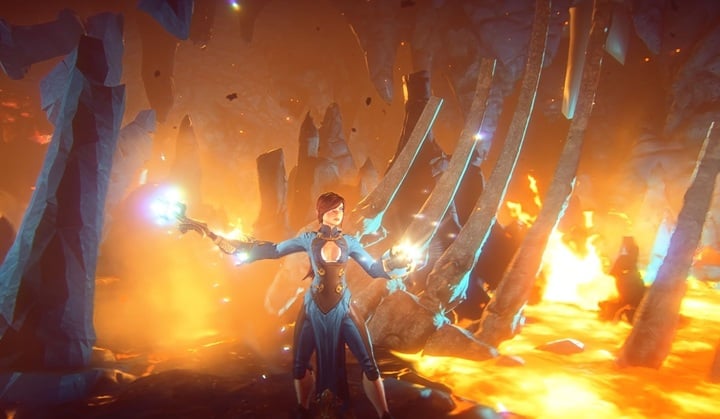
Important decisions
We need to be cautious, as the decisions we make will not only affect our own fate but also shape the future of all of Norrath. Players' actions would cause some cities to fall and others to rise, some kings would lose their thrones while others gained power, and NPCs would either like us or totally hate us, depending on our past actions.
The enemies were supposed to have advanced AI too, and the game was set to ditch the random enemy spawns for good, replacing them with realistic troop movements across the map.
Combat and exploration were to be diversified with arcade elements. On the battlefield, we would need to be quick on our feet (though juggling our skills and playing to our characters' strengths would be important too). And if we wanted to reach certain spots, we would sometimes have to tackle some platforming challenges. Character development would be based on improving specific skills.
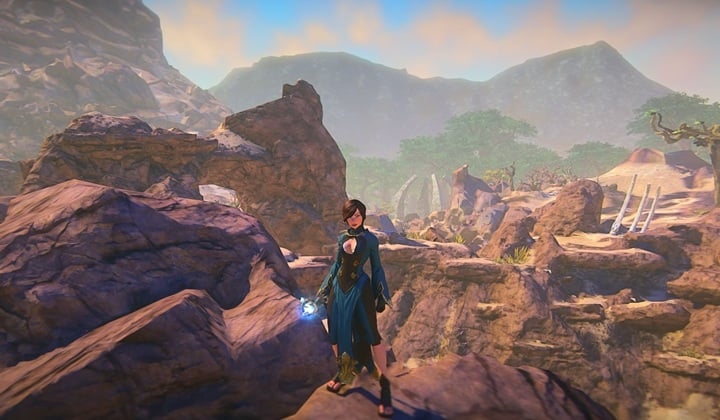
Impressive technology
However, what was supposed to be most impressive about EverQuest Next was the technology. The graphics for this project were supposed to be based on voxels, which would allow for a lot of environmental destruction. Destroying entire structures, objects, and plants was not only meant to be visually pleasing but also to expand our range of tactical options. This way, we could, for instance, blow up bridges to slow down enemy troops or even trigger avalanches to mess with our opponents. Moreover, the game would let us dig down to the underground ourselves, so we wouldn't have to go through the hassle of finding tunnel entrances.
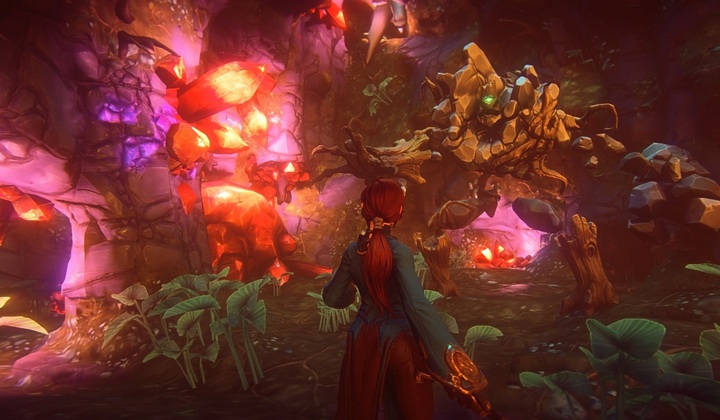
Chronicle of a downfall
All of this sounds too good to be true? To be honest, yes. The game was announced in August 2010, but the cards were only revealed by Sony Online Entertainment three years later. It looked like everything was going smoothly because the creators even started talking about a PlayStation 4 version. Back in March 2014, we also learned that Jeremy Soule, known for soundtracks to The Elder Scrolls series, would be composing the music for EverQuest Next.
Unfortunately, even though in 2015 Daybreak Entertainment (as the studio had, in the meantime, left the wings of Sony Interactive Entertainment and undergone rebranding) promised that EverQuest Next was its priority, March 2016 brought news of the suspension of work on this project, as it didn't meet the expectations placed on it.
Nevertheless, the EverQuest brand remained alive (and remains so to this day) because DayBreak Entertainment regularly expanded the two previous installments of the series with new DLCs.
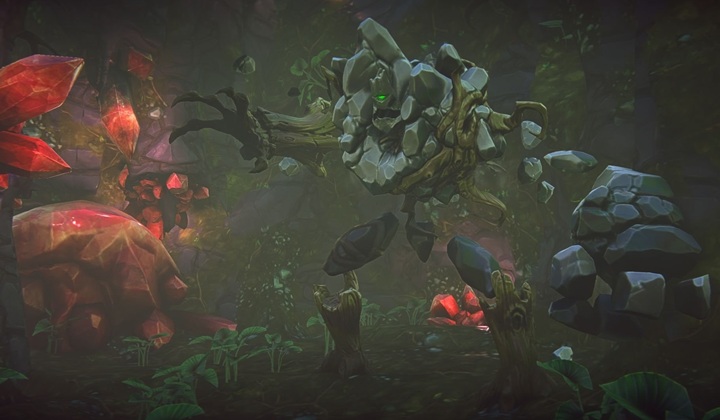
Landmark
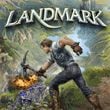
Interestingly, EverQuest Next got a spin-off called EverQuest Next Landmark, which was renamed to just Landmark in 2014. It was a Minecraft-style title, allowing players to explore the world, gather materials, and construct various buildings.
The game originally started as a tool for testing EverQuest Next's tech, but eventually, it evolved into its own standalone project. The title came out on PC on June 10, 2016, but it didn't really manage to challenge the top spot held by the industry giant, Minecraft. In the end, the decision was made to shut down its servers, which took place on February 21, 2017.
Would you like to get more articles like this or read interesting facts from the gaming world? Join our community on Google News and follow us there! Your support helps us grow and bring you even more content!
- For years, one of the best single-player areas in WoW was closed. Today its gates will be opened
- „When was the last time you saw the sun?” WoW player scored every possible achievement in the MMO for 6 expansions in a row
- Most important question of the series without answer. Only Dead Space 4 could reveal the truth about the Necromorphs

1

Author: Christian Pieniazek
Started working with Gamepressure.com in August 2016. Although the Game Encyclopedia has been his pride and joy from the beginning, he also writes for the Newsroom and the Editorial section. Gained professional experience through a now-defunct service, in which he worked for almost three years. Graduated in Cultural Studies at the AGH University of Krakow. Runs his own business, jogs, cycles, loves mountain hiking, is a fan of nu metal, is interested in space, and of course, enjoys playing games. Feels best in action games with an open world and RPGs, although won't turn down good racing or shooting games.

Latest News
- A new Nod campaign has been added to The Dawn of the Tiberium Age, a freeware Command & Conquer RTS
- Fans have removed the time limit from The Blood of Dawnwalker
- Empire II: Total War now with two extra historical campaigns
- Someone has remastered Medieval 2: Total War and Rome: Total War so well that the AI's moves are now calculated in a matter of seconds [Updated]
- After 11 years, The Witcher 3 has received a feature that CD Projekt Red abandoned before launch. Players will see some things for the first time