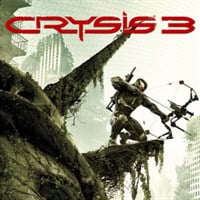
Founded in 1999, this independent German studio creates PC and console titles and is also responsible for developing its own CryEngine graphics technology. The company is based in Frankfurt, Germany, with additional studios operating in Kyiv and Istanbul. Crytek's co-founder, Cevat Yerli, had served as CEO since the company's beginnings, but in February 2018 he stepped aside, with his brothers, Faruk and Avni, taking over leadership.
Crytek's development activity is led by two principal brands. The first is the Far Cry series, originally created by Crytek and later taken over and continued by Ubisoft's internal teams. The other is Crysis, a brand the German team has been expanding ever since 2007. Later, Crytek shifted its focus to free-to-play games and projects using the increasingly popular virtual reality tech. Besides its games, one of the company's biggest contributions to the industry is its CryEngine, which it basically built from scratch. Over the years, it's been used in tons of hit titles - not just by Crytek, but by other developers too.
Crytek started out in 1997 as a small company in Coburg, Germany, founded by Cevat Yerli, the son of Turkish immigrants. But it wasn't until two years later, working with his brothers Avni and Faruk, that Cevat turned it into a full-fledged company and officially named it Crytek. The studio first went public with a tech demo at Nvidia's booth at the ECTS 2000 trade show. Over the next few years, the company released several game demos, including one called X-Isle, which eventually grew into Crytek's first full game, Far Cry, released in 2004.
On May 2nd, 2002, the company revealed it was developing a proprietary graphics engine called CryEngine, which made its debut at the 2003 Game Developers Conference. That same year, Crytek returned to the ECTS trade show, where an early, playable version of Far Cry won the award for Best PC Game. The game was eventually released in March 2004, with Ubisoft as its worldwide publisher. Built on CryEngine and setting new standards in computer graphics, the title was a huge hit and was even ported to consoles the next year as Far Cry Instincts.
In February 2004, German police showed up at Crytek's headquarters after an anonymous tip claimed the company was using pirated software. However, there was no evidence to support the allegations. Later that month, Crytek announced a strategic partnership with Electronic Arts, and by the end of the year, they teamed up with ATI to unveil another tech demo, giving a glimpse of the future of PC gaming. Following Far Cry's success, Crytek almost immediately began a sequel, but Ubisoft, the series' publisher and rights holder, wasn't happy with their vision and chose to continue the series independently.
Paradoxically, parting ways with Ubisoft turned out to be a blessing for Crytek, as the rejected version of Far Cry 2 eventually evolved into their next major hit, Crysis, which was announced in January 2006 and released by Electronic Arts a few months later. At the same time, the second-generation CryEngine made its public debut, and it was quickly picked up by a number of third-party studios. Crysis (2007), built on that tech, pushed Crytek's already high bar for 3D graphics even further and once again wowed the industry, earning Game of the Year awards at events like E3 and the Games Convention. A year later, the game got a standalone expansion called Crysis: Warhead.
After another big success, Crytek started expanding quickly. In 2006, the company opened a branch in Kyiv, Ukraine, which became a full development studio the following year. That year, Crytek also set up a new branch in Budapest, Hungary. In mid-2008, Crytek acquired the Bulgarian team Black Sea Studios and rebranded it as Crytek Black Sea. In October, the company opened another branch in South Korea. In February 2009, Crytek bought the British studio Free Radical Design - best known for the TimeSplitters series - and renamed it Crytek UK. Shortly after that, at the Game Developers Conference, the company revealed the third generation of CryEngine, which became available to third-party developers that October. Crytek's first original game on CryEngine 3 was Crysis 2, released in 2011. It kept the series' high standards but didn't quite match the success of the first game.
That same year, Crytek started working on several new projects. One of these was the third-person action game Ryse: Son of Rome, developed as a launch title for the Xbox One. The second project was a sequel to Digital Extremes' Homefront, developed in partnership with THQ. However, after the publisher went bankrupt, the game was left unfinished, though Crytek kept the rights and didn't rule out finishing it later. In the spring of 2012, the online first-person shooter Warface, developed with several Crytek studios, was released. That summer, the company also opened a branch in Shanghai, China. In December 2012, the company opened another international branch in Istanbul, Turkey, and shortly after, Crytek USA was launched. The Austin, Texas studio was mainly made up of former Vigil Games employees, after the studio was shut down when THQ went bankrupt.
In 2013, Crytek released the third full Crysis game, powered by an upgraded version of CryEngine (3.4), as well as Ryse: Son of Rome for Xbox One, which was later ported to PC in 2014. Both games received mixed reviews. That June, reports revealed that Crytek had fallen behind on salary payments for staff at Crytek UK and Crytek USA. Facing financial troubles, the company had to strike a strategic deal with Deep Silver/Koch Media, which took over development of Homefront: The Revolution along with the Crytek UK team working on it, which was renamed Deep Silver Dambuster Studios. As part of the restructuring, Crytek USA was also closed, and the online action game Hunt: Horrors of the Gilded Age, which had been in development there, was moved to Crytek's main studio.
In 2016, with virtual reality gaining momentum, Crytek used its own graphics engine to make two VR titles: the extreme sports game The Climb for Oculus Rift and the exploration adventure Robinson: The Journey for PlayStation VR. At the same time, the company focused on CryEngine 4 and worked on two more original projects: the previously mentioned Hunt: Horrors of the Gilded Age and the popular MOBA Arena of Fate, developed at Crytek's Black Sea studio. However, 2016 turned out to be the worst year in the company's history, as it fell behind on employee wages for months - just like it had two years earlier. At the end of the year, Crytek's management carried out a major restructuring, closing four of the company's seven branches. Ultimately, only the developers at Crytek's Kyiv and Istanbul offices remained employed. In February 2018, Cevat Yerli officially stepped down as Crytek's CEO, with his brothers Avni and Faruk taking over. He stayed on as the company's majority shareholder and also served as an advisor.
In 2018, Warface, originally known for PC and Xbox 360, was also released on PlayStation 4 and Xbox One, and it came to Nintendo Switch in 2020. Meanwhile, in August 2019, Hunt: Horrors of the Gilded Age - which had been renamed Hunt: Showdown - launched on Steam. In the following months, it also came to Xbox One and PlayStation 4.
At the end of 2019, Crytek started teasing a remaster of its biggest hit, Crysis. Developed in collaboration with Saber Interactive, Crysis Remastered launched on Nintendo Switch on July 23rd, 2020, and was released on PC, PlayStation 4, and Xbox One on September 18th. The console version even featured ray tracing, which was impressive for eighth-generation platforms, while the PC version stuck to the original's extreme demands - no hardware could fully run it at maximum settings.
In March 2021, The Climb 2 was released, designed for VR headsets like the original. Then in May, the company followed up by releasing remastered versions of the next two Crysis games. Like the remaster of the first game, Crysis 2 Remastered and Crysis 3 Remastered were made in collaboration with Saber Interactive and released not just on PC, but also on PlayStation 4, Xbox One, and Nintendo Switch.
Thanks to the positive reception of the Crysis remasters, Crytek officially announced the fourth game in the series in January 2022. In May, Mattias Engström, who had previously directed Hitman 3 and other titles, joined the development team. After that, the project went quiet until April 2023. Crytek then opened recruitment for Lead Producer, Lead AI Programmer, and Lead Environment Designer positions, with the new hires set to work on Crysis 4.
Meanwhile, the company kept developing its CryEngine technology along with the game Hunt: Showdown. In August 2024, it was updated and ported to CryEngine 5.11. At the same time, the developers ended support for the PlayStation 4 and Xbox One versions, releasing dedicated editions for PlayStation 5 and Xbox Series X/S instead.
However, by February 2025, it became clear that the company hadn't secured the financial backing needed to continue its operations. As a result, the studio went through a wave of layoffs, with around 60 employees losing their jobs. Additionally, the team had to put work on Crysis 4 on hold.
Since its founding, Crytek has valued the technology powering its games as much as the games themselves. Its most significant contribution to gaming has been the successive iterations of the CryEngine, which have continually raised the bar for 3D graphics. However, the CryEngine isn't used just in Crytek's own games - the company also licenses it to almost any third-party developer that's interested. From version 3.6.0 onward, Crytek stopped using generation numbers and referred to it just as "CryEngine". Unveiled in March 2016, CryEngine V was released under a "pay what you want" model, letting smaller independent developers who couldn't afford the traditional license still use the engine.
Across the years, various generations of CryEngine have powered games such as:
List of all released games developed by Crytek.
Crysis 2 Remastered - October 15, 2021 - PC, PS4, XONE, PS5, XSX, Switch
Crysis 3 Remastered - October 15, 2021 - PC, PS4, XONE, PS5, XSX, Switch
Crysis Remastered Trilogy - October 15, 2021 - PC, PS4, XONE, Switch, PS5, XSX
The Climb 2 - March 4, 2021 - PC
Crysis Remastered - July 23, 2020 - Switch, PC, PS4, XONE
Hunt: Showdown - August 27, 2019 - PC, XONE, PS4, XSX, PS5
Robinson: The Journey - November 8, 2016 - PS4, PC
The Climb - April 28, 2016 - PC
Ryse: Son of Rome - November 22, 2013 - PC, XONE
Crysis 3 - February 19, 2013 - PC, X360, PS3
Warface - April 12, 2012 - PC, Switch, X360, PS4, XONE
Crysis 2 - March 22, 2011 - X360, PS3, PC
Crysis: Warhead - September 16, 2008 - PC
Crysis - November 14, 2007 - X360, PS3, PC
Far Cry - March 23, 2004 - PC
Crysis 4 - cancelled - PC, PS5, XSX
Arena of Fate - cancelled - PC
TimeSplitters 4 - cancelled - PS3, X360
List of all released games published by Crytek.
Crysis 2 Remastered - October 15, 2021 - PC, PS4, XONE, PS5, XSX, Switch
Crysis 3 Remastered - October 15, 2021 - PC, PS4, XONE, PS5, XSX, Switch
Crysis Remastered Trilogy - October 15, 2021 - PC, PS4, XONE, Switch, PS5, XSX
The Climb 2 - March 4, 2021 - PC
Crysis Remastered - July 23, 2020 - PC, PS4, XONE, Switch
Hunt: Showdown - August 27, 2019 - PC, PS4, XONE, XSX, PS5
SNOW - February 14, 2019 - PS4, PC
Robinson: The Journey - November 8, 2016 - PC
The Climb - April 28, 2016 - PC
Warface - April 12, 2012 - Switch, PC, X360, PS4, XONE

In a few minutes Hunt Showdown 1896 servers will go offline, but it is scheduled and connected to the newest 2.6 Update.
How to
December 10, 2025
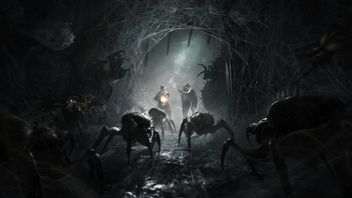
A couple of hours ago, Hunt Showdown Update 2.5 was launched. It is called Web of the Empress. It is full of novelties: Tarot Cards, new weapons and changes in extraction points. You will also encounter a new creepy monster.
How to
September 24, 2025
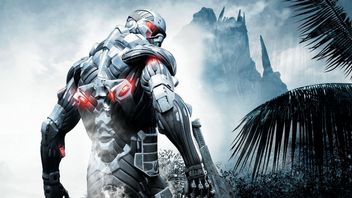
Electronic Arts has removed the first installment of the Crysis series from Steam. No reasons were given for the decision, but players are guessing what is behind it.
video games
June 26, 2025
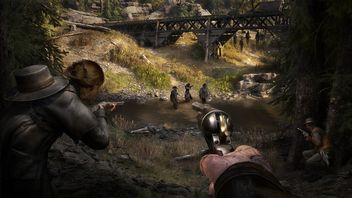
Garden of the Witch is coming to Hunt Showdown 1896. So, what novelties will Crytek introduce this time?
How to
March 24, 2025
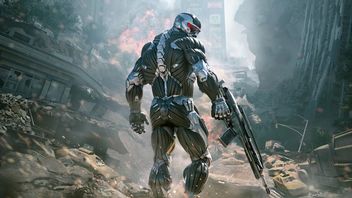
About 60 employees will say goodbye to the Crytek studio. The developers of Crysis announced that they have stopped work on the next installment of the series.
video games
February 12, 2025

Hunt Showdown 1896 is the best when you have friends to play with. But does the game support crossplay?
How to
December 20, 2024
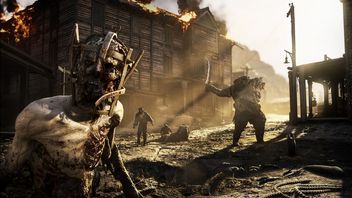
New UI in Hunt Showdown is far from being transparent. From this guide you will learn how to check your KDA and MMR.
How to
August 16, 2024

If you see a dark future for Hunt Showdown 1896 in the form of black screen, there might be a light at the end of the tunnel, not only in the form of white cursor on the screen. Check out this article to learn a possible fix for this issue.
How to
August 16, 2024
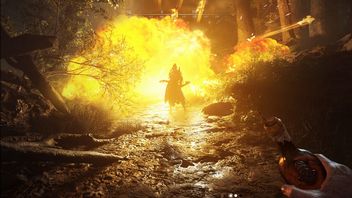
Tide of Desolation in Hunt Showdown introduced teleportation mechanics. From this guide you will learn how it works.
How to
December 15, 2023

Hunt: Showdown continues to be enjoyed by thousands of players. A Crytek representative recently explained what exactly is the source of the success of this FPS, which continues to be vigorously expanded by the developers.
video games
December 6, 2023