Creative Assembly is a British development studio established in 1987, creating games for PC, consoles and mobile devices. Since 2005, the studio has been owned by the Japanese publishing giant (and previously also a console manufacturer), SEGA. The company is headquartered in Horsham, West Sussex, and employs approximately 300 people from all over the world. Since January 2009, the studio has been headed by former Atari/Infogrames and Electronic Arts employee Tim Heaton, but since the company's inception, the key figure in Creative Assembly has been its founder, Tim Ansell.
In the initial period of its operation, Creative Assembly was mainly involved in game ports and cooperation with other, larger developers (e.g. EA Sports studios). In 2000, after thirteen years of existence, the studio released its first independent production – Shogun: Total War, which launched the best-selling Total War series; since then, the studio has been associated mainly with this franchise. The secret of the series' success is a skillful combination of turn-based strategy and RTS elements: on the one hand, we take part in real-time tactical battles involving thousands of units, but we also take care of a whole range of other – political and economic – aspects of our kingdom. Over the years, Creative Assembly's extensive portfolio has seen only a few productions unrelated to the Total War brand. A special mention here goes to the first-person survival horror Alien: Isolation, released in 2014 and set in the universe of the famous Alien film series.
Creative Assembly studio was founded on August 18, 1987 by Tim Ansell, who had programming experience on Amstrad CPC, Commodore 64 and Atari 800 computers. The studio's first achievements, most often the work of Ansell himself, were ports of games designed for Amiga computers to the DOS system, and among the ported titles, it is worth mentioning games such as Stunt Car Racer and Shadow of the Beast by Psygnosis. In 1993, Creative Assembly established cooperation with Electronic Arts and in the following years collaborated with them in creating sports games under the EA Sports brand. These included the first installments of the FIFA series, as well as productions dedicated to rugby, cricket and Australian rules football. By the late 1990s, Ansell decided to take a step forward and start creating his own games. As a result of the actions taken, the studio grew significantly in a short time, and Michael Simpson took over as head of Creative Assembly.
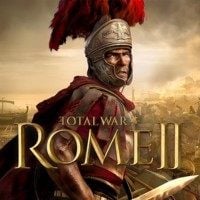
Thanks to several years of cooperation with EA, the studio had a sufficient budget to finally start working on its own project in 1999. That game was Shogun: Total War, released in the middle of the following year, combining elements of turn-based and real-time strategies. Creative Assembly's debut was very warmly received by both critics and players, and Jeff van Dyck, responsible for the game's soundtrack, was honored with EMMA and BAFTA awards. After the release of the expansion titled The Mongol Invasion, the studio ended its cooperation with Electronic Arts, signing an agreement with Activision (now Activision Blizzard). Under its banner, the studio released two subsequent installments of the series: Medieval: Total War (2002) and Rome: Total War (2004) which used an improved graphic engine; both received official expansions and surpassed their predecessors in popularity. Creative Assembly was awarded the best developer of 2002 award, and two years later Jeff van Dyck received another BAFTA nomination.
Amid speculation that Activision was planning to take over the Creative Assembly studio, the Japanese company SEGA joined the competition and in March 2005 acquired the British developer along with the rights to the games it had previously created. The first titles released under the new publisher were two expansions for Rome: Total War, as well as the action-adventure game Spartan: Total Warrior, the studio's console debut. In 2006, Creative Assembly returned with another installment of its flagship series, Medieval II: Total War. The game did not receive such good reviews as its predecessors, as a result of which the studio decided to take a break from developing the brand for a while and in 2008-2009 presented two completely new titles: the third-person action game Viking: Battle for Asgard and the unconventional real-time strategy Stormrise. Meanwhile, SEGA established an Australian branch of the studio to port three classic Sonic installments for the Sonic Classic Collection compilation.
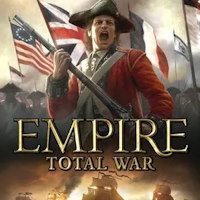
After a short break, the Total War brand returned, and between 2009 and 2013, Creative Assembly prepared four installments: Empire: Total War, Napoleon: Total War, Total War: Shogun 2 and Total War: Rome II. The first one received some of the highest ratings in the history of the series on Metacritic (90 points), and the last one – mainly due to numerous technical problems – one of the worst (76 points). Starting in 2011, the structure of the series' titles was changed and the phrase Total War was moved to the beginning to better highlight the brand. A year later, the studio released the first installment of the spin-off miniseries called Total War Battles, which was also the first production in the company's history intended for popular mobile devices. In April 2013, it was announced that SEGA Studios Australia (formerly known as Creative Assembly Australia) was closing.
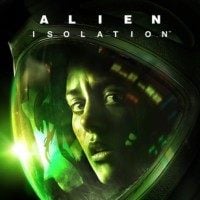
In October 2014, Creative Assembly unveiled its first new IP in five years – a first-person survival horror action game, Alien: Isolation, set in the universe of the famous science fiction film series Alien. The game was warmly received and got several large DLCs. Creative Assembly, however, had no intention of giving up on capitalizing on its flagship series, releasing its next installment, Total War: Attila, in 2015. A year later, the studio released Total War: Warhammer, based on Games Workshop's popular Warhammer universe, and the first part of a planned trilogy. The production brought a breath of fresh air to the somewhat stale franchise, transferring the series' familiar mechanics to fantasy realities previously unexplored by the British developers. In the same year, Creative Assembly presented the second part of the Total War Battles miniseries, which, like its predecessor, was released on PCs and mobile devices – although this time in the controversial free-to-play model.
2017 brought new challenges for Creative Assembly. The final version of another free-to-play game called Total War: Arena has debuted on the market. It was a combination of an RTS and a MOBA (Multiplayer Online Battle Arena), using elements of the studio's famous franchise. In the same year, the company also made another "side project" - together with the 343Industries studio, they developed Halo Wars 2, a continuation of the strategy game released in 2009 exclusively for Microsoft consoles, set in the universe of the famous Halo series. The described production is the first Creative Assembly game since 2005 developed not for SEGA. Shortly afterwards, the second installment of the Total War: Warhammer series was released, and in the following months it received a number of expansions.
In February 2018, the servers for Total War: Arena were shut down, and participants of its beta tests received various consolation prizes from the developers in the form of add-ons for their other games. In May, the Total War spin-off titled Thrones of Britannia debuted, taking players to the British Isles of the 9th century AD.
Fans had to wait for a new, full-fledged Total War until May 2019, when Total War: Three Kingdoms hit store shelves; its action was set in ancient China, in the so-called Three Kingdoms Era. In addition, in 2019 we also got two expansions for Rome: Total War - Alexander and Barbarian Invasion for Android mobile devices, as well as the release of Alien: Isolation on Nintendo Switch. In addition, Total War: Three Kingdoms has received its first expansion called Eight Princes. The studio released two more extensive add-ons in 2020: Mandate of Heaven released in January, and A World Betrayed released in March.
In 2020, the Total War spin-off series, titled Total War Saga, received its second installment. That game was Total War Saga: Troy, in which the developers let us to take part in the so-called Trojan War. The production debuted on PC (or more precisely – on the Epic Games Store platform) on August 13 and was available for free for the first 24 hours after its release; this resulted in it reaching 7.5 million players within 24 hours. Later, Creative Assembly prepared two more expansions for Total War: Three Kingdoms: The Furious Wild and Fates Divided.
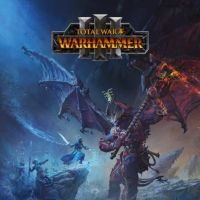
In March 2021, Total War: Rome Remastered was announced, a remastered version of the iconic strategy game released in 2004. The game was released on April 29 and received positive reviews. The latter showed that although its original was then a dozen or so years old, it had ultimately stood the test of time quite well. Numerous improvements (not only graphical) introduced by the developers have made this remaster a great choice for both seasoned players who spent a lot of time with the original and for people who have not yet had contact with it. In 2021, Creative Assembly developed the first major expansion for Total War Saga: Troy, titled Mythos. The year 2022 brought the premiere of the long-awaited Total War: Warhammer III. The game was warmly received by players ("mostly positive" reviews on Steam) and reviewers (according to Metacritic, the average rating from industry media was 85/100). The title was a commercial success, so the developers could work on its development in peace. After several smaller DLCs, in April 2023 it was time for the first major expansion for this title, titled Forge of the Chaos Dwarfs.
In the meantime, in June 2022, Creative Assembly announced its new (and unusual for this studio) work, which was unofficially rumored back in 2017. It was an online first-person shooter called Hyenas, which allowed players to take on the role of the titular characters competing for loot, and represented with cartoon and colorful graphics. The announcement was not met with a positive response from players, who clearly expected something different from the creators of Alien: Isolation. Due to the above, there were doubts about the success of Sega's ambitious plans, according to which the project was to generate $900 million in revenue. As it turned out, Sega itself ultimately lost faith in them, and at the end of September 2023, it officially announced that the project had been canceled. To make matters worse, we soon learned that Creative Assembly would be hit by budget cuts that could lead to layoffs. However, the studio assured that everything would be done to ensure that as few studio members as possible would lose their jobs; one solution was to transfer them to other departments.
However, Creative Assembly had another potential ace up its sleeve. The next installment of the Total War series, titled Total War: Pharaoh. The production was announced in May 2023, and was released on PC on October 11. Unfortunately, the first reviews indicated that the studio was clearly losing its form. Although the game was quite warmly received by industry critics, the average rating of 75/100 (according to Metacritic) was definitely not what fans were expecting from the Total War series. Players weren't kinder, as evidenced by the "mixed" reviews on Steam. To make matters worse, the game was not particularly popular.
In the days, weeks, and months that followed, both Creative Assembly and Sega began working to deal with the crisis. First, it was announced that the developer would be able to focus on what they do best, creating strategy games, and would no longer be distracted by projects representing other genres (like the unfortunate Hyenas). Later, the developers themselves apologized to their fans by reducing the price of Total War: Pharaoh by almost half. Another sign of goodwill from the developers and publishers was the free update titled High Tide, released at the end of January 2024, which was initially planned as paid DLC.
The next steps towards improving player relations were the release of update 4.2, which introduced new content to Total War: Warhammer III, and the splitting of the next expansion, Thrones of Decay, into three parts. The former was a kind of compensation for the modest Shadows of Change expansion, while thanks to the latter, players were to be able to purchase only the content that interested them.
However, changes in the studio's policy did not protect it from the mass layoffs that hit it at the end of March 2024. Among the 240 Sega employees who had to say goodbye to their jobs, the majority were reportedly members of Creative Assembly.
List of all games in development by Creative Assembly.
Total War: Shogun 2 - Complete Edition - October 13, 2026 - PC
Alien: Isolation 2 - TBA - PS5, XSX, NS2, PC
Total War: Medieval 3 - TBA - PC
Total War: Warhammer 40,000 - TBA - PC, PS5, XSX
List of all released games developed by Creative Assembly.
Total War: Warhammer III - Lords of the End Times - September 24, 2026 - PC
Total War: Warhammer III - Tides of Torment - December 4, 2025 - PC
Total War: Warhammer III - Omens of Destruction - December 12, 2024 - PC
Total War: Warhammer III - Thrones of Decay - April 30, 2024 - PC
Total War: Pharaoh - October 11, 2023 - PC
Total War: Warhammer III - Forge of the Chaos Dwarfs - April 13, 2023 - PC
Total War: Warhammer III - February 17, 2022 - PC
Total War Saga: Troy - Mythos - September 2, 2021 - PC
Total War: Rome Remastered - April 29, 2021 - PC
Total War: Three Kingdoms - Fates Divided - March 11, 2021 - PC
Total War: Three Kingdoms - The Furious Wild - September 3, 2020 - PC
Total War Saga: Troy - August 13, 2020 - PC
Total War: Three Kingdoms - A World Betrayed - March 19, 2020 - PC
Total War: Three Kingdoms - Mandate of Heaven - January 16, 2020 - PC
Total War: Three Kingdoms - Eight Princes - August 8, 2019 - PC
Total War: Three Kingdoms - May 23, 2019 - PC
Total War: Warhammer II - Curse of the Vampire Coast - November 8, 2018 - PC
Total War: Rome II - Rise of the Republic - August 9, 2018 - PC
Total War Saga: Thrones of Britannia - May 3, 2018 - PC
Total War: Arena - February 22, 2018 - PC
Total War: Warhammer II - Rise of the Tomb Kings - January 23, 2018 - PC
Total War: Rome II - Empire Divided - November 30, 2017 - PC
Total War: Warhammer II - Mortal Empires - October 26, 2017 - PC
Total War: Warhammer II - September 28, 2017 - PC
Halo Wars 2: Awakening the Nightmare - September 26, 2017 - PC, XONE
Halo Wars 2 - February 17, 2017 - PC, XONE
Total War: Warhammer - Realm of The Wood Elves - December 8, 2016 - PC
Total War: Warhammer - Call of the Beastmen - July 28, 2016 - PC
Total War: Warhammer - May 24, 2016 - PC
Total War Battles: Kingdom - March 24, 2016 - PC, iOS, AND
Total War: Attila - Age of Charlemagne - December 10, 2015 - PC
Total War: Attila - The Last Roman - June 25, 2015 - PC
Alien: Isolation - The Trigger - March 3, 2015 - PC, XONE, PS4, X360, PS3
Total War: Attila - February 17, 2015 - PC
Alien: Isolation - Lost Contact - February 10, 2015 - PC, X360, XONE, PS3, PS4
Alien: Isolation - Safe Haven - January 13, 2015 - PC, XONE, X360, PS4, PS3
Total War: Rome II - Wrath of Sparta - December 16, 2014 - PC
Alien: Isolation - Trauma - December 1, 2014 - PC, X360, PS3, XONE, PS4
Alien: Isolation - Corporate Lockdown - October 28, 2014 - PC, X360, PS3, XONE, PS4
Alien: Isolation - October 7, 2014 - PC, X360, PS3, XONE, PS4, AND, iOS, Switch
Total War: Rome II - Hannibal at the Gates - March 27, 2014 - PC
Total War: Rome II - Caesar in Gaul - December 17, 2013 - PC
Total War: Rome II - September 3, 2013 - PC
Total War Battles: Shogun - April 19, 2012 - iOS, PC, AND
Total War: Shogun 2 - Fall of the Samurai - March 23, 2012 - PC
Total War: Shogun 2 - March 15, 2011 - PC
Napoleon: Total War - February 23, 2010 - PC, AND, iOS
Empire: Total War - The Warpath - October 5, 2009 - PC
Stormrise - March 24, 2009 - PS3, X360, PC
Empire: Total War - March 3, 2009 - PC, AND, iOS
Viking: Battle for Asgard - March 28, 2008 - PS3, X360, PC
Medieval II: Total War - Kingdoms - August 28, 2007 - AND, iOS, PC
Total War: Medieval II - November 10, 2006 - PC, AND, iOS
Total War Eras Collection - June 30, 2006 - PC
Rome: Total War - Alexander - June 19, 2006 - PC, iOS, AND
Spartan: Total Warrior - October 7, 2005 - GCN, PS2, XBOX
Rome: Total War - Barbarian Invasion - September 27, 2005 - AND, iOS, PC
Rome: Total War - September 22, 2004 - PC, iOS, AND
Medieval: Total War - Viking Invasion - May 6, 2003 - PC
Medieval: Total War - August 21, 2002 - PC
Shogun: Total War - The Mongol Invasion - August 18, 2001 - PC
Shogun: Total War Warlord Edition - August 8, 2001 - PC
Shogun: Total War - June 13, 2000 - PC
Hyenas - cancelled - PC, XSX, PS5, XONE, PS4
Total War: Elysium - cancelled - PC, AND, iOS