BioWare is a Canadian development studio founded in 1995, originally part of the VG Holding Group, and since 2007 part of Electronic Arts. The company has three branches, located in Edmonton and Montreal (Canada) and in Austin, USA, and are headed by Aaryn Flynn, Yanick Roy and Jeff Hickman, respectively.
Apart from games such as the debut Shattered Steel and MDK 2 released in 2000, the vast majority of BioWare's productions are RPGs that are representing their four key franchises: Baldur's Gate, Mass Effect, Dragon Age and Star Wars: The Old Republic.
Almost from the beginning, the studio's mission has been to "provide players with the best role-playing games in the world and build a trusted brand through its products, numerous events and cooperation with the gaming community." In addition to large, high-budget productions, BioWare has also made several smaller mobile games, such as Sonic Chronicles: The Dark Brotherhood, Mass Effect Galaxy, and Mass Effect Infiltrator.
The origins of BioWare date back to February 1995, when three newly qualified doctors: Ray Muzyka, Greg Zeschuk, and Augustine Yip decided to abandon their medical careers and start a business in the video game industry. The funds earned during their medical practice allowed them to open their own studio with an initial capital of $100,000. BioWare's first original project, Shattered Steel, began life as a demo sent to all major publishers. The contract was offered by Interplay Entertainment, a world-leading company at the time, and thus, in 1996, the studio's debut game was released, being one of two non-RPGs in BioWare's portfolio. Shattered Steel achieved quite good sales results, but it did not make a big impact on the gaming industry, so its sequel, planned for 1998, was never released.
BioWare's first and greatest success was a classic cRPG, the concept of which arose from the creators' interest in the genre of computer and pen-and-paper role-playing games. At the publisher's suggestion, the production was based on the license of the extremely popular Dungeons & Dragons system, acquired at that time from SSI. Baldur's Gate was released after three years of work, during which the studio's founders continued their medical practice. It sold over two million copies, achieving a sale similar to the legendary Diablo by Blizzard Entertainment. The Infinity engine created for the game became the basis for subsequent games set in the AD&D world, such as Planescape Torment and the Icewind Dale series by Black Isle studio. While work was still underway on Baldur's Gate, one of the co-founders of BioWare, Augustine Yip, left the studio, deciding to pursue a medical career.
In the following years, BioWare focused on continuing the Baldur's Gate series as well as creating a completely new IP, Neverwinter Nights, based on a similar concept (the sequel of which, however, was developed by the already mentioned Black Isle studio). In the meantime, the studio released the third-person action game called MDK 2 (2000) - a sequel to Shiny Entertainment's cult classic from 1997 and BioWare's first game released on consoles. After selling the D&D system license to Atari, in 2003 the studio released Star Wars: Knight of the Old Republic - an action RPG set in the world of the iconic Star Wars. Two years later, BioWare released another new IP: Jade Empire. Both games were huge successes, but their popularity did not surpass that of Baldur's Gate.
In November 2007, VG Holding Group, the owner of BioWare, was acquired by Electronic Arts. Under its leadership, the studio achieved another great success with the science fiction action RPG Mass Effect (2007), which launched the cult trilogy about Commander Shepard's fate [years later receiving a new chapter titled Mass Effect: Andromeda (2017)]. A few months later, the studio released Sonic Chronicles: The Dark Brotherhood on Nintendo DS, which was the studio's first game created for handheld consoles. In 2008, EA announced the merger of BioWare studio with Mythic Entertainment. In the same year, the newly opened studio branch in Austin, Texas, began work on the MMORPG Star Wars: The Old Republic (released in 2011). Shortly thereafter, another studio was opened in Quebec, Canada, to support the other two studios.
BioWare, which was on the rise, presented another new IP in 2009 - Dragon Age: Origins - which was the studio's return to the RPG genre. Like Mass Effect which was set in a completely different universe, the game was very well received by players and spawned two full-fledged sequels. In the same year, as part of the restructuring process, EA established the BioWare Group, where Ray Muzyka and Greg Zeschuk also played important roles. During its peak activity, it had several branches scattered around the world, including studios that no longer exist or are no longer part of the group, like BioWare Mythic (formerly Mythic Entertainment), BioWare Victory (formerly Victory Games), BioWare Ireland, BioWare San Francisco and Waystone Games.
At that time, the studio also experienced a number of personnel changes, which influenced the production process of Mass Effect: Andromeda and the fate of two other, ultimately canceled productions: Shadow Realms and Command & Conquer. The biggest blow for the company came in September 2012, when, after the announcement of the third installment of the Dragon Age series, the studio's founders, Zeschuk and Muzyka, announced their retirement from development. In May 2014, Casey Hudson, the creator of the Mass Effect series, announced his departure from BioWare, while in January 2016, David Gaider, the screenwriter of the Dragon Age series, left the team. Chris Wynn left the studio in December 2015, and Chris Schlerf did the same in February 2016; both had important roles in the Mass Effect: Andromeda project. The last of the mentioned games debuted in March 2017, but it did not meet the expectations of both the gamers (it differed significantly in quality from its predecessors) and the developers and publisher (it did not achieve much artistic or commercial success). This resulted in the entire brand put on hold by Electronic Arts.
However, BioWare did not give up and in June 2017 presented its next work to the world. A science fiction looter shooter titled Anthem, which charmed fans primarily with its graphics. In July, however, Aaryn Flynn, the game's main manager, left the studio and was replaced by Casey Hudson, returning to the studio after more than three years. In October, Mike Laidlaw, creative director of Jade Empire and Dragon Age: Origins, left BioWare. In June 2018, Jame Ohlen, lead designer of the Baldur's Gate, Neverwinter Nights and Star Wars: Knights of the Old Republic series, also left the company.
Anthem debuted in February 2019 and was received even worse than Mass Effect: Andromeda. The game's sales left much to be desired, with reviewers focusing primarily on the poor content and uninteresting gameplay. For this reason, the developers abandoned their previously announced plans to develop this project, deciding to return to the drawing board and do some significant redesign changes. In December 2018, BioWare announced the fourth installment of the Dragon Age series. At that time, however, this enigmatic title was in a very early stage of production – suffice it to say that the behind-the-scenes video published in August 2020 only featured concept art and developer commentary. Meanwhile, in February 2019, industry journalist Jason Schreier revealed that the development process of Anthem was pure hell for BioWare developers. In September 2019, the studio's headquarters was moved from Calgary Trail to Epcor Tower in Edmonton.
On November 7, 2020, the studio announced that it was working on Mass Effect: Legendary Edition. The set containing remastered versions of the first three installments of the series was released on PC, PlayStation 4, Xbox One, PlayStation 5 and Xbox Series X. Furthermore, on December 10, 2020, at The Game Awards 2020, the studio announced works on the fifth installment of the series. The teaser released at the time seemed to suggest that the creators intended to deliver a production that would continue both the story presented in the original trilogy and the plot of Mass Effect: Andromeda. On the same day, we also got a remainder that the fourth Dragon Age was coming. It might seem that although BioWare has looked "lost" for years, it is finally starting to walk the right path. Unfortunately, on December 3, 2020, Casey Hudson (who left the team for the second time) and Mark Darrah (executive producer of the Dragon Age series) announced their departure from the studio.
On May 14, 2021, the Mass Effect: Legendary Edition compilation was released and the industry media gave it good scores; according to Metacritic, the average score was between 86-90/100 (depending on the platform). Players were a bit less kind to this compilation; on the same site, their average ratings ranged between 6.1-6.9/10.
In the following months, the studio was very sparing in sharing information about its next project, the fourth Dragon Age. In the meantime, the project gained a subtitle – from June 2022 it was known as Dragon Age: Dreadwolf. In January 2023, another veteran left the studio – Mac Walters, the lead writer of Mass Effect 2 and Mass Effect 3. The last game Walters worked on before the end of his nineteen-year career at BioWare was the fourth Dragon Age, on which he served as project manager.
In August 2023, BioWare broke the silence that had been going on for a long time: the studio announced that in order to become a "more agile and focused" team for its future projects, it was forced to restructure. As a result, about 50 people lost their jobs at the company, including Jon Renish, the technical director of the fourth Dragon Age, as well as many experienced scriptwriters. The studio also promised that the reorganization would not affect work on announced games.
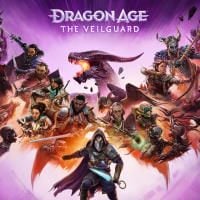
In June 2024, BioWare finally revealed the previously hidden information regarding its new project. First, it was revealed that the fourth Dragon Age had yet another name change, this time to Dragon Age: The Veilguard. Next, we got the first trailer and finally the first, long gameplay video, which signaled, among other things, the studio's greater emphasis on action.
Dragon Age: The Veilguard debuted on October 31, 2024 on PC, PlayStation 5 and Xbox Series X/S. The production was warmly received by the industry media, as evidenced by the average rating on Metacritic ranging from 76-85/100 (depending on the platform). Steam users were also kind to it, giving it "mostly positive" reviews.
Even though Dragon Age: The Veilguard was the most popular game on Steam in the history of BioWare games, there were many indications that it was not a sales hit. It should be noted, however, that neither the developer nor the publisher have provided official data on the sales results of this game. This meant that various industry analyses on this issue had to be approached with a certain degree of skepticism.
However, in December 2024, unofficial reports began to appear revealing the layoffs at BioWare were the consequence of unsatisfactory results achieved by the fourth Dragon Age. Shortly afterwards, in mid-January 2025, Corinne Busche, the project director, left the team. We also got rumors that the entire BioWare Edmonton team working on this game was to be disbanded. Over time, other developers joined in.
In the second half of January 2025, BioWare released a patch and a note stating that support for Dragon Age: The Veilguard has ended. From now on, the developers were to "move to look for crash-causing bugs." At the same time, it was officially admitted that the game did not meet Electronic Arts' expectations, which contributed to a decline in the publisher's stock market value by 15% (i.e. approximately $6 billion).
The not satisfactory reception of the fourth Dragon Age had an impact on the studio's next project, the fifth installment of the Mass Effect series. BioWare has undergone a restructuring, and although a "core team" has been delegated to work on the next space adventure, it was also decided that the project does not require "support from the entire studio." As a result, "many" BioWare employees were sent to "other EA teams." Such a move was intended to make the studio "more agile."
Even though later BioWare games were based mainly on engines from other developers (including Unreal Engine 3 and Frostbite 3), one of the studio's greatest contributions to the development of the PC role-playing game genre were its original graphic engines, developed between 1998 and 2011. A large number of important productions were created based on technologies created by BioWare, such as The Witcher released in 2007 by CD Projekt RED. The full list is as follows:
List of all games in development by BioWare.
Mass Effect 5 - TBA - PC, PS5, XSX
List of all released games developed by BioWare.
Dragon Age: The Veilguard - October 31, 2024 - PC, PS5, XSX
Star Wars: The Old Republic - Legacy of the Sith - February 15, 2022 - PC
Mass Effect: Legendary Edition - May 14, 2021 - PS4, XONE, PS5, XSX, PC
Star Wars: The Old Republic - Onslaught - October 22, 2019 - PC
Anthem - February 22, 2019 - XONE, PC, PS4
Mass Effect: Andromeda - March 21, 2017 - PC, XONE, PS4, WiiU
Star Wars: The Old Republic - Knights of the Eternal Throne - December 2, 2016 - PC
Star Wars: The Old Republic - Knights of the Fallen Empire - October 27, 2015 - PC
Dragon Age: Inquisition - Trespasser - September 8, 2015 - PC, PS4, XONE
Dragon Age: Inquisition - The Descent - August 11, 2015 - PC, XONE, PS4
Dragon Age: Inquisition - Jaws of Hakkon - March 24, 2015 - PC, XONE, PS4, PS3, X360
Star Wars: The Old Republic - Shadow of Revan - December 9, 2014 - PC
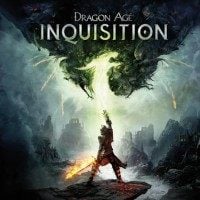
Dragon Age: Inquisition - November 18, 2014 - PC, X360, PS3, XONE, PS4
Star Wars: The Old Republic - Galactic Strongholds - October 14, 2014 - PC
Star Wars: The Old Republic - Galactic Starfighter - February 4, 2014 - PC
Star Wars: The Old Republic - The Rise of the Hutt Cartel - April 14, 2013 - PC
Mass Effect 3: Citadel - March 5, 2013 - PC, X360, PS3
Mass Effect 3: Omega - November 27, 2012 - PC, X360, PS3
Mass Effect Trilogy - November 6, 2012 - PC, X360, PS3
Mass Effect 3: Leviathan - August 28, 2012 - PC, X360, PS3
Mass Effect 3 - March 6, 2012 - PC, X360, PS3, WiiU
Mass Effect 3: From Ashes - March 6, 2012 - X360, PS3, PC
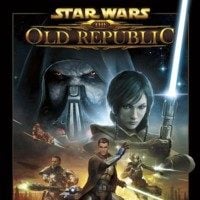
Star Wars: The Old Republic - December 20, 2011 - PC
Dragon Age II: Mark of the Assassin - October 11, 2011 - PC, X360, PS3
Dragon Age II: Legacy - July 26, 2011 - PC, PS3, X360
Mass Effect 2: The Arrival - March 29, 2011 - X360, PC, PS3
Dragon Age: Legends - March 16, 2011 - PC
Dragon Age II - March 8, 2011 - PC, X360, PS3
Dragon Age II: The Exiled Prince - March 8, 2011 - X360, PS3, PC
Dragon Age: Origins - Witch Hunt - September 7, 2010 - PC, X360, PS3
Mass Effect 2: Lair of the Shadow Broker - September 7, 2010 - PC, X360
Dragon Age: Origins - Golems of Amgarrak - August 10, 2010 - PC, X360, PS3
Dragon Age: Origins - Leliana's Song - July 6, 2010 - PC, X360, PS3
Mass Effect 2: Overlord - June 15, 2010 - PC, X360
Dragon Age: Origins - Darkspawn Chronicles - May 18, 2010 - X360, PS3, PC
Mass Effect 2: Kasumi - Stolen Memory - April 6, 2010 - PC, X360
Mass Effect 2: Firewalker - March 23, 2010 - PC, X360
Dragon Age: Origins - Awakening - March 16, 2010 - PC, PS3, X360
Dragon Age: Origins - Return to Ostagar - January 29, 2010 - X360, PC, PS3
Mass Effect 2 - January 26, 2010 - PC, X360, PS3
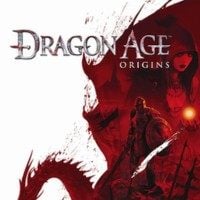
Dragon Age: Origins - November 3, 2009 - PC, PS3, X360
Mass Effect: Pinnacle Station - August 25, 2009 - X360, PC
Mass Effect Galaxy - June 22, 2009 - iOS
Sonic Chronicles: The Dark Brotherhood - September 26, 2008 - NDS
Mass Effect: Bring Down the Sky - May 9, 2008 - X360, PC
Mass Effect - November 20, 2007 - PC, X360, PS3
Jade Empire: Special Edition - April 12, 2005 - XBOX, PC, iOS, AND
Neverwinter Nights: Hordes of the Underdark - December 2, 2003 - PC
Star Wars: Knights of the Old Republic - July 16, 2003 - XBOX, PC, iOS, AND, Switch
Neverwinter Nights: Shadows of Undrentide - June 18, 2003 - PC
Neverwinter Nights - June 18, 2002 - PC
Saga Baldur's Gate: Edycja Kolekcjonerska - December 17, 2001 - PC
Baldur's Gate II: Throne of Bhaal - June 19, 2001 - PC
Baldur's Gate II: Shadows of Amn - September 22, 2000 - PC
MDK 2 - July 14, 2000 - PC, PS2
Baldur's Gate: Tales of the Sword Coast - May 6, 1999 - PC
Baldur's Gate - December 23, 1998 - PC
Shattered Steel - October 22, 1996 - PC
Command & Conquer - cancelled - PC
Shadow Realms - cancelled - PC