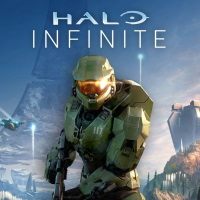
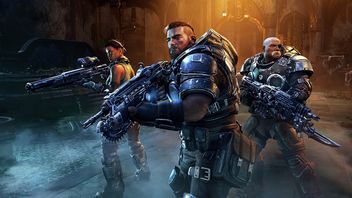
Xbox Game Studios (formerly Microsoft Studios) is a division of Microsoft responsible for developing and publishing video games. Founded in 1975 by Paul Allen and the legendary Bill Gates, the company is best known as one of the world’s largest software producers - creators of operating systems like DOS and Windows, as well as popular applications such as Microsoft Office and Skype. For years, the company has also been active in the gaming world - not just developing video games, but also creating hardware like the Xbox console family, Microsoft Surface tablets, and a range of PC accessories including mice and keyboards.
Although Xbox Game Studios has existed in its current form only since 2002 (originally as Microsoft Game Studios), its parent company, Microsoft, actually began publishing games back in the late 1970s and 80s. The company’s published titles were released under the Microsoft label - later rebranded as Microsoft Games. The company is based in Redmond, Washington - the same city that serves as the global headquarters of Microsoft itself. Since 2014, Phil Spencer has served as the head of Xbox Game Studios, overseeing not just the studio itself, but also the broader Xbox division - including the console’s development and its connected services. In 2022, it was announced that Phil Spencer would lead a new division called Microsoft Gaming, while Matt Booty stepped in to take charge of Xbox Game Studios.
Xbox Game Studios as a game developer
Xbox Game Studios includes both smaller, lesser-known teams focused mainly on casual titles and large AAA studios with their own distinct identities - all owned by Microsoft and responsible for developing the company’s biggest franchises. Microsoft started building its own network of in-house development studios around the beginning of the new millenium. After founding Microsoft Game Studios and entering the console market, the company ramped up its game development efforts, creating numerous new studios while continuing to acquire external developers. The launch of the first Xbox also meant the debut of Halo, a series of futuristic first-person shooters by Bungie Software, followed a few years later by Turn 10 Studios’ Forza Motorsport racing franchise. With the launch of the Xbox 360, another flagship Microsoft franchise arrived: Gears of War, a series of fast-paced shooters initially developed by Epic Games and later continued by Microsoft’s in-house studios. The Forza Horizon series also made its debut on the Xbox 360, quickly becoming another key franchise for Microsoft, with development handled by Playground Games.
Studios belonging to Xbox Game Studios:
- Compulsion Games, based in Montreal, Canada, was founded in 2010 and acquired by Microsoft eight years later. The studio gained recognition for titles like Contrast and We Happy Few,
- Double Fine Productions, based in San Francisco, USA, was founded in 2000 and acquired by Microsoft nineteen years later. The studio is led by the renowned Tim Schafer,
- Halo Studios, based in Redmond, USA, was established in 2007 and focuses exclusively on developing the Halo series,
- inXile Entertainment, based in Newport Beach, USA, was founded in 2002 and acquired by Microsoft in 2018. The studio is best known for the second and third installments of the Wasteland series,
- Mojang AB, based in Stockholm, Sweden, was founded in May 2009 and acquired by Microsoft in September 2014. The studio is best known for the iconic Minecraft,
- Ninja Theory, based in Cambridge (UK), was founded in 2000 and acquired by Microsoft in 2018. The studio is best known for Hellblade: Senua's Sacrifice,
- Obsidian Entertainment, based in Irvine (USA), was founded in 2003 and acquired by Microsoft fifteen years later. The studio is known for titles such as Pillars of Eternity, The Outer Worlds, and Fallout: New Vegas,
- Playground Games, based in Leamington Spa, UK, was founded in 2010 and acquired by Microsoft eight years later. The studio primarily develops the Forza Horizon series,
- Rare, based in Twycross (UK), was founded in 1985 and acquired by Microsoft in 2002. The studio is best known for iconic series such as Viva Pinata, Banjo–Kazooie, Perfect Dark, and Kinect Sports,
- The Coalition, based in Vancouver (Canada), was founded in February 2010 as Zipline Studios (later known as Microsoft Game Studios Vancouver and then Black Tusk Studios). The team is responsible for developing the Gears of War series,
- Turn 10 Studios, based in Redmond, USA, was founded in 2001 and is responsible for the Forza Motorsport series,
- Undead Labs, based in Seattle (USA), is a development studio founded in 2009 and acquired by Microsoft nine years later. The team is best known for creating and developing the State of Decay series,
- World's Edge, based in Redmond (USA), was founded in 2019. The studio’s main role is to oversee the development of the Age of Empires series,
- Xbox Game Studios Publishing – the division in charge of publishing the company’s games.
Bethesda Softworks Studios:
- Arkane Studios, based in Lyon (France), was founded in 1999 and acquired by Microsoft in 2020. The studio is best known for creating the Dishonored series,
- Bethesda Game Studios, based in Rockville (USA), was founded in 1986 and acquired by Microsoft 24 years later. The studio develops and publishes games under the Bethesda Softworks brand, with its portfolio including the The Elder Scrolls series and the Fallout series from its third installment onward,
- id Software, based in Dallas (USA), was founded in 1991 and acquired by Microsoft in 2020. The studio is best known for iconic series such as Quake and Doom,
- Machine Games, based in Uppsala (Sweden), was founded in 2009 and has been developing the Wolfenstein series since 2014,
- ZeniMax Online Studios, located in Hunt Valley (USA), was founded in 2007 and is best known for creating The Elder Scrolls Online.
Xbox Game Studios as a game publisher
Microsoft didn’t fully step into the game publishing world until the late 1990s, releasing several key titles that were initially PC exclusives. The real breakthrough, however, came in the early 2000s with the launch of the first Xbox console and the establishment of Microsoft Game Studios as a dedicated division. In the years that followed, it rolled out numerous bestsellers - crafted not only by Microsoft's internal teams, but also by well-known external studios and, later on, by smaller indie developers supported through the ID@Xbox program. During that period, only a small portion of releases were strictly for PC, while most games were developed for Microsoft’s next-generation consoles.
The history of Xbox Game Studios
The 1980s and 1990s.
The beginnings of Xbox Game Studios are closely tied to Microsoft’s history. While the company initially focused on creating PC operating systems, it had already started exploring game development by the late 1970s and 80s, releasing several games for popular computers of the time, like the Apple II and TRS-80, including titles such as Microsoft Adventure and Olympic Decathlon. The first major game series published by Microsoft was the Microsoft Flight Simulator series, launched a year later. It was initially developed by subLOGIC and later taken over by The Bruce Artwick Organization Ltd.
In 1985, the first version of Windows hit the market - and it came with the classic game Reversi. Windows 3.0, released in 1990, introduced a digital version of solitaire called Microsoft Solitaire, which has continued to appear in nearly every version of Windows since. In the years that followed, Windows also got a bunch of smaller games, bundled in packages called Microsoft Entertainment Pack. In 1992, Microsoft released its first sports game, Microsoft Golf, which went on to get several new editions over the next decade. In 1993, Microsoft launched the groundbreaking fifth version of Flight Simulator, and a year later followed it up with the educational Microsoft Space Simulator.
In the second half of the 1990s Microsoft started getting bolder, publishing a mix of sports titles like Microsoft Soccer and NBA Full Court Press, racing games such as Motocross Madness and Monster Truck Madness, the adventure game The Neverhood, the platformer Gex, and the tactical strategy title Close Combat. In 1997, Microsoft launched one of its most important franchises: the strategy game Age of Empires, developed by Ensemble Studios. The years 1997-2001 had Microsoft in a publishing overdrive, releasing new editions of its popular series: Age of Empires, Close Combat, Microsoft Flight Simulator or Motocross Madness, as well as a lot of completely new games. Standout releases from this period included not only brand-new titles like Microsoft Combat Flight Simulator, Microsoft Train Simulator, and the economic strategy Zoo Tycoon, but also established franchises acquired from other publishers, such as Links, MechWarrior, and Metal Gear.
In 2000, Microsoft picked up Digital Anvil, the studio behind Starlancer and Freelancer, and also grabbed Bungie, the team that made the first two games in the popular Myth strategy series. In 2001, Ensemble Studios became part of Microsoft’s in-house team, and over the next few years, they rolled out the third Age of Empires game along with the spin-off Age of Mythology. Between 1999 and 2001, Microsoft released its games under the Microsoft Games brand. In 2001, Microsoft launched its first original console, introducing two exclusive franchises: Halo and Project Gotham Racing. That same year, Microsoft set up its in-house Turn 10 Studios, which a few years later launched Forza Motorsport, kicking off a series meant to rival PlayStation’s Gran Turismo. In 2002, the iconic British studio Rare officially joined Microsoft’s lineup of developers.
Microsoft Game Studios
In 2002, Microsoft decided to set up a dedicated division - and brand - called Microsoft Game Studios, tasked with developing and publishing games for both PC and Xbox consoles. Between 2002 and 2004, Microsoft Game Studios pumped out a bunch of major titles. They released sequels to big-name series like Halo, Links, Microsoft Flight Simulator, Project Gotham Racing, Rallisport Challenge, and Zoo Tycoon, while also launching new hits like Dungeon Siege, Fable, and Rise of Nations. At the end of 2005, Microsoft launched its next-gen console, the Xbox 360. Xbox Game Studios struck a deal with Epic Games, meaning its future titles would be built using Unreal Engine 3. A year later, Microsoft snapped up the famous Lionhead Studios, led by Peter Molyneux, best known for the Black & White strategy series and the Fable RPGs - one of the key franchises in Microsoft's lineup.
In 2006, players got to experience titles like Rise of Nations: Rise of Legends, Microsoft Flight Simulator X, and the first entries in the Dead Rising and Gears of War series. In 2007, Microsoft Game Studios opened its first European office in Reading, England, with Phil Spencer at the helm. The Xbox 360 also saw the debut of the new Crackdown franchise, along with the first “next-gen” entries in the Halo, Forza Motorsport, and Project Gotham Racing series. That same year, Microsoft shut down FASA Studio, known for the MechWarrior series and acquired eight years earlier, and also saw Bungie Software, one of its most valuable internal developers, regain independence after seven years of working on the Halo series - though Bungie continued to develop its flagship franchise. Meanwhile, 343 Industries was founded. At first, the studio supported the development of later Halo installments and the Halo Legends animated films, but eventually it took over full responsibility for the series.
In 2008, Microsoft set up an internal division called Xbox Live Productions, focused on developing smaller games for the Xbox Live Arcade platform. Sequels to the Fable and Gears of War series hit the Xbox 360, but the global financial crisis took its toll. Microsoft Game Studios decided to shut down the legendary Ensemble Studios, creators of Age of Empires, and ACES Studio, known for the Microsoft Flight Simulator and Microsoft Combat Flight Simulator series. The following year, Microsoft dropped a few big titles on its console, including Forza Motorsport 3 and the strategy game Halo Wars, set in the Halo universe.
Around the same time, Microsoft set up Good Science Studio, dedicated to developing software for its upcoming Kinect motion controller. Microsoft also snapped up the Canadian studio BigPark Inc. and poured resources into developing the legendary Rare studio. That same year, Microsoft set up two more divisions: Zipline Studios (which later became Microsoft Game Studios Vancouver, then Black Tusk Studios, and finally The Coalition) and the Microsoft Flight Development Team, tasked with creating a free follow-up to the legendary Flight Simulator called Microsoft Flight. Following the shake-up, Phil Spencer was promoted to vice president of Microsoft Game Studios, while his European role was filled by Phil Harrison, formerly vice president at Sony Computer Entertainment Europe. In 2010, fans got sequels to the Dead Rising and Fable series, along with a brand-new franchise, Alan Wake, crafted by Remedy Entertainment, the studio behind the iconic Max Payne games.
Searching for a new path
After the Xbox 360’s Kinect sensor launched, Microsoft’s in-house studios started developing games and apps that made full use of its motion-sensing features. In 2011, Microsoft dropped “Games” from its name. That same year, Xbox Game Studios brought Twisted Pixel into the fold, the indie studio best known for the 'Splosion Man series. That year also saw the release of Gears of War 3, Forza Motorsport 4, and the anniversary edition of the original Halo. The following year, Microsoft opened two more studios in Redmond, and added one each in London and Los Angeles. The company also expanded its existing teams and acquired Press Play, the studio behind games like Max: The Curse of Brotherhood. Xbox 360 players got the fourth main entry in the Halo series, along with a spin-off of Forza Motorsport, Forza Horizon, developed by Playground Games in collaboration with Turn 10 Studios.
In 2013, Microsoft launched its next-gen console, the Xbox One, along with a lineup of fifteen exclusive games. At the same time, Microsoft opened a new branch in Osaka, Japan, and poured nearly twice as much into gaming development as its main competitors. However, only a handful of exclusives really showed off the Xbox One’s power that year. The highlights were Ryse: Son of Rome, a revamped version of the classic fighter Killer Instinct, a reboot of Zoo Tycoon, and the fifth main entry in the Forza Motorsport series - which, rushed out the door, ended up being the lowest-rated installment in the franchise.
Following the Xbox One’s rocky launch in 2013–14, Xbox Game Studios and the broader Xbox team went through a series of staffing changes. In February 2014, former vice president Phil Spencer took over as head of the company, announcing that Microsoft Studios would shift its focus more toward games rather than the broader “electronic entertainment” approach that had defined the new Xbox so far. That same year, Xbox Game Studios picked up the Rise of Nations series, while the rights to continue the Gears of War franchise went to Epic Games. The series’ further development was handed over to Black Tusk Studios, which soon rebranded itself as The Coalition.
Also in 2014, Microsoft released Forza Horizon 2, a remastered version of the first Fable, and the special Halo: The Master Chief Collection bundle for its consoles. In the fall of 2014, Microsoft acquired Mojang AB, the Swedish studio behind the legendary Minecraft. In 2015, Microsoft merged two of its London-based studios and announced it was developing a VR headset for the Xbox One. That same year, Microsoft founded Decisive Games, tasking the studio with developing the next installment of "a fan-favorite strategy series". Twisted Pixel meanwhile parted ways with Xbox Game Studios and returned to being an independent developer. 2015 also saw the release of big titles like the sixth Forza Motorsport, the fifth Halo, a remastered Gears of War, and the timed-exclusive Rise of the Tomb Raider.
In 2016, Microsoft went through another big shake-up, deciding to close Press Play and the legendary Lionhead Studios, while also consolidating several internal teams that weren’t directly making games. That year also saw the release of big hits like Gears of War 4, Forza Horizon 3, Quantum Break from the creators of Alan Wake, and ReCore, a brand-new title from the legendary Keiji Inafune. That same year, Xbox Game Studios tweaked its strategy a bit, deciding to bring some of its exclusive Xbox One titles over to PC as well. These moves were paired with the launch of the Xbox Play Anywhere program. The E3 announcement also showcased Project Scorpio, a more powerful version of the Xbox One. The console, eventually named Xbox One X, officially launched on November 7, 2017.
Shopping madness and the era of XSX/S
On June 1, 2017, Microsoft launched Xbox Game Pass. In the years that followed, the company expanded aggressively, both by founding new development studios and by acquiring established ones. In 2018, Microsoft not only launched a brand-new studio, The Initiative, but also brought Ninja Theory, Playground Games, Undead Labs, and Compulsion Games into its fold. In 2019, Microsoft added Double Fine to its roster and launched a brand-new studio called World's Edge. In 2020, it was announced that ZeniMax Media - including Bethesda Game Studios and its other teams - had officially joined Microsoft.
Meanwhile, Xbox Game Studios continued to develop its core brands. Thanks to this, three installments of the Age of Empires series have been completely remastered. In addition, Forza Motorsport 7 hit the shelves in 2017, followed a year later by Forza Horizon 4. Additionally, the following titles have hit store shelves: Halo Wars 2 (2017), Sea of Thieves (2018), State of Decay 2 (2018), Crackdown 3 (2019), Gears 5 (2019), Gears Tactics (2020), Microsoft Flight Simulator (2020), Minecraft Dungeons (2020), Battletoads (2020), and Age of Empires IV (2021).
On November 10, 2020, Microsoft launched its two ninth-generation consoles. The first and more powerful of the two was the Xbox Series X, while the smaller, less powerful version without a disk drive was called the Xbox Series S. They became the fastest-selling consoles in Xbox history, even though players had to wait until 2021 for the first big exclusives from Microsoft’s studios - Forza Horizon 5 and Halo Infinite.
In January 2022, news broke of another massive acquisition by Microsoft. This time, Microsoft announced that it was bringing Activision Blizzard under its wing. The deal - worth a staggering $68.7 billion - was set to make the Redmond giant the third-largest company in the video game industry. At the same time, Microsoft announced the creation of a new division - Microsoft Gaming - with Phil Spencer appointed as its head. Matt Booty was to take over Xbox Game Studios.
The merger wasn’t officially completed until October 2023. The deal drew scrutiny from multiple antitrust authorities, with agencies like the US Federal Trade Commission (FTC) and the UK’s Competition and Markets Authority (CMA) initially opposing it. In the end, Microsoft had to make a few compromises: they won’t make Call of Duty Xbox-exclusive until at least 2033, and Ubisoft will handle cloud support for Activision Blizzard games.
Surprisingly, the first big move from Microsoft after the merger was to lay off around 1,900 employees from Microsoft Gaming - out of 22,000 people in the division. The reason stated was to "adjust the strategy and plan to a sustainable cost structure" for how Microsoft Gaming will operate moving forward. The company promised to handle the whole process as “thoughtfully” as possible, including offering severance packages to those affected.
The shake-up at Microsoft Gaming didn’t stop there - on the same day, it was announced that Mike Ybarra, the company’s president, and Allen Adham, Blizzard’s co-founder and design director, had left the studio. The new president was Johanna Faries, who has been the general manager of the Call of Duty series at Activision Blizzard since April 2021. At the same time, Blizzard Entertainment confirmed that their survival game had been canceled. Some of the developers were reassigned to work on other “promising” projects within the team.
Winds of change
The next big developments for Xbox Game Studios came in March 2024. It was announced that some Xbox-exclusive games, previously only on Xbox consoles and PC, would now be coming to other platforms. Among these were Hi-Fi Rush and Sea of Thieves, which soon launched on PlayStation 5, as well as Pentiment and Grounded, which became available on PlayStation 4, PlayStation 5, and Nintendo Switch. Since these games sold well on new platforms, it looked like only a matter of time before other titles from the Redmond giant’s lineup made the jump too.
Early in May, another major - though rather unfortunate - event took place. That’s when news broke that four development studios under Bethesda Softworks were being shut down. The affected studios were Arkane Austin (with some employees moving to other Bethesda teams), Tango Gameworks, Alpha Dog (shortly after its closure, support for Mighty Doom ended), and Roundhouse Studios (whose staff were absorbed into ZeniMax Online Studios to work on The Elder Scrolls Online).
In February 2024, Toys for Bob, previously part of Activision, announced that it was going independent. As a side note, the team also revealed that they’re in the very early stages of working on their next project. In May 2024, it emerged that the team’s new project would actually come from a collaboration with… Microsoft - the very company they had “broken away” from just a few weeks earlier.
In the summer of 2024, it was announced that Xbox Game Studios and Activision had opened a new development studio in Poland. The new studio, named Elsewhere Entertainment, was set to work on a brand-new AAA game. In September, the team expanded its operations to Sweden. Unfortunately, shortly after, less optimistic news arrived: another round of layoffs at the Redmond giant saw 650 people lose their jobs. Activision Blizzard was hit the hardest, seeing 400 employees from its Irvine branch let go - including accountants, engineers, designers, and even some department directors. In early October, 343 Industries went through major changes: the team was renamed Halo Studios and decided to ditch its own tech in favor of Unreal Engine 5.
Not long after, Xbox Game Studios dropped more big news. In mid-October 2024, it was announced that Alan Hartman, the longtime head of that Xbox division, was retiring, and Craig Duncan, former longtime boss of Rare, would be taking over. With Craig Duncan at the helm, Xbox Game Studios was set to both support its biggest franchises and invest in fresh new IPs.
By the end of January 2025, it became clear that Xbox Game Studios’ new approach - bringing its games to competitor consoles instead of keeping them exclusive - was paying off. With a whopping $465 million in revenue, Xbox Game Studios topped the charts as the highest-earning publisher in December 2024. Interestingly, a surprising 64% of that revenue actually came from PlayStation consoles. Shortly after, it was announced that more Xbox Game Studios titles would be coming to PS5, including Forza Horizon 5, Age of Empires II: Definitive Edition, and Age of Mythology: Retold, joining Indiana Jones and the Great Circle, set to release on PlayStation 5 in August 2024.
Despite this multiplatform success, Microsoft still went through another major restructuring. In early July 2025, it was revealed that Microsoft had laid off 9,000 employees. The layoffs hit several Xbox Game Studios teams, including Rare, Compulsion Games, Undead Labs, Halo Studios (formerly 343 Industries), and Turn 10 Studios. In addition, Microsoft decided to shut down The Initiative and cancel the Everwild and Perfect Dark projects. The restructuring also hit ZeniMax Online Studios, leading to the cancellation of its unannounced project, codenamed Blackbird. In addition, after 18 years with the company, its president, Matt Firor, stepped down from his role.
Xbox consoles
Microsoft is responsible for creating some of the most popular home gaming consoles. The first generation of the console, simply called Xbox, launched in November 2001. It was the first of its kind to use a traditional hard drive for saving game progress, instead of the costly memory cards used by competing systems. The console was meant to compete with the PlayStation 2, which came out in 2000, but it never quite reached the same level of popularity. In 2009, Microsoft ended support for Xbox.
The Xbox 360, which launched in November 2005, went head-to-head with the PlayStation 3 a year later – even though it relied on regular DVDs, while the PS3 used the newer Blu-ray discs. Despite the Xbox 360’s rocky start with the notorious “Red Ring of Death” – glowing red lights signaling a fatal hardware failure – it still managed to capture the market’s attention. In 2013, Microsoft rolled out the slimmer Xbox 360 S, and three years later followed up with the even more compact Super Slim (SE) model - both featured a modern design, took up less space, and used less power than their predecessors.
In 2013, Microsoft launched the next-gen version of its flagship console: the Xbox One. Thanks to a series of missteps in both development and marketing, the Xbox One lagged far behind the PlayStation 4 from the start, selling just over half as many units as Sony’s console. The launch of the Xbox One S in 2016 gave sales a modest boost, thanks to its sleeker design, HDR support, and 4K video capabilities. No surprise, then, that less than three years after the Xbox One hit the market, Microsoft unveiled a new model, initially called Project Scorpio. This wasn’t meant to kick off a new console generation - it was a beefed-up version of the Xbox One, with much better graphics, higher performance, full 4K support, VR compatibility, and complete backward compatibility with existing games. In the end, the console launched as the Xbox One X on November 7, 2017.
Gamers had to wait until November 10, 2020, for Microsoft’s true ninth-generation console, the Xbox Series X. Featuring a distinctive cuboid design, it was theoretically more powerful than the PlayStation 5. Aditionally, Microsoft released the Xbox Series S - a smaller, less powerful console without a disc drive, but priced much more affordably.
In June 2025, ASUS and Microsoft unveiled the ROG Xbox Ally and ROG Xbox Ally X handhelds - special versions of ASUS gaming laptops made in collaboration with Microsoft.
Xbox Live
Xbox Live is a multiplayer and digital rights management (DRM) platform used for games on Xbox 360, Xbox One, and Windows devices - both PCs and mobile - with full integration starting from Windows 8. Xbox Live is officially available in almost 50 countries worldwide and offers two main types of membership. A free account, known as Xbox Live Silver, gives access to most of the service’s basic features - but if you want to play online multiplayer, you’ll need a paid Xbox Live Gold membership. These restrictions only apply to Xbox consoles; on PCs and mobile devices, your account type doesn’t limit what you can do.
The first version of Xbox Live launched on November 15, 2002 - almost exactly a year after the original Xbox hit the market. Support for that version ended in April 2010. Over the years, Xbox Live added new features like Video Marketplace, a digital rental service for movies and TV shows from major studios; Xbox Live Arcade, which let players buy and download smaller arcade games (starting at 50 MB, now up to 2 GB); and the Xbox Live Indie Games program, offering independent games capped at 150 MB.
In the 2010s, Microsoft decided to expand Xbox Live to other devices, bringing the service to PCs, tablets, and mobile platforms. More changes came in 2013 with the launch of the Xbox One, and then in 2015 when Windows 10 hit the market. From that point on, Xbox Live became available across all Microsoft systems. In September 2016, Microsoft launched Xbox Play Anywhere, letting players who buy select games on Xbox One also get the PC version for free. Xbox Smart Delivery, rolled out in 2020, worked similarly - owners of supported Xbox One games automatically got the upgraded versions for Xbox Series X/S at no extra cost.
Games with Gold
In July 2013, Microsoft launched the Games with Gold program as its answer to PlayStation Plus. Under this program, Xbox Live Gold subscribers get a selection of free games every month. At first, the free games were only for Xbox 360, but over time, the lineup grew to include Xbox One titles as well. While Xbox 360 games could be added and downloaded freely, getting the Xbox One titles required an active Xbox Live Gold subscription.
In September 2023, Xbox Live Gold - and with it, the Games with Gold program - was replaced by Xbox Game Pass Core.
Game Pass
A service that launched on June 1, 2017. With an active subscription, players got access to a library of over 130 games. Games developed by Xbox Game Studios stay in the library permanently, while other titles are available only for a limited time. Originally exclusive to Xbox consoles, Xbox Game Pass has been available for PC players since 2019 (initially as Xbox Game Pass for PC, later renamed PC Game Pass).
Xbox Game Pass Core
Xbox Game Pass Core is the service that replaced both Xbox Live Gold and the Games with Gold program. Subscribers get multiplayer access and can also enjoy a catalog of over 25 games.
Xbox Game Pass Standard
Xbox Game Pass Standard is the budget-friendly version of Game Pass, giving access to console games, exclusive discounts, and online multiplayer on Xbox.
Xbox Game Pass Ultimate
Xbox Game Pass Ultimate is the premium version of Game Pass, available on both PC and consoles. In addition to letting you play hundreds of games, get exclusive offers and discounts, and enjoy online multiplayer on Xbox, Xbox Game Pass Ultimate also includes cloud gaming, day-one access to new releases, EA Play titles, and extra subscriber discounts.
Xbox Cloud (xCloud)
A service available on mobile devices, PCs, and Xbox consoles that lets you play many Xbox Game Pass games via the cloud, without needing to download them locally. Xbox Game Streaming officially debuted on September 15, 2020. Access requires an active Game Pass Ultimate subscription.
Games for Windows – Live
Games for Windows – Live (GFWL) was Microsoft’s multiplayer and digital rights management system for PC games, which later also functioned as a digital distribution platform. Designed as the PC counterpart to Xbox Live, Games for Windows – Live (GFWL) officially launched on May 29, 2007. In 2009, GFWL got its own client, Games for Windows Marketplace, and soon after, players could also download games through the Games on Demand system.
In the summer of 2014, Microsoft shut down Games for Windows – Live as part of its plan to merge all its network services into a single unified platform. Later, its functions were absorbed by the updated Xbox Live system. However, Xbox Live didn’t support games that had originally used GFWL, which led to a lot of technical headaches for players trying to run many older, popular titles.
Microsoft Store
Microsoft also runs its own official online store, where you can download both free and paid games and apps, along with other digital content. The precursor to today’s Windows Store was Windows Marketplace, which launched back in October 2004. When the Xbox 360 hit the shelves in November 2005, its companion service, Xbox Live Marketplace, also went live. Beyond games, add-ons, and avatar items, the store later expanded to include music and movies, offered through Xbox Music and Xbox Video, respectively.
In October 2010, with the launch of the Windows Phone 7 mobile system, the Windows Phone Marketplace was created. In 2012, Microsoft rolled out two new operating systems, Windows 8 and Windows Server 2012, and with them came the launch of what’s now the Windows Store - the main hub for downloading games and apps designed for the Modern UI. In 2013, when Windows 8.1 launched, the store got its first major overhaul, fixing many of the technical issues that had plagued the original version. Later that year, in November 2013, Microsoft launched the Xbox One Store.
By the end of 2015, Microsoft began merging three separate stores - Windows Store, Windows Phone Store, and Xbox Store - into a single unified platform. The old Xbox Music and Xbox Video services were replaced by Groove Music and Microsoft Movies & TV. Today, the Microsoft Store serves as the primary digital distribution platform for all Windows products.
DirectX
One of Microsoft’s biggest contributions to gaming is DirectX, a collection of runtime libraries and APIs (Application Programming Interfaces) that help developers create games and multimedia applications. The DirectX package is made up of several components, each handling different functions to help applications. These include: DirectX Graphics, Direct Input, DirectPlay, DirectSound, DirectMusic, DirectShow, DirectSetup, DirectX Media Objects oraz DirectXCompute.
The first version of DirectX was released on September 30, 1995. Starting with Windows 95 OSR 2, it became a core component of every subsequent Windows edition. Today, almost all PC and Xbox games rely on DirectX. All modern graphics cards are also compatible with Microsoft’s proprietary DirectX technology.